Category: Emotional Intelligence (Page 13 of 14)

Q: Does the way you think affect your performance?
A: Yes — the way you think has a powerful impact on your performance.
Your mindset shapes:
- How you respond to challenges
- How you handle pressure
- How you manage mistakes
- How confident you feel
- How well you communicate
- How you adapt to change
- How resilient you are when things go wrong
Thoughts influence emotions.
Emotions influence actions.
Actions influence performance.
So, if your thinking is negative, reactive, or limiting, your performance will reflect that.
If your thinking is clear, balanced, and emotionally grounded, your performance improves dramatically.
This is where Emotional Intelligence becomes essential.
Q: How can developing Emotional Intelligence improve the way I think and boost my performance?
EI strengthens the connection between your thoughts, emotions, and behaviors. Each EI skill helps you think more clearly, interpret situations more accurately, and make decisions that enhance performance.
1. Self-Awareness
Understanding how your thoughts and emotions influence your actions.
How it improves thinking:
- Helps you identify negative or distorted thought patterns
- Allows you to catch limiting beliefs early
- Makes you aware of your mental triggers and biases
- Helps you separate facts from emotional stories
Try:
- Ask: “Is this thought helping me or hurting me?”
- Notice patterns like catastrophizing, perfectionism, or overthinking.
2. Self-Management
Regulating emotions so they don’t cloud your thinking.
How it improves thinking:
- Reduces emotional reactivity, helping you think more logically
- Keeps your mind steady under pressure
- Helps you stay focused instead of distracted by worry or frustration
- Supports better decision-making during stressful moments
Try:
- Use breathing and grounding techniques before important decisions
- Pause and reflect instead of reacting immediately
3. Social Awareness (Empathy)
Understanding others’ emotions and perspectives.
How it improves thinking:
- Expands your perspective beyond your own assumptions
- Helps you interpret situations with more accuracy
- Reduces misunderstandings that impact performance
- Enhances collaboration and creativity
Try:
- Ask: “What might they be thinking or feeling right now?”
- Consider multiple viewpoints before acting
4. Relationship Management
Handling interactions effectively and communicating clearly.
How it improves thinking:
- Helps you think more strategically in conversations
- Reduces emotional conflict that disrupts performance
- Strengthens team alignment and cooperation
- Supports constructive problem-solving
Try:
- Use assertive communication
- Seek clarification before making assumptions
- Manage conflict early before it escalates
Q: What practical EI-based strategies can help improve my thinking and performance?
1. Reframe unhelpful thoughts
Shift from:
- “I can’t handle this” → “I can take it one step at a time.”
- “I’m failing” → “I’m learning and adjusting.”
- “This is impossible” → “What part is possible right now?”
2. Use reflective pauses
Before reacting or deciding, ask:
- “What emotion is influencing my thinking?”
- “What is the real issue?”
- “What outcome do I want?”
3. Build a mental reset routine
This helps clear emotional fog and restore clarity:
- A short walk
- Deep breathing
- Stretching
- A minute of silence
- Writing down the thought causing stress
4. Develop emotional labeling skills
When you name the emotion, it becomes easier to control:
- “I’m anxious.”
- “I’m frustrated.”
- “I’m overwhelmed.”
Naming reduces intensity, allowing clearer thinking.
5. Strengthen your inner dialogue
High performers use supportive, realistic self-talk like:
- “I can handle this challenge.”
- “I don’t need to be perfect; I need to progress.”
- “One step at a time.”
Q: What benefits will I see by improving my EI and thinking patterns?
You will experience:
- Sharper focus and clearer decision-making
- Better stress management
- More confidence and emotional stability
- Improved communication and teamwork
- Increased resilience during setbacks
- Higher performance and productivity
- More intentional, less reactive thinking
- Stronger leadership presence
Emotional Intelligence empowers you to think with clarity, act with intention, and perform at your best.

Our next live event will be in Bloemfontein on the 24, 25/04/2026
Here is an outline for a 2-day Emotional Intelligence (EI) development program for corporate companies:
Day 1: Understanding Emotional Intelligence
Morning Session (9:00 am – 12:00 pm)
1. Introduction to Emotional Intelligence (30 minutes)
* Definition and importance of EI
* Benefits of EI in the workplace and in life
2. Self-Awareness (45 minutes)
* Understanding personal emotions and values
* Identifying strengths and weaknesses
3. Emotional Intelligence Assessment (45 minutes)
* Participants take a validated EI assessment tool (e.g., EQ-i, MSCEIT)
Afternoon Session (1:00 pm – 4:00 pm)
1. Emotional Regulation (45 minutes)
* Understanding and managing personal emotions
* Strategies for effective emotional regulation
2. Empathy and Social Skills (45 minutes)
* Understanding and developing empathy
* Building effective communication and relationships
3. Group Exercise: Active Listening and Empathy (30 minutes)
Day 2: Applying Emotional Intelligence in the Workplace
Morning Session (9:00 am – 12:00 pm)
1. Emotional Intelligence in Leadership (45 minutes)
* The role of EI in effective leadership
* Strategies for leading with EI
2. Conflict Resolution and EI (45 minutes)
* Understanding and managing conflict
* Using EI to resolve conflicts effectively
3. Group Exercise: Conflict Resolution Role-Play (30 minutes)
Afternoon Session (1:00 pm – 4:00 pm)
1. Emotional Intelligence and Team Performance (45 minutes)
* The impact of EI on team performance
* Strategies for building a high-EI team
2. Creating an EI-Friendly Work Culture (45 minutes)
* Understanding the importance of EI in the workplace
* Strategies for creating a supportive work environment
3. Action Planning and Next Steps (30 minutes)
* Participants create a personal action plan to apply EI skills in their work
* Handing over of the Attendance and Successful Completion Certificate
Program Evaluation
* Participants will receive a feedback report on their EI assessment
* Participants will evaluate the program and provide feedback for future improvements
Program Facilitation
* The program will be facilitated by an experienced EI trainer or coach
* The facilitator will provide engaging presentations, group exercises, and opportunities for reflection and feedback
Program Materials
* Participants will receive a comprehensive program manual, including:
+ EI assessment report
+ Program slides and notes
+ EI development resources and tips
This is just a suggested outline, and the program can be tailored to meet the specific needs and goals of your organization.
Cost and Investment
The cost of the program is R1600 per participant minimum 8 pax – maximum 90 pax.
* You supply the venue, refreshment’s and lunch.
* I supply all the information and guide you over two days to Develop Your Emotional Intelligence.
To Book this 2 Day Emotional Intelligence Development Program for your company please e-mail me at: 2dayprogram@emotional-intelligence.co.za.
Quicket Booking and Payment Platform: https://www.quicket.co.za/events/355237-2-day-emotional-intelligence-development-program-in-bloemfontein/#/
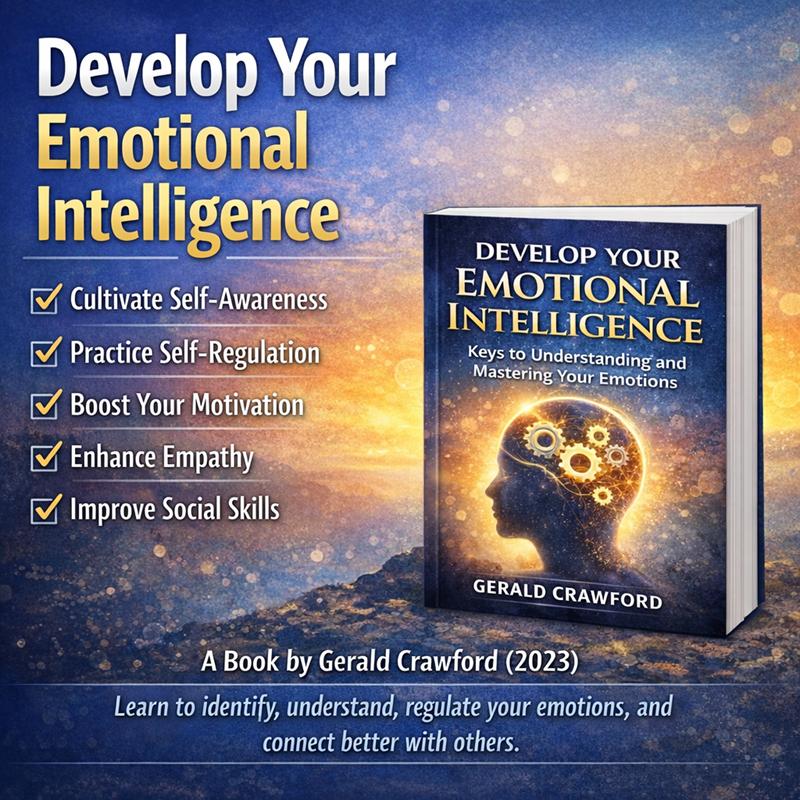
Gerald Crawford is the author of the book “Development your Emotional Intelligence Book by Gerald Crawford” (2023).
He is also is a Certified Clinical Hypnosis Practitioner, Healer, Guide and Educator. He has gone on a personal journey of transformation and discovery and studied the human mind for over 10 years and though his own adversity he has emerged victorious and is passionate about helping others find and live there true-self linked to balance an resilience.
Gerald Crawford has worked to develop specialized treatments integrating the principles of meditation, yoga, ayurveda, and clinical hypnotherapy. Gerald is a Master Teacher in the field of Dharma Therapy and continues to work both clinically and as an educator specializing in the treatment of individuals with anxiety, stress, depression, pain and complex trauma.
Gerald Crawford Personal Motto: With experience and study comes insight with insight come wisdom with wisdom comes moments of clarity, then transcendence then follows.
I facilitate changes in human thinking and spiritual awareness utilizing affirmation, suggestions and other techniques, thereby disentangling and unraveling unwanted thoughts, beliefs and habits, freeing my clients to live the lives they choose to.
Please put your Remarks, recommendations and suggestions below in the comments section:
Development your Emotional Intelligence Book by Gerald Crawford
Click on the button below to make an appointment booking

Make A Donation and Support the Author

This Banner Space is for Rent with a Hyperlink!

Recent Comments