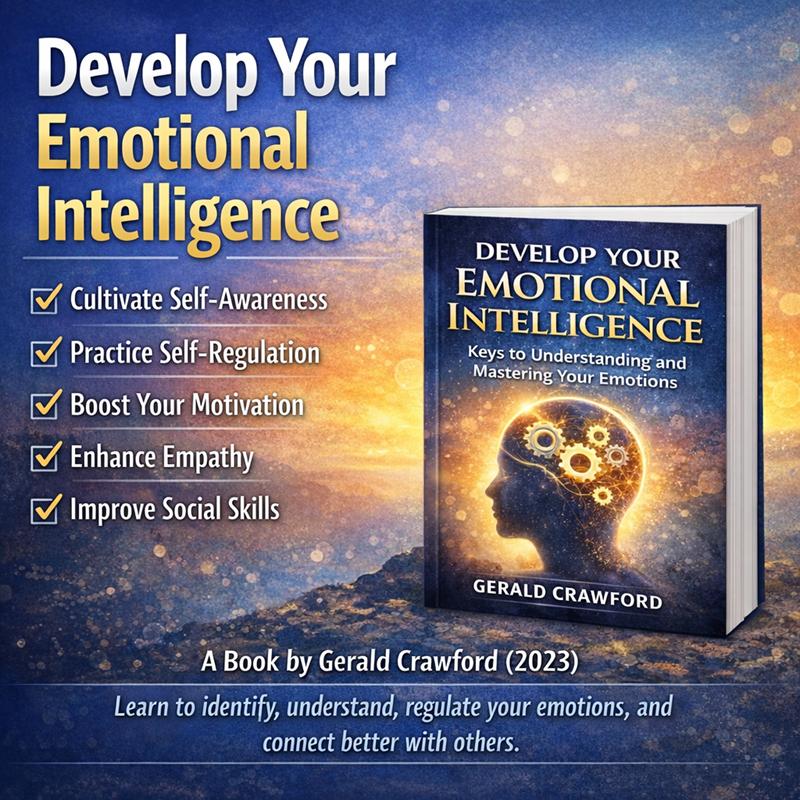
To develop Emotional Intelligence (EI), cultivate self-awareness by identifying and naming your emotions, self-regulation by managing those feelings, motivation by setting goals, empathy by understanding others' perspectives, and improving social skills through active listening and clear communication.

Category: 111 Development your Emotional Intelligence (Page 1 of 7)

Case Study 38: Developing Emotional Intelligence building Enlightenment (700–1000): Pure consciousness.

Case Study 38: Developing Emotional Intelligence and Realising Enlightenment

Consciousness Level: Enlightenment (700–1000)
State: Pure consciousness


Background

There is no longer a conventional biography.
The person once known as Elias (68) still functions in the world, but identity is no longer organised around a personal story. Life continues — walking, speaking, teaching, resting — yet none of it is experienced as “mine.”

Enlightenment did not arrive as a dramatic event. It arrived as the quiet disappearance of the one who was seeking.


Inner Landscape at the Level of Enlightenment

At this level, belief is replaced by knowing:
“There is only what is.”

The inner landscape is characterised by:

  • Absence of psychological identity

  • Awareness without centre

  • Love without object

  • Silence that is alive and intelligent

This is not emotional regulation — it is freedom from emotional ownership.


Relationships Without Identity

Relationships no longer function through roles or needs:

  • Those Once Loved and Cared For:
    Love remains, but without attachment or fear of loss.

  • Those Once Needed:
    Dependency dissolves into mutual presence.

  • Those Once Tolerated or Felt Indifferent To:
    Separation disappears entirely.

There is no “other” — only expressions of the same consciousness.


Behavioural Expression

Behaviour appears ordinary but carries unusual clarity:

  • Action arises spontaneously

  • Speech is simple, precise, and kind

  • No impulse to control outcomes

  • No emotional residue after interaction

Nothing is performed. Everything is happening.


The Realisation: No One Is Doing This

The pivotal realisation is:

There has never been a separate self.

What once felt like “personal effort” is recognised as movement within consciousness itself.


Emotional Intelligence at Enlightenment

Here, EI is not a skill — it is irrelevant as a concept. Yet its essence is fully embodied:


1. Emotions Without Ownership

Emotions may arise:

  • Without resistance

  • Without identification

  • Without narrative

They pass like ripples on water.


2. Compassion Without Choice

Compassion is automatic:

  • Not ethical

  • Not learned

  • Not selective

It is the natural expression of unity.


3. Intelligence Without Thought

Understanding occurs instantly:

  • No analysis

  • No judgment

  • No delay

Knowing precedes thinking.


Beyond the Consciousness Scale

Enlightenment is not a level on the scale — it is the dissolution of the scale itself.

  • No movement upward

  • No further development

  • No attainment

Only being.


Outcome

Life continues:

  • Without fear

  • Without seeking

  • Without psychological suffering

  • Without resistance

Joy, peace, love, and clarity are no longer states — they are the texture of awareness itself.


Final Learning

Enlightenment is not becoming something greater.
It is remembering what was never absent.

When emotional intelligence completes its journey, it dissolves into pure consciousness — silent, infinite, and whole.


Case Study 36: Developing Emotional Intelligence building Peace (600): Bliss, illumination.

Case Study 36: Developing Emotional Intelligence and Building Peace

Consciousness Level: Peace (600)
Emotional State: Bliss, illumination


Background

Zanele (61) speaks little, yet her presence is unmistakable. Time seems to slow around her. She has lived fully — raising children, losing loved ones, facing illness — and none of it left bitterness. Peace did not arrive through effort or discipline; it emerged when seeking ended.

Nothing needed to be different.


Emotional Landscape at the Level of Peace

At the Peace level, the core knowing is:
“All is well, exactly as it is.”

Zanele’s inner world is characterised by:

  • Profound stillness

  • Effortless joy

  • Deep compassion without attachment

  • A sense of unity beyond identity

Peace is not an emotion — it is a state of being.


Impact on Relationships

Peace transformed relationships at their root:

  • Those She Loved and Cared For:
    Love flowed without ownership or fear of loss.

  • Those She Needed:
    Roles dissolved into shared humanity.

  • Those She Tolerated or Felt Indifferent To:
    Separation faded; compassion became universal.

Relationships were no longer central — presence was.


Behavioural Patterns

Behaviour at Peace appears simple, almost ordinary:

  • Listening more than speaking

  • Acting only when action arises naturally

  • Responding without mental commentary

  • Living without urgency or resistance

Actions came from stillness, not intention.


The Turning Point: The End of Seeking

Zanele’s defining realisation was:

There is nothing to improve — only to notice.

When the search for meaning, happiness, or self-betterment ended, peace revealed itself.


Developing Emotional Intelligence

At Peace, emotional intelligence is complete integration rather than development. Still, three qualities were evident:


1. Dissolution of Emotional Ownership

Emotions arose but were no longer personal:

  • No identification with feeling states

  • No narrative attached to emotion

Emotion flowed like weather through open sky.


2. Effortless Compassion

Compassion was no longer practiced:

  • It was automatic

  • Non-selective

  • Without fatigue

Care extended equally to self, others, and life itself.


3. Awareness Without Centre

Zanele experienced awareness without a fixed “self”:

  • No internal conflict

  • No need to defend or define identity

This was illumination — seeing without distortion.


Movement Beyond the Consciousness Scale

Peace sits at the threshold of transcendence:

  • From Peace (600) → stillness and unity

  • Toward Enlightenment (700–1000) → pure consciousness

  • Beyond identity, emotion, and form

Here, growth gives way to being.


Outcome

Over time, Zanele experienced:

  • Continuous inner stillness

  • Absence of fear or resistance

  • Deep, silent joy

  • A sense of unity with all life

Life no longer happened to her — it happened as her.


Key Learning

Peace is not the absence of disturbance — it is the absence of resistance.

When emotional intelligence fully matures, peace becomes the natural ground of existence: blissful, luminous, and unshakeable.

Case Study 34: Developing Emotional Intelligence building Joy (540): Serenity, compassion.

Case Study 32: Developing Emotional Intelligence and Building Joy

Consciousness Level: Joy (540)
Emotional State: Serenity, compassion


Background

Sipho (56) is often described as calm in a way that cannot be taught. His presence settles a room. He has faced hardship, loss, and uncertainty, yet none of it seems to cling to him. Joy did not arise because his life became easy — it emerged because resistance dissolved.

Joy arrived quietly, without effort.


Emotional Landscape at the Level of Joy

At the Joy level, the core belief is:
“Life is fundamentally okay.”

Sipho’s emotional world is characterised by:

  • Inner serenity

  • Gentle compassion for all beings

  • Gratitude without dependency

  • Lightness of being

Joy is not excitement. It is peaceful aliveness.


Impact on Relationships

Joy transformed Sipho’s relationships in subtle but powerful ways:

  • Those He Loved and Cared For:
    He loved without clinging, allowing others their freedom.

  • Those He Needed:
    Cooperation flowed naturally, without negotiation or effort.

  • Those He Tolerated or Felt Indifferent To:
    Compassion replaced emotional distance, without obligation.

People felt safe, seen, and unpressured in his presence.


Behavioural Patterns

Behaviour at Joy reflects effortless alignment:

  • Kindness without calculation

  • Patience without strain

  • Forgiveness without memory

  • Presence without urgency

Sipho acted not from intention, but from attunement.


The Turning Point: Joy Without Cause

Sipho’s defining realisation was:

Joy does not come from what happens — it comes from how little I resist what happens.

When striving fell away, joy remained.


Developing Emotional Intelligence

At this level, EI is not a skill set — it is integration. Still, three qualities were evident:


1. Emotional Transparency

Emotions arose and passed without attachment:

  • No suppression

  • No amplification

  • No identification

Emotions became visitors, not residents.


2. Compassion Without Effort

Compassion flowed naturally:

  • No moral struggle

  • No obligation to fix

  • No superiority

Care became spontaneous.


3. Trust in Life

Sipho trusted the unfolding of life:

  • Reduced planning anxiety

  • Ease with uncertainty

  • Faith without belief systems

This trust created serenity.


Movement Up the Consciousness Scale

Joy gently opened the door to transcendence:

  • From Joy (540) → effortless compassion

  • To Peace (600) → stillness and unity

  • Toward Enlightenment (700+) → pure awareness

The sense of a separate self continued to soften.


Outcome

Over time, Sipho experienced:

  • Sustained inner happiness

  • Minimal emotional disturbance

  • Deep compassion without burnout

  • A quiet sense of fulfilment

Life felt complete — even in imperfection.


Key Learning

Joy is not something achieved — it is what remains when resistance ends.

When emotional intelligence reaches this level, joy becomes the natural atmosphere of being, steady, compassionate, and free.

Emotional Intelligence (EI) Strengthens Intrinsic Motivation

Emotional Intelligence (EI) strengthens intrinsic motivation — the inner drive that helps a person set meaningful goals, stay focused, and persevere despite setbacks. When emotions are understood and aligned with purpose, motivation becomes sustainable, not dependent on pressure, approval, or fear.

Intrinsic motivation comes from within, while extrinsic motivation comes from outside forces. Emotional Intelligence helps transform motivation from external pressure into inner commitment.


1. What is Intrinsic Motivation?

Intrinsic motivation is the desire to act because something is personally meaningful or valuable.

It is driven by:

  • Purpose

  • Personal growth

  • Values

  • Meaning

  • Passion

People with strong intrinsic motivation continue even when:

  • Results are slow

  • Challenges arise

  • Recognition is absent

  • Obstacles appear

This type of motivation is stable and long-lasting.


2. Emotional Intelligence Connects Emotions to Purpose

Without Emotional Intelligence:

  • People feel confused about what they want

  • Motivation comes and goes

  • Goals feel empty

  • Effort feels forced

With Emotional Intelligence:

  • People understand what matters to them

  • Goals become meaningful

  • Effort feels purposeful

  • Progress feels satisfying

Key Insight:

Motivation becomes powerful when emotion and purpose work together.

When people care deeply about something, energy follows naturally.


3. EI Helps People Persevere Through Setbacks

Setbacks are emotional experiences.

They often trigger:

  • Disappointment

  • Frustration

  • Self-doubt

  • Fear of failure

Without Emotional Intelligence:

  • People give up quickly

  • Failure feels personal

  • Confidence drops

  • Effort stops

With Emotional Intelligence:

  • Setbacks become learning experiences

  • Emotions are processed instead of avoided

  • Confidence recovers faster

  • Persistence increases

Understanding emotions prevents discouragement from turning into defeat.


4. EI Replaces Fear-Based Motivation

Many people are motivated by:

  • Fear of failure

  • Fear of rejection

  • Fear of criticism

  • Pressure to perform

This creates:

  • Stress

  • Burnout

  • Anxiety

  • Exhaustion

Fear-based motivation is powerful but not sustainable.

Emotional Intelligence allows motivation to come from:

  • Meaning

  • Growth

  • Purpose

  • Values

This creates long-term energy instead of emotional exhaustion.


5. EI Builds Focus and Discipline

Distractions are often emotional:

  • Boredom

  • Frustration

  • Overwhelm

  • Doubt

Emotional Intelligence helps people:

  • Recognize distractions

  • Refocus attention

  • Stay committed

  • Manage frustration

Discipline is emotional management in action.


6. EI Builds Confidence

Confidence grows when people understand their emotional patterns.

They learn:

  • How they react under pressure

  • How they recover from setbacks

  • How they calm themselves

  • How they stay motivated

Confidence becomes experience-based instead of fragile.


7. EI Creates Sustainable Motivation

Sustainable motivation is:

  • Calm rather than pressured

  • Steady rather than intense

  • Consistent rather than temporary

People with Emotional Intelligence:

  • Work with their emotions instead of fighting them

  • Rest when needed

  • Continue when challenged

  • Adjust when necessary

They avoid the cycle of:

Excitement → Pressure → Exhaustion → Quitting

Instead they live in:

Purpose → Effort → Growth → Stability


8. Deep Insight

Motivation is emotional energy.

If emotions are confused, motivation becomes unstable.

If emotions are understood, motivation becomes steady.

Clear emotions create clear direction.


9. Core Principle

Pressure creates temporary motivation.
Purpose creates lasting motivation.

Emotional Intelligence helps people move from:

  • Fear → Purpose

  • Pressure → Meaning

  • Struggle → Growth


10. One Sentence Teaching Statement

Emotional Intelligence transforms motivation from something you force into something that flows naturally from meaning, purpose, and inner clarity.

Unmanaged Emotions often lead to regret, conflict, and poor judgment.

A central truth about Emotional Intelligence (EI): unmanaged emotions often lead to regret, conflict, and poor judgment, while emotional intelligence teaches self-regulation — managing emotions wisely without suppression or emotional explosions. Below is a deeper explanation suitable for teaching, mentoring, or program material.


Unmanaged Emotions Lead to Regret

When emotions are unmanaged, they often drive impulsive reactions instead of thoughtful responses.

Examples include:

  • Saying hurtful words in anger

  • Making decisions out of fear

  • Acting out of frustration

  • Withdrawing because of anxiety

After the emotional moment passes, people often experience:

  • Regret

  • Guilt

  • Shame

  • Broken trust

Key Insight:
Strong emotions are not the problem — lack of regulation is the problem.

Emotions are signals, but they are not always wise guides.


Emotional Intelligence Teaches Self-Regulation

Self-regulation is the ability to experience emotions without being controlled by them.

Self-regulation means:

  • Feeling anger without becoming aggressive

  • Feeling fear without becoming paralyzed

  • Feeling frustration without giving up

  • Feeling anxiety without losing control

It is the space between feeling and action that creates emotional maturity.


The Three Common Emotional Mistakes

1. Suppression

Suppression means pushing emotions down or pretending they do not exist.

Signs include:

  • “I’m fine” when you’re not

  • Avoiding feelings

  • Emotional numbness

  • Internal stress

Results:

  • Emotional buildup

  • Anxiety

  • Physical stress

  • Emotional distance in relationships

Suppression hides emotions but does not heal them.


2. Emotional Explosion

Explosion means expressing emotions without control.

Signs include:

  • Shouting

  • Harsh words

  • Impulsive decisions

  • Emotional outbursts

Results:

  • Relationship damage

  • Regret

  • Loss of trust

  • Increased stress

Explosions release emotion but create damage.


3. Healthy Regulation (The Balanced Way)

Healthy regulation means:

  • Acknowledge the emotion

  • Pause

  • Respond wisely

This is Emotional Intelligence in action.

Balanced Response Model

  1. Notice the feeling

  2. Name the emotion

  3. Pause

  4. Choose a wise response


The Pause Principle

One of the most powerful EI skills is the pause.

The pause:

  • Slows reactions

  • Engages the thinking mind

  • Prevents damage

  • Creates wisdom

Even 10 seconds of pause can change an outcome.


Emotional Regulation Skills

1. Awareness

Ask:

  • What am I feeling?

  • Why am I feeling this?

Awareness reduces emotional intensity.


2. Breathing

Slow breathing tells the nervous system:

You are safe.

Results:

  • Lower stress hormones

  • Clearer thinking

  • Emotional calm


3. Naming Emotions

Research shows naming emotions reduces emotional intensity.

Example:

“I feel hurt.”

“I feel frustrated.”

“I feel anxious.”

Naming emotions creates distance from them.


4. Choosing Response

Instead of reacting automatically:

Ask:

  • What response will help this situation?

  • What response will I not regret?


Deep Insight

Emotional intelligence is not about controlling emotions.

It is about guiding emotions.

You do not eliminate emotions.

You become stronger than them.


The Core Principle

Unmanaged emotions control your life.
Managed emotions strengthen your life.


One Sentence Teaching Statement

Emotional Intelligence teaches us to feel deeply, think clearly, and act wisely instead of reacting impulsively.

« Older posts

Step-up and get your seat on my VIP Emotional Intelligence Mentorship Program for 2026

X
Back a Buddy Show your Support