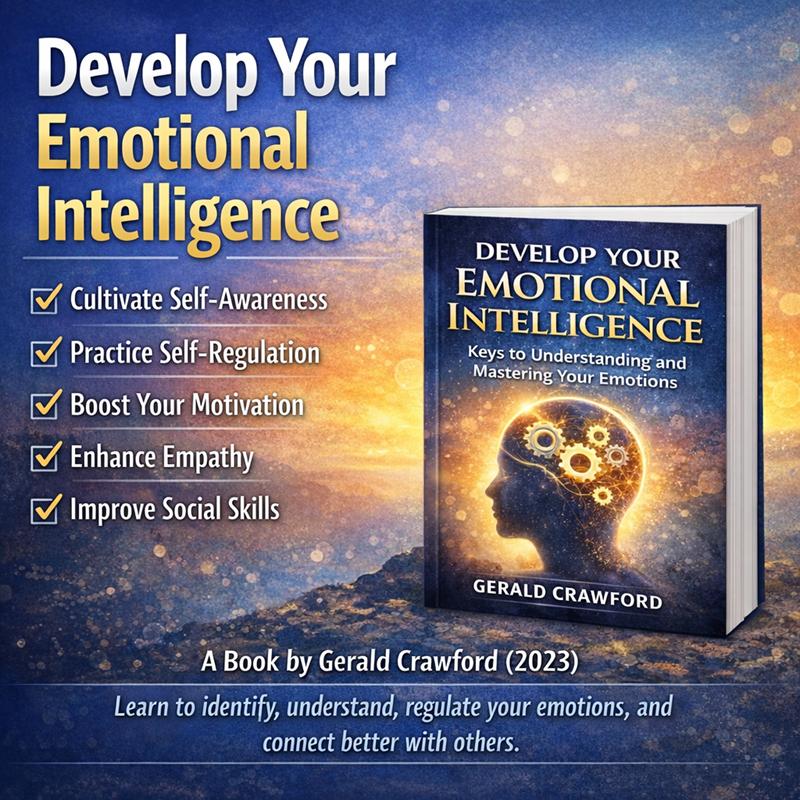
To develop Emotional Intelligence (EI), cultivate self-awareness by identifying and naming your emotions, self-regulation by managing those feelings, motivation by setting goals, empathy by understanding others' perspectives, and improving social skills through active listening and clear communication.

Tag: Anger

Case Study 26: Developing Emotional Intelligence and healing from Anger (150): Frustration, can be constructive or destructive.

Case Study 26: Developing Emotional Intelligence and Healing from Anger

Consciousness Level: Anger (150)
Emotional State: Frustration, force that can be constructive or destructive


Background

Michael (40) is outspoken, passionate, and driven. He is often described as “intense.” When things don’t go as expected, his frustration surfaces quickly — sharp words, raised voice, and a strong need to correct what he sees as wrong.

Michael grew up in an environment where power came through dominance. Emotions were expressed loudly, and calm communication was often mistaken for weakness. Anger became his primary way of asserting control and protecting himself.


Emotional Landscape at the Level of Anger

At the Anger level, the core belief is:
“Something is wrong, and I must force change.”

Michael’s emotional world was characterised by:

  • Irritability and impatience

  • Strong reactions to perceived injustice

  • A sense of moral superiority

  • Difficulty tolerating opposition or delay

Anger carries significantly more energy than fear or desire — but it is volatile.


Impact on Relationships

Anger deeply influenced Michael’s relationships:

  • Those He Loved and Cared For:
    He oscillated between loyalty and outbursts, leaving loved ones emotionally unsafe.

  • Those He Needed:
    Authority figures were often challenged, leading to conflict and resistance.

  • Those He Tolerated or Felt Indifferent To:
    Minor inconveniences triggered disproportionate reactions.

Anger pushed people away while convincing Michael he was “just being honest.”


Behavioural Patterns

Michael’s behaviours reflected force-driven action:

  • Confrontational communication

  • Blame and defensiveness

  • Impulsive decisions

  • Difficulty listening or pausing

While anger created movement, it often damaged trust and collaboration.


The Turning Point: Anger as Information, Not Identity

Michael’s shift began when he learned a crucial EI distinction:

Anger is a signal — not a strategy.

Through coaching, he discovered that beneath anger often lived:

  • Fear of being ignored

  • Frustration with powerlessness

  • Unmet needs or violated values

Recognising anger as information reduced its explosiveness.


Developing Emotional Intelligence

Michael developed EI through three essential skills:


1. Emotional Decompression

He learned to pause before reacting:

  • Slowing his breathing

  • Creating space between stimulus and response

  • Naming the emotion internally

This pause prevented automatic escalation.


2. Needs Identification

Instead of expressing anger as attack, he learned to ask:

  • “What boundary was crossed?”

  • “What value feels threatened?”

Anger became a guide to unmet needs rather than a weapon.


3. Assertive Communication

Michael practiced expressing himself without force:

  • Clear requests

  • Calm firmness

  • Willingness to listen

This preserved power without aggression.


Movement Up the Consciousness Scale

Michael’s emotional growth followed a decisive progression:

  • From Anger (150) → awareness and restraint

  • To Pride (175) → self-respect and confidence

  • Toward Courage (200) → grounded, empowered action

Force slowly transformed into strength.


Outcome

Over time, Michael experienced:

  • Reduced conflict

  • Stronger, safer relationships

  • Increased influence without intimidation

  • Greater emotional self-control

Anger no longer controlled him — it served him.


Key Learning

Anger becomes destructive when it is unconscious.
When met with emotional intelligence, anger becomes clarity, boundaries, and purposeful action.

True power does not come from force — it comes from self-mastery.

Let go of Anger, frustration, resentment emotions with Hypnotherapy

Here’s a hypnotherapy script to help let go of anger, frustration, and resentment emotions:

Introduction

(Soft, calming music starts playing. Speak in a gentle, soothing tone.)

“Welcome to this hypnotherapy session, where you’ll embark on a journey to release the emotions of anger, frustration, and resentment that have been holding you back. Allow yourself to relax, breathe deeply, and let go of any tension or stress. You’re safe, and you’re in control. Find a comfortable position, either sitting or lying down, and take a deep breath in… and out… Feel the air fill your lungs, and then release it slowly. As you exhale, imagine any worries or concerns leaving your body.”

Induction

“Close your eyes and begin to focus on your breath. Feel the sensation of the air moving in and out of your nostrils. Imagine a warm, soothing light beginning to fill your body, starting at the crown of your head. As this light travels down through your face, neck, and shoulders, it melts away any tension or stress, leaving you feeling calm and relaxed. Allow this light to continue down through your arms, hands, chest, abdomen, lower back, and finally, your legs and feet. With each breath, feel yourself becoming more and more relaxed, more and more at ease.”

Deepening

“Imagine yourself standing in a peaceful, serene environment. It could be a beach, a forest, or a mountain meadow. Take a moment to notice the sights, sounds, and sensations around you. Feel the sensation of your feet connecting with the ground, the sensation of the air on your skin, and the sensation of your heart beating in your chest. As you breathe in, imagine fresh, clean air filling your lungs, and as you breathe out, imagine any anger, frustration, or resentment leaving your body. Repeat the following phrase to yourself: ‘I am letting go, I am releasing, I am free.'”

Confronting Anger, Frustration, and Resentment

“Imagine a large, heavy weight in front of you. This weight represents the emotions of anger, frustration, and resentment that you’ve been carrying. Visualize the weight, feel its heaviness, and acknowledge its presence. But also remind yourself that this weight is not a part of your true nature. You are not defined by these emotions. Imagine taking a deep breath, and as you exhale, imagine the weight beginning to lift, beginning to lighten, and beginning to release. Repeat the following phrase to yourself: ‘I release you, I let you go, I am free from your grasp.'”

Releasing the Emotions

“Imagine a warm, soothing water beginning to flow over the weight, washing away the anger, frustration, and resentment that it represents. As the water continues to flow, imagine the weight becoming lighter, becoming smaller, and becoming less burdensome. Repeat the following phrase to yourself: ‘I release you, I let you go, I am free from your grasp.’ As you continue to breathe deeply, imagine the fresh, clean air filling your lungs, and the sensation of freedom and release spreading throughout your body.”

Forgiveness and Letting Go

“Imagine a person or situation that has triggered feelings of anger, frustration, or resentment in you. See the person or situation in your mind’s eye, and imagine yourself taking a step back, taking a deep breath, and choosing to forgive. Repeat the following phrase to yourself: ‘I forgive you, I release you, I let you go.’ Remember that forgiveness is not about the other person, but about you, and your own freedom from negative emotions. Allow yourself to let go of any need for control, any need for revenge, or any need for validation. You are free to choose how you respond to any situation, and you are free to choose forgiveness.”

Empowerment

“Imagine a new, empowered version of yourself emerging. This version is calm, confident, and free from the burdens of anger, frustration, and resentment. See yourself handling situations with ease, responding to challenges with confidence, and trusting yourself completely. Feel the sense of pride, the sense of accomplishment, and the sense of freedom that comes with knowing you’re in control. Repeat the following phrase to yourself: ‘I trust myself, I trust my abilities, I am capable and competent.’ Remember that you have the power to choose how you respond to any situation, and that you are always in control of your thoughts, emotions, and actions.”

Future Pacing

“Imagine yourself in a future scenario, where you’re facing a challenge or a situation that would normally trigger anger, frustration, or resentment. But this time, imagine yourself responding with calmness, with confidence, and with a sense of control. See yourself handling the situation with ease, and emerging from it feeling stronger, feeling more empowered, and feeling more confident. Repeat the following phrase to yourself: ‘I am prepared, I am capable, I am in control.’ Know that you have the tools, the skills, and the inner strength to overcome any obstacle, and to achieve your goals.”

Counting Up and Awakening

“Take a deep breath in, and as you exhale, begin to slowly count up from one to five. With each number, feel yourself becoming more and more alert, more and more focused. When you reach the number five, you’ll be fully awake, feeling refreshed, renewed, and empowered. One… You’re beginning to stir, feeling a sense of calm and relaxation. Two… You’re becoming more alert, more focused. Three… You’re starting to feel more energized, more motivated. Four… You’re almost fully awake, feeling refreshed and renewed. Five… You’re now fully awake, feeling empowered, confident, and free from the emotions of anger, frustration, and resentment. Take a deep breath in, and when you’re ready, you can open your eyes.”

Conclusion

“Remember, the emotions of anger, frustration, and resentment are not a part of your true nature. You are calm, you are confident, and you are capable of overcoming any challenge. Whenever you feel these emotions arising, take a deep breath, and remind yourself of the empowerment you’ve experienced in this session. You can return to this peaceful, serene place whenever you need to, and you can always trust yourself to handle any situation with confidence and ease.”

Sign of Deep Unhealed Emotional Wound – Persistent negative emotions: Experiencing ongoing fear, anger, guilt, shame, or a sense of detachment from others.

Persistent negative emotions: Experiencing ongoing fear, anger, guilt, shame, or a sense of detachment from others.

Persistent negative emotions can be a sign of deep unhealed emotional wounds. When we experience traumatic or stressful events, our emotions can become stuck in a state of hyperarousal, making it difficult to regulate and manage our emotional responses.

This can lead to a range of negative emotions, including:

1. Fear: Experiencing excessive or irrational fear, such as fear of abandonment, rejection, or harm.

2. Anger: Feeling persistent anger, resentment, or irritability, which can be directed towards oneself or others.

3. Guilt: Carrying around feelings of guilt, shame, or self-blame, which can be related to past mistakes or perceived wrongdoings.

4. Shame: Feeling deep-seated shame, self-loathing, or worthlessness, which can be related to past trauma or negative experiences.

5. Detachment: Feeling disconnected or detached from others, which can be a coping mechanism to avoid feelings of vulnerability or rejection.

These persistent negative emotions can affect various aspects of life, including relationships, work, and overall well-being. It’s essential to address these emotions and work through the underlying causes to promote healing and emotional regulation.

Why do persistent negative emotions occur?

Persistent negative emotions can occur due to various reasons, including:

1. Unresolved trauma: Unprocessed traumatic experiences can lead to persistent negative emotions, as the body and mind may remain in a state of hyperarousal.

2. Lack of emotional validation: When emotional experiences are not validated or acknowledged, it can lead to feelings of shame, guilt, or self-doubt.

3. Ineffective coping mechanisms: Using unhealthy coping mechanisms, such as substance abuse or avoidance, can perpetuate negative emotions and prevent healing.

4. Unrealistic expectations: Having unrealistic expectations about oneself or others can lead to feelings of frustration, anger, or disappointment.

5. Genetic predisposition: Some individuals may be more prone to negative emotions due to genetic factors, such as a family history of mental health conditions.

How to address persistent negative emotions?

To address persistent negative emotions, consider the following steps:

1. Seek professional help: Consult with a mental health professional, such as a therapist or counselor, to explore the underlying causes of your emotions.

2. Practice self-compassion: Treat yourself with kindness, understanding, and patience, just as you would a close friend.

3. Engage in self-care: Participate in activities that bring you joy, relaxation, and a sense of fulfillment, such as exercise, meditation, or creative pursuits.

4. Challenge negative thoughts: Learn to recognize and challenge negative thought patterns, replacing them with more balanced and realistic ones.

5. Develop emotional awareness: Cultivate awareness of your emotions, recognizing how they affect your thoughts, behaviors, and relationships.

6. Build a support network: Surround yourself with supportive people who can provide emotional validation, encouragement, and connection.

7. Practice mindfulness and relaxation techniques: Regularly engage in mindfulness and relaxation practices, such as deep breathing, progressive muscle relaxation, or meditation, to help regulate your emotions.

Remember, healing from deep unhealed emotional wounds takes time, effort, and patience. By addressing persistent negative emotions and working through the underlying causes, you can promote emotional healing, regulation, and well-being.

What resonates with you the most, or what would you like to explore further?

Healing from Emotional Wounds that show up as Negative Emotions like Anger

Healing from emotional wounds that manifest as negative emotions like anger can be a challenging and complex process. However, with the right approach and support, it is possible to work through these emotions and develop a more positive and resilient outlook.

One of the key steps in healing from emotional wounds that show up as anger is to acknowledge and accept your emotions. This can be a difficult process, as it requires you to confront and validate your feelings, rather than trying to suppress or deny them. However, by acknowledging and accepting your emotions, you can begin to understand the underlying causes of your anger and develop a more constructive way of managing it.

Another important step in healing from emotional wounds that show up as anger is to develop a greater sense of self-awareness. This involves recognizing your thoughts, feelings, and behaviors, and understanding how they contribute to your emotional state. By developing a greater sense of self-awareness, you can begin to identify the triggers and patterns that contribute to your anger, and develop more effective strategies for managing it.

In addition to acknowledging and accepting your emotions, and developing a greater sense of self-awareness, there are several other strategies that can help you heal from emotional wounds that show up as anger. These include:

1. Practicing mindfulness and relaxation techniques: Mindfulness and relaxation techniques, such as meditation, deep breathing, and yoga, can help you manage stress and anxiety, and reduce feelings of anger and frustration.

2. Engaging in physical activity: Regular physical activity can help reduce stress and anxiety, and improve your mood. It can also provide an outlet for anger and frustration, and help you feel more energized and focused.

3. Seeking social support: Connecting with others, whether it’s through talking to a friend or family member, or joining a support group, can help you feel less isolated and more supported. Social support can also provide an outlet for emotions, and help you develop a more positive and resilient outlook.

4. Practicing self-compassion: Treating yourself with kindness, understanding, and patience can help you develop a more positive and compassionate relationship with yourself. This can involve practicing self-care, engaging in activities that bring you joy, and acknowledging and accepting your emotions.

5. Seeking professional help: If you’re struggling to manage your anger or other negative emotions, it may be helpful to seek professional help. A therapist or counselor can provide you with a safe and supportive space to explore your emotions, and develop more effective strategies for managing them.

Some additional resources that may be helpful in healing from emotional wounds that show up as anger include:

Books: “The Anger Control Workbook” by Ray DiGiuseppe and Raymond Chip Tafrate, “The Gift of Anger” by Marcia Narine, and “Healing Anger” by Harriet Lerner

Online courses: Courses on anger management, emotional intelligence, and mindfulness on platforms like Coursera, Udemy, or edX

Therapy: Consider working with a therapist who specializes in anger management, cognitive-behavioral therapy (CBT), or dialectical behavior therapy (DBT)

Remember, healing from emotional wounds that show up as anger is a process that takes time, effort, and patience. It’s okay to take things one step at a time, and to seek support and guidance along the way. By acknowledging and accepting your emotions, developing a greater sense of self-awareness, and practicing mindfulness and relaxation techniques, you can begin to heal from emotional wounds that show up as anger, and develop a more positive and resilient outlook.

What resonates with you the most, or what would you like to explore further?

Step-up and get your seat on my VIP Emotional Intelligence Mentorship Program for 2026

X
Back a Buddy Show your Support