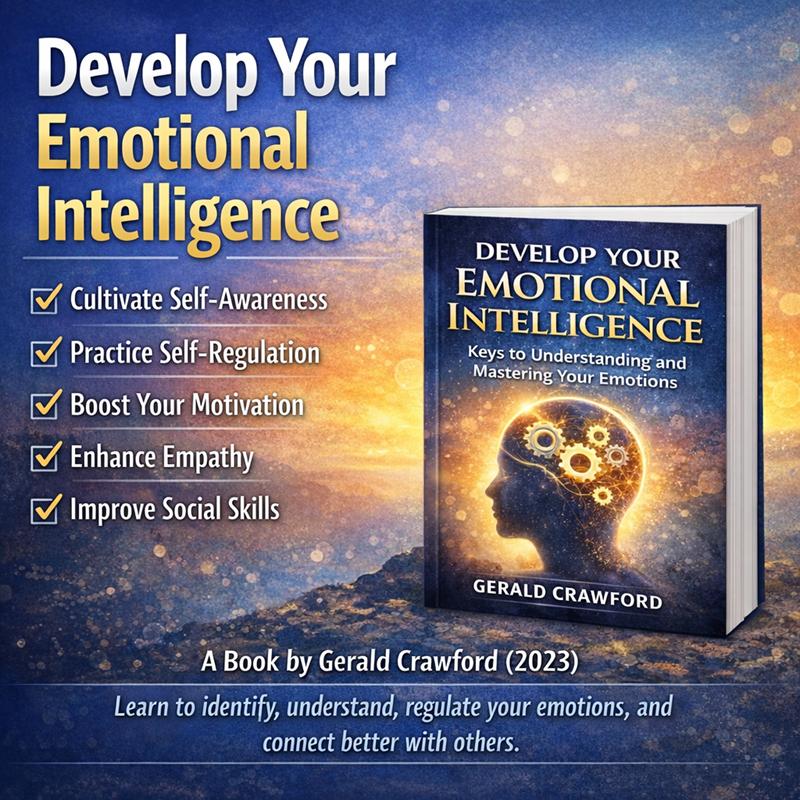
To develop Emotional Intelligence (EI), cultivate self-awareness by identifying and naming your emotions, self-regulation by managing those feelings, motivation by setting goals, empathy by understanding others' perspectives, and improving social skills through active listening and clear communication.

Tag: shame

Case Study 20: Developing Emotional Intelligence and healing from Shame (20): Destructive, self-loathing.

Case Study 20: Developing Emotional Intelligence and Healing from Shame

Consciousness Level: Shame (20)
Emotional State: Destructive, self-loathing


Background

Thabo (42) is a mid-level manager who outwardly appears competent and reliable. Internally, however, he lives with a constant sense of unworthiness. He believes that if people truly knew him, they would reject him. This belief has shaped his relationships, career choices, and emotional life for decades.

Thabo grew up in an environment where affection was conditional and mistakes were met with humiliation rather than correction. Praise was rare; criticism was public. Over time, he internalised the message:
“I am fundamentally flawed.”

This belief did not operate consciously — it lived beneath his thoughts, quietly directing his behaviour.


Emotional Landscape at the Level of Shame

At the Shame level, emotions are not just painful — they are identity-defining.

Thabo’s dominant internal experiences included:

  • Chronic self-criticism

  • Persistent feelings of inferiority

  • Fear of being exposed or “found out”

  • Emotional withdrawal and isolation

Rather than thinking “I made a mistake,” he thought:
“I am a mistake.”

This distinction is central to understanding shame.


Impact on Relationships

Thabo’s shame influenced how he related to others across all relationship levels:

  • Those He Loved and Cared For:
    He struggled to receive love, often mistrusting affection or sabotaging closeness.

  • Those He Needed:
    He over-relied on approval from authority figures, tying his worth to performance.

  • Those He Tolerated or Felt Indifferent To:
    He perceived neutral interactions as rejection or judgment, reinforcing his self-loathing.

Shame distorted reality — neutral events felt personal, and minor feedback felt devastating.


Behavioural Patterns

From the outside, Thabo appeared quiet and agreeable. Internally, he was in constant emotional distress.

Common behaviours included:

  • Avoiding conflict at all costs

  • People-pleasing and over-apologising

  • Procrastination driven by fear of failure

  • Self-sabotage when success felt undeserved

These behaviours temporarily reduced anxiety but reinforced shame long-term.


Turning Point: Awareness Without Judgment

Healing did not begin with confidence — it began with awareness.

Through counselling, Thabo learned to:

  • Name shame as an emotional state, not a truth

  • Separate identity from behaviour

  • Recognise the inner voice of self-attack as learned, not factual

This marked the first step in developing emotional intelligence:

“I am feeling shame”
instead of
“I am shameful.”

This shift alone reduced the intensity of his emotional suffering.


Developing Emotional Intelligence

Thabo focused on three core EI skills:

1. Emotional Recognition

He learned to identify shame in his body:

  • Tight chest

  • Avoidant eye contact

  • Urge to withdraw

Recognising the emotion early prevented spirals of self-destruction.


2. Emotional Regulation

Rather than suppressing shame, he practiced:

  • Self-compassionate language

  • Grounding techniques

  • Allowing emotions without acting on them

This softened the internal attack cycle.


3. Cognitive Reframing

He challenged automatic thoughts such as:

  • “I’m not good enough”

  • “I don’t belong”

Replacing them with neutral truths:

  • “I am learning.”

  • “I made an error, not a moral failure.”

This slowly moved him toward Guilt (30) — a healthier level where responsibility replaces identity collapse.


Movement Up the Consciousness Scale

Progress was gradual but real:

  • From Shame (20) → awareness and naming

  • To Guilt (30) → recognising behaviour without self-destruction

  • Toward Courage (200) → taking responsibility without self-hatred

The key was self-compassion, not self-improvement.


Outcome

After sustained effort, Thabo experienced:

  • Increased emotional resilience

  • Healthier boundaries in relationships

  • Reduced fear of judgment

  • A growing sense of self-worth independent of performance

Shame no longer defined him — it became an emotion he could recognise, tolerate, and release.


Key Learning

Shame is not healed by success, approval, or perfection.
It is healed through awareness, compassion, and emotional literacy.

When people learn to observe shame rather than identify with it, they reclaim choice, agency, and dignity.


Your Feelings don’t just follow your Thoughts – Very Often, they Lead them.

Understanding this changes how you relate to your inner world and gives you back power.

1. Feelings are faster than thoughts

Your emotional system operates before logic.

The emotional brain (amygdala / limbic system) reacts in milliseconds

The thinking brain (prefrontal cortex) reacts after

By the time you’re “thinking,” your nervous system has already decided if you are safe, threatened, loved, or rejected

Thought often becomes a justification for how you already feel.

2. Feelings create the lens your thoughts look through

Your current emotional state acts like a filter:

  • Fear → thoughts search for danger
  • Shame → thoughts search for what’s wrong with you
  • Sadness → thoughts replay loss
  • Love → thoughts see possibility and meaning
  • Peace → thoughts slow down and become wise

The mind doesn’t ask, “What is true?”

It asks, “What matches how I feel?”

3. The body sets the story

Feelings originate in the body, not the mind.

  • Tight chest → thoughts of threat or loss
  • Heavy body → thoughts of hopelessness
  • Open breath → thoughts of safety
  • Calm nervous system → clear thinking

Thoughts are translations of bodily sensation into language.

4. Unhealed emotions hijack thinking

When emotions are unprocessed, they take control of thought:

  • Old abandonment → “This won’t last”
  • Old rejection → “I’m not enough”
  • Old betrayal → “I can’t trust anyone”

These are not objective thoughts.

They are emotional memories speaking.

Your mind becomes a storyteller for unresolved pain.

5. Feelings seek confirmation, not truth

An emotion wants to stay alive.

So it pushes the mind to:

  • Select confirming evidence
  • Ignore contradictory evidence
  • Repeat familiar narratives

This is why the same thought loops return – they are emotionally fueled, not logically chosen.

6. Why trying to “think positive” fails

You cannot override emotion with thought alone.

A fearful body will generate fearful thoughts

A shamed body will generate self-attacking thoughts

Healing happens from the bottom up: body → emotion → thought, not the other way around.

7. The turning point: awareness without judgment

The moment you see this, control shifts.

Instead of:

“Why am I thinking this?”

You ask:

“What am I feeling right now?”

And then:

“What does this feeling need to be felt, not resisted?”

When emotion is allowed, thought softens naturally.

8. Spiritual integration (faith-based insight)

In Scripture, this is called guarding the heart:

“For out of it flow the issues of life.” (Proverbs 4:23)

The heart (emotional center) directs the mind.

  • Peace in the heart → clarity in the mind
  • Fear in the heart → chaos in the mind

9. Simple daily practice (2 minutes)

  1. Pause
  2. Place a hand on your chest
  3. Name the feeling (not the thought)
  4. Breathe slowly
  5. Say: “I allow this feeling to be here.”

Watch how the thought loses its grip.

In one sentence:

Your thoughts are not the problem – they are the echo of your emotional state.

Let go of Guilt, shame, embarrassment emotions with Hypnotherapy

Here’s a hypnotherapy script to help let go of guilt, shame, and embarrassment emotions:

Introduction

(Soft, calming music starts playing. Speak in a gentle, soothing tone.)

“Welcome to this hypnotherapy session, where you’ll embark on a journey to release the emotions of guilt, shame, and embarrassment that have been weighing you down. Allow yourself to relax, breathe deeply, and let go of any tension or stress. You’re safe, and you’re in control. Find a comfortable position, either sitting or lying down, and take a deep breath in… and out… Feel the air fill your lungs, and then release it slowly. As you exhale, imagine any worries or concerns leaving your body.”

Induction

“Close your eyes and begin to focus on your breath. Feel the sensation of the air moving in and out of your nostrils. Imagine a warm, soothing light beginning to fill your body, starting at the crown of your head. As this light travels down through your face, neck, and shoulders, it melts away any tension or stress, leaving you feeling calm and relaxed. Allow this light to continue down through your arms, hands, chest, abdomen, lower back, and finally, your legs and feet. With each breath, feel yourself becoming more and more relaxed, more and more at ease.”

Deepening

“Imagine yourself standing in a peaceful, serene environment. It could be a beach, a forest, or a mountain meadow. Take a moment to notice the sights, sounds, and sensations around you. Feel the sensation of your feet connecting with the ground, the sensation of the air on your skin, and the sensation of your heart beating in your chest. As you breathe in, imagine fresh, clean air filling your lungs, and as you breathe out, imagine any guilt, shame, or embarrassment leaving your body. Repeat the following phrase to yourself: ‘I am letting go, I am releasing, I am free.'”

Confronting Guilt, Shame, and Embarrassment

“Imagine a large, empty canvas in front of you. This canvas represents the space where you’ll confront and release your guilt, shame, and embarrassment. Visualize the specific situations, events, or memories that have led to these emotions. See the faces, hear the voices, and relive the feelings. But this time, as you recall these experiences, imagine yourself observing them from a detached perspective. You’re not reliving the emotions; you’re simply acknowledging them. Now, imagine taking a brush, and painting a picture that represents the guilt, shame, or embarrassment you’ve been carrying. As you paint, allow the emotions to rise to the surface, and acknowledge them. But also remind yourself that these emotions are not a part of your true nature. You are not defined by these feelings.”

Releasing the Emotions

“Imagine a gentle rain beginning to fall on the canvas, washing away the colors, the shapes, and the emotions that you’ve painted. As the rain continues to fall, imagine the guilt, shame, and embarrassment being washed away, leaving the canvas clean and blank. Repeat the following phrase to yourself: ‘I release you, I let you go, I am free from your grasp.’ As you continue to breathe deeply, imagine the fresh, clean air filling your lungs, and the sensation of freedom and release spreading throughout your body.”

Self-Forgiveness and Self-Compassion

“Imagine a warm, comforting light beginning to fill your body. This light represents self-forgiveness, self-compassion, and self-love. As the light grows, it nourishes your heart, your mind, and your soul. Allow yourself to receive this light, and to feel its warmth and comfort. Repeat the following phrase to yourself: ‘I forgive myself, I am kind to myself, I am compassionate towards myself.’ Remember that everyone makes mistakes, and that it’s a natural part of the learning and growth process. Treat yourself with the same kindness and compassion that you would offer to a friend.”

Empowerment

“Imagine a new, empowered version of yourself emerging. This version is confident, self-assured, and free from the burdens of guilt, shame, and embarrassment. See yourself handling situations with ease, responding to challenges with confidence, and trusting yourself completely. Feel the sense of pride, the sense of accomplishment, and the sense of freedom that comes with knowing you’re in control. Repeat the following phrase to yourself: ‘I trust myself, I trust my abilities, I am capable and competent.'”

Counting Up and Awakening

“Take a deep breath in, and as you exhale, begin to slowly count up from one to five. With each number, feel yourself becoming more and more alert, more and more focused. When you reach the number five, you’ll be fully awake, feeling refreshed, renewed, and empowered. One… You’re beginning to stir, feeling a sense of calm and relaxation. Two… You’re becoming more alert, more focused. Three… You’re starting to feel more energized, more motivated. Four… You’re almost fully awake, feeling refreshed and renewed. Five… You’re now fully awake, feeling empowered, confident, and free from the emotions of guilt, shame, and embarrassment. Take a deep breath in, and when you’re ready, you can open your eyes.”

Conclusion

“Remember, the emotions of guilt, shame, and embarrassment are not a part of your true nature. You are worthy, you are deserving, and you are free. Whenever you feel these emotions arising, take a deep breath, and remind yourself of the empowerment you’ve experienced in this session. You can return to this peaceful, serene place whenever you need to, and you can always trust yourself to handle any situation with confidence and ease.”

Sign of Deep Unhealed Emotional Wound – Persistent negative emotions: Experiencing ongoing fear, anger, guilt, shame, or a sense of detachment from others.

Persistent negative emotions: Experiencing ongoing fear, anger, guilt, shame, or a sense of detachment from others.

Persistent negative emotions can be a sign of deep unhealed emotional wounds. When we experience traumatic or stressful events, our emotions can become stuck in a state of hyperarousal, making it difficult to regulate and manage our emotional responses.

This can lead to a range of negative emotions, including:

1. Fear: Experiencing excessive or irrational fear, such as fear of abandonment, rejection, or harm.

2. Anger: Feeling persistent anger, resentment, or irritability, which can be directed towards oneself or others.

3. Guilt: Carrying around feelings of guilt, shame, or self-blame, which can be related to past mistakes or perceived wrongdoings.

4. Shame: Feeling deep-seated shame, self-loathing, or worthlessness, which can be related to past trauma or negative experiences.

5. Detachment: Feeling disconnected or detached from others, which can be a coping mechanism to avoid feelings of vulnerability or rejection.

These persistent negative emotions can affect various aspects of life, including relationships, work, and overall well-being. It’s essential to address these emotions and work through the underlying causes to promote healing and emotional regulation.

Why do persistent negative emotions occur?

Persistent negative emotions can occur due to various reasons, including:

1. Unresolved trauma: Unprocessed traumatic experiences can lead to persistent negative emotions, as the body and mind may remain in a state of hyperarousal.

2. Lack of emotional validation: When emotional experiences are not validated or acknowledged, it can lead to feelings of shame, guilt, or self-doubt.

3. Ineffective coping mechanisms: Using unhealthy coping mechanisms, such as substance abuse or avoidance, can perpetuate negative emotions and prevent healing.

4. Unrealistic expectations: Having unrealistic expectations about oneself or others can lead to feelings of frustration, anger, or disappointment.

5. Genetic predisposition: Some individuals may be more prone to negative emotions due to genetic factors, such as a family history of mental health conditions.

How to address persistent negative emotions?

To address persistent negative emotions, consider the following steps:

1. Seek professional help: Consult with a mental health professional, such as a therapist or counselor, to explore the underlying causes of your emotions.

2. Practice self-compassion: Treat yourself with kindness, understanding, and patience, just as you would a close friend.

3. Engage in self-care: Participate in activities that bring you joy, relaxation, and a sense of fulfillment, such as exercise, meditation, or creative pursuits.

4. Challenge negative thoughts: Learn to recognize and challenge negative thought patterns, replacing them with more balanced and realistic ones.

5. Develop emotional awareness: Cultivate awareness of your emotions, recognizing how they affect your thoughts, behaviors, and relationships.

6. Build a support network: Surround yourself with supportive people who can provide emotional validation, encouragement, and connection.

7. Practice mindfulness and relaxation techniques: Regularly engage in mindfulness and relaxation practices, such as deep breathing, progressive muscle relaxation, or meditation, to help regulate your emotions.

Remember, healing from deep unhealed emotional wounds takes time, effort, and patience. By addressing persistent negative emotions and working through the underlying causes, you can promote emotional healing, regulation, and well-being.

What resonates with you the most, or what would you like to explore further?

Step-up and get your seat on my VIP Emotional Intelligence Mentorship Program for 2026

X
Back a Buddy Show your Support