
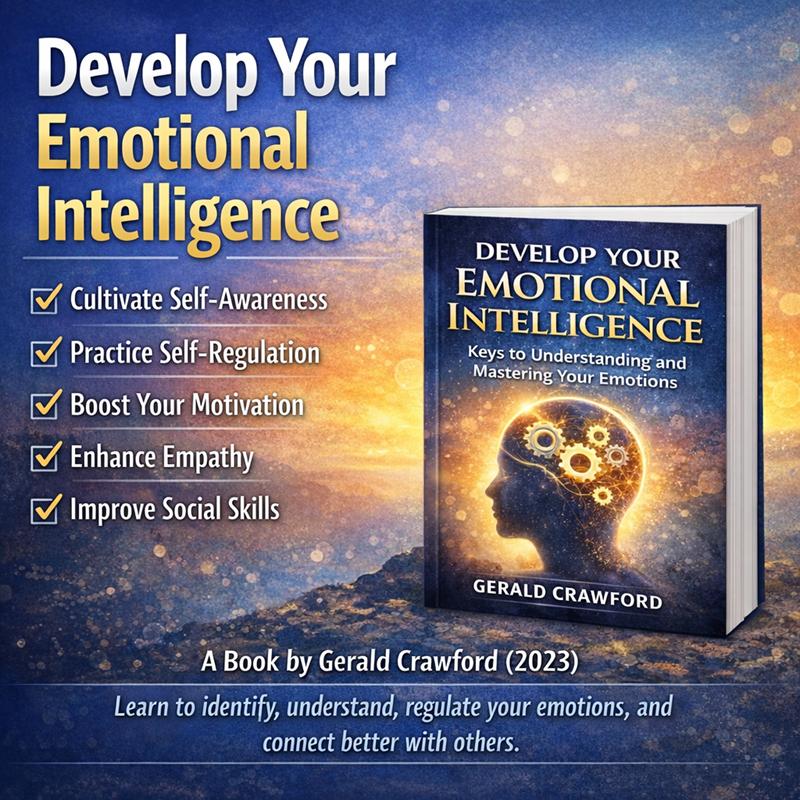
To develop Emotional Intelligence (EI), cultivate self-awareness by identifying and naming your emotions, self-regulation by managing those feelings, motivation by setting goals, empathy by understanding others' perspectives, and improving social skills through active listening and clear communication.

Category: Case Studies (Page 1 of 4)

Case Study 38: Developing Emotional Intelligence building Enlightenment (700–1000): Pure consciousness.

Case Study 38: Developing Emotional Intelligence and Realising Enlightenment

Consciousness Level: Enlightenment (700–1000)
State: Pure consciousness


Background

There is no longer a conventional biography.
The person once known as Elias (68) still functions in the world, but identity is no longer organised around a personal story. Life continues — walking, speaking, teaching, resting — yet none of it is experienced as “mine.”

Enlightenment did not arrive as a dramatic event. It arrived as the quiet disappearance of the one who was seeking.


Inner Landscape at the Level of Enlightenment

At this level, belief is replaced by knowing:
“There is only what is.”

The inner landscape is characterised by:

  • Absence of psychological identity

  • Awareness without centre

  • Love without object

  • Silence that is alive and intelligent

This is not emotional regulation — it is freedom from emotional ownership.


Relationships Without Identity

Relationships no longer function through roles or needs:

  • Those Once Loved and Cared For:
    Love remains, but without attachment or fear of loss.

  • Those Once Needed:
    Dependency dissolves into mutual presence.

  • Those Once Tolerated or Felt Indifferent To:
    Separation disappears entirely.

There is no “other” — only expressions of the same consciousness.


Behavioural Expression

Behaviour appears ordinary but carries unusual clarity:

  • Action arises spontaneously

  • Speech is simple, precise, and kind

  • No impulse to control outcomes

  • No emotional residue after interaction

Nothing is performed. Everything is happening.


The Realisation: No One Is Doing This

The pivotal realisation is:

There has never been a separate self.

What once felt like “personal effort” is recognised as movement within consciousness itself.


Emotional Intelligence at Enlightenment

Here, EI is not a skill — it is irrelevant as a concept. Yet its essence is fully embodied:


1. Emotions Without Ownership

Emotions may arise:

  • Without resistance

  • Without identification

  • Without narrative

They pass like ripples on water.


2. Compassion Without Choice

Compassion is automatic:

  • Not ethical

  • Not learned

  • Not selective

It is the natural expression of unity.


3. Intelligence Without Thought

Understanding occurs instantly:

  • No analysis

  • No judgment

  • No delay

Knowing precedes thinking.


Beyond the Consciousness Scale

Enlightenment is not a level on the scale — it is the dissolution of the scale itself.

  • No movement upward

  • No further development

  • No attainment

Only being.


Outcome

Life continues:

  • Without fear

  • Without seeking

  • Without psychological suffering

  • Without resistance

Joy, peace, love, and clarity are no longer states — they are the texture of awareness itself.


Final Learning

Enlightenment is not becoming something greater.
It is remembering what was never absent.

When emotional intelligence completes its journey, it dissolves into pure consciousness — silent, infinite, and whole.

Case Study 36: Developing Emotional Intelligence building Peace (600): Bliss, illumination.

Case Study 36: Developing Emotional Intelligence and Building Peace

Consciousness Level: Peace (600)
Emotional State: Bliss, illumination


Background

Zanele (61) speaks little, yet her presence is unmistakable. Time seems to slow around her. She has lived fully — raising children, losing loved ones, facing illness — and none of it left bitterness. Peace did not arrive through effort or discipline; it emerged when seeking ended.

Nothing needed to be different.


Emotional Landscape at the Level of Peace

At the Peace level, the core knowing is:
“All is well, exactly as it is.”

Zanele’s inner world is characterised by:

  • Profound stillness

  • Effortless joy

  • Deep compassion without attachment

  • A sense of unity beyond identity

Peace is not an emotion — it is a state of being.


Impact on Relationships

Peace transformed relationships at their root:

  • Those She Loved and Cared For:
    Love flowed without ownership or fear of loss.

  • Those She Needed:
    Roles dissolved into shared humanity.

  • Those She Tolerated or Felt Indifferent To:
    Separation faded; compassion became universal.

Relationships were no longer central — presence was.


Behavioural Patterns

Behaviour at Peace appears simple, almost ordinary:

  • Listening more than speaking

  • Acting only when action arises naturally

  • Responding without mental commentary

  • Living without urgency or resistance

Actions came from stillness, not intention.


The Turning Point: The End of Seeking

Zanele’s defining realisation was:

There is nothing to improve — only to notice.

When the search for meaning, happiness, or self-betterment ended, peace revealed itself.


Developing Emotional Intelligence

At Peace, emotional intelligence is complete integration rather than development. Still, three qualities were evident:


1. Dissolution of Emotional Ownership

Emotions arose but were no longer personal:

  • No identification with feeling states

  • No narrative attached to emotion

Emotion flowed like weather through open sky.


2. Effortless Compassion

Compassion was no longer practiced:

  • It was automatic

  • Non-selective

  • Without fatigue

Care extended equally to self, others, and life itself.


3. Awareness Without Centre

Zanele experienced awareness without a fixed “self”:

  • No internal conflict

  • No need to defend or define identity

This was illumination — seeing without distortion.


Movement Beyond the Consciousness Scale

Peace sits at the threshold of transcendence:

  • From Peace (600) → stillness and unity

  • Toward Enlightenment (700–1000) → pure consciousness

  • Beyond identity, emotion, and form

Here, growth gives way to being.


Outcome

Over time, Zanele experienced:

  • Continuous inner stillness

  • Absence of fear or resistance

  • Deep, silent joy

  • A sense of unity with all life

Life no longer happened to her — it happened as her.


Key Learning

Peace is not the absence of disturbance — it is the absence of resistance.

When emotional intelligence fully matures, peace becomes the natural ground of existence: blissful, luminous, and unshakeable.

Case Study 34: Developing Emotional Intelligence building Joy (540): Serenity, compassion.

Case Study 32: Developing Emotional Intelligence and Building Joy

Consciousness Level: Joy (540)
Emotional State: Serenity, compassion


Background

Sipho (56) is often described as calm in a way that cannot be taught. His presence settles a room. He has faced hardship, loss, and uncertainty, yet none of it seems to cling to him. Joy did not arise because his life became easy — it emerged because resistance dissolved.

Joy arrived quietly, without effort.


Emotional Landscape at the Level of Joy

At the Joy level, the core belief is:
“Life is fundamentally okay.”

Sipho’s emotional world is characterised by:

  • Inner serenity

  • Gentle compassion for all beings

  • Gratitude without dependency

  • Lightness of being

Joy is not excitement. It is peaceful aliveness.


Impact on Relationships

Joy transformed Sipho’s relationships in subtle but powerful ways:

  • Those He Loved and Cared For:
    He loved without clinging, allowing others their freedom.

  • Those He Needed:
    Cooperation flowed naturally, without negotiation or effort.

  • Those He Tolerated or Felt Indifferent To:
    Compassion replaced emotional distance, without obligation.

People felt safe, seen, and unpressured in his presence.


Behavioural Patterns

Behaviour at Joy reflects effortless alignment:

  • Kindness without calculation

  • Patience without strain

  • Forgiveness without memory

  • Presence without urgency

Sipho acted not from intention, but from attunement.


The Turning Point: Joy Without Cause

Sipho’s defining realisation was:

Joy does not come from what happens — it comes from how little I resist what happens.

When striving fell away, joy remained.


Developing Emotional Intelligence

At this level, EI is not a skill set — it is integration. Still, three qualities were evident:


1. Emotional Transparency

Emotions arose and passed without attachment:

  • No suppression

  • No amplification

  • No identification

Emotions became visitors, not residents.


2. Compassion Without Effort

Compassion flowed naturally:

  • No moral struggle

  • No obligation to fix

  • No superiority

Care became spontaneous.


3. Trust in Life

Sipho trusted the unfolding of life:

  • Reduced planning anxiety

  • Ease with uncertainty

  • Faith without belief systems

This trust created serenity.


Movement Up the Consciousness Scale

Joy gently opened the door to transcendence:

  • From Joy (540) → effortless compassion

  • To Peace (600) → stillness and unity

  • Toward Enlightenment (700+) → pure awareness

The sense of a separate self continued to soften.


Outcome

Over time, Sipho experienced:

  • Sustained inner happiness

  • Minimal emotional disturbance

  • Deep compassion without burnout

  • A quiet sense of fulfilment

Life felt complete — even in imperfection.


Key Learning

Joy is not something achieved — it is what remains when resistance ends.

When emotional intelligence reaches this level, joy becomes the natural atmosphere of being, steady, compassionate, and free.

Case Study 32: Developing Emotional Intelligence building Love (500): Unconditional, adoration.

Case Study 32: Developing Emotional Intelligence and Building Love

Consciousness Level: Love (500)
Emotional State: Unconditional, adoration


Background

Ayesha (50) has lived through complexity, loss, and deep self-reflection. After years of developing emotional clarity and understanding, she noticed a profound shift: life no longer felt adversarial. People were no longer problems to be solved but human beings to be met.

Love did not arrive as sentimentality. It arrived as presence.


Emotional Landscape at the Level of Love

At the Love level, the core belief is:
“Connection matters more than control.”

Ayesha’s emotional world is characterised by:

  • Deep empathy

  • Emotional warmth

  • Non-judgmental acceptance

  • A sense of inner abundance

Love operates beyond logic, yet includes it.


Impact on Relationships

Love transformed how Ayesha related to others:

  • Those She Loved and Cared For:
    Love was offered freely, without conditions or expectations.

  • Those She Needed:
    Interdependence replaced transaction.

  • Those She Tolerated or Felt Indifferent To:
    Compassion softened emotional distance.

Relationships became sources of nourishment rather than negotiation.


Behavioural Patterns

Behaviour at Love reflects embodied compassion:

  • Listening with full presence

  • Offering kindness without agenda

  • Forgiving without superiority

  • Responding from the heart rather than the ego

Actions flowed naturally, not strategically.


The Turning Point: Love as a Way of Being

Ayesha’s defining insight was:

Love is not something I do — it is who I am when fear dissolves.

This dissolved the inner barriers that once separated her from others.


Developing Emotional Intelligence

At Love, EI is not learned — it is embodied. Still, three capacities deepened:


1. Compassionate Presence

She learned to be fully present without fixing:

  • Allowing others to feel seen and safe

  • Holding space without judgment

Presence became healing.


2. Self-Love Without Narcissism

Her compassion included herself:

  • Gentle self-talk

  • Forgiveness of past selves

  • Acceptance of imperfection

Wholeness replaced self-criticism.


3. Boundaries Rooted in Care

Love did not mean self-sacrifice:

  • Clear boundaries protected energy

  • “No” was expressed with kindness

Love remained sustainable.


Movement Up the Consciousness Scale

Love opened access to higher states:

  • From Love (500) → unity and compassion

  • To Joy (540) → serenity and flow

  • Toward Peace (600) → transcendence of ego

Effort dissolved into grace.


Outcome

Over time, Ayesha experienced:

  • Deep emotional fulfilment

  • Harmonious relationships

  • Reduced fear and resistance

  • A sense of meaning beyond achievement

Life felt interconnected and alive.


Key Learning

Love is not attachment — it is freedom with care.

When emotional intelligence reaches maturity, love becomes an operating system, guiding perception, behaviour, and relationship without force or fear.

Case Study 30: Developing Emotional Intelligence building Acceptance (350): Forgiveness, responsibility.

Case Study 30: Developing Emotional Intelligence and Building Acceptance

Consciousness Level: Acceptance (350)
Emotional State: Forgiveness, responsibility


Background

Naledi (47) has lived enough life to know that blame is exhausting. Earlier in her journey, she oscillated between endurance and effort — doing her best while quietly carrying resentment. Acceptance emerged when she stopped fighting what had already happened.

She did not excuse harm or deny pain. She simply recognised that resisting reality only prolonged suffering.


Emotional Landscape at the Level of Acceptance

At Acceptance, the core belief is:
“I am responsible for my response, not for controlling life.”

Naledi’s emotional world is characterised by:

  • Emotional honesty

  • Accountability without self-blame

  • Forgiveness without forgetting

  • Inner stability during difficulty

Acceptance is grounded, sober, and deeply empowering.


Impact on Relationships

Acceptance profoundly reshaped Naledi’s relationships:

  • Those She Loved and Cared For:
    She released expectations and allowed people to be human.

  • Those She Needed:
    Clear boundaries replaced unspoken resentment.

  • Those She Tolerated or Felt Indifferent To:
    Emotional neutrality gave way to respectful understanding.

Relationships became more authentic and less transactional.


Behavioural Patterns

Behaviour at Acceptance reflects emotional maturity:

  • Taking responsibility for choices and outcomes

  • Making repairs instead of defending positions

  • Setting boundaries without hostility

  • Letting go of the need to be right

Naledi chose peace over power struggles.


The Turning Point: Forgiveness as Self-Liberation

Her pivotal insight was:

Forgiveness is not for others — it is for my freedom.

By releasing blame, she reclaimed energy previously tied to resentment.


Developing Emotional Intelligence

Naledi embodied EI through three foundational practices:


1. Radical Responsibility

She accepted ownership of her reactions:

  • “This is happening — how will I respond?”

  • No victimhood, no self-attack

Responsibility became empowering.


2. Forgiveness Without Collapse

She learned to forgive without re-entering harmful dynamics:

  • Forgiveness as release

  • Boundaries as protection

This balanced compassion with self-respect.


3. Emotional Integration

Rather than suppress emotions, she integrated them:

  • Allowing grief, anger, and fear to be felt

  • Processing instead of projecting

Wholeness replaced fragmentation.


Movement Up the Consciousness Scale

Acceptance created access to higher cognitive clarity:

  • From Acceptance (350) → emotional responsibility

  • To Reason (400) → insight and understanding

  • Toward Love (500) → compassion beyond conditions

The mind and heart aligned.


Outcome

Over time, Naledi experienced:

  • Emotional freedom

  • Reduced resentment

  • Deeper self-respect

  • Greater inner peace

Life became workable — even meaningful — in all its complexity.


Key Learning

Acceptance is not surrender — it is ownership without resistance.

When emotional intelligence is fully embodied, acceptance becomes the doorway to wisdom, compassion, and inner authority.

« Older posts

Step-up and get your seat on my VIP Emotional Intelligence Mentorship Program for 2026

X
Back a Buddy Show your Support