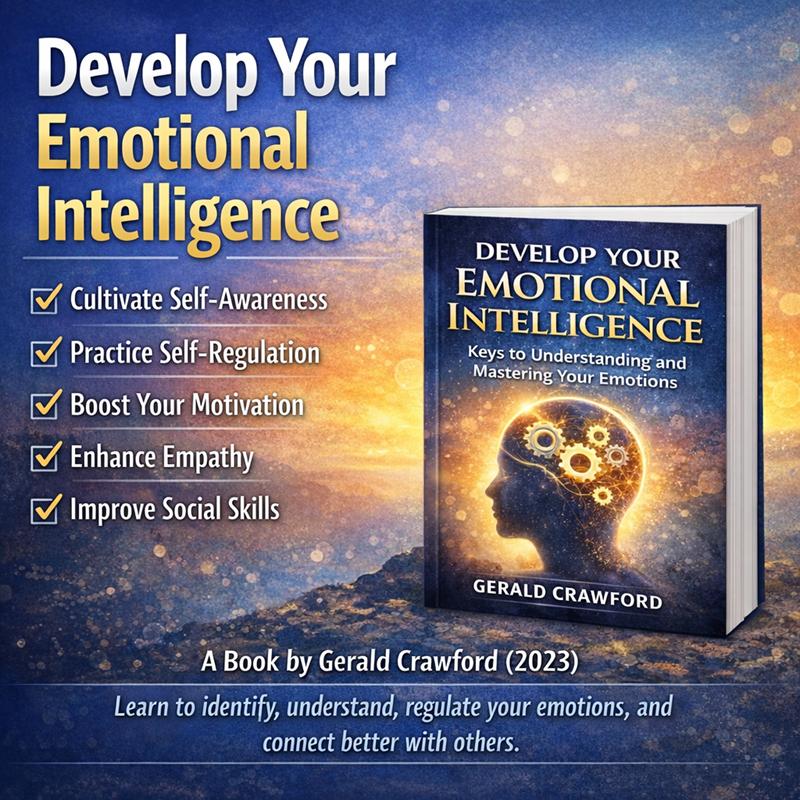
To develop Emotional Intelligence (EI), cultivate self-awareness by identifying and naming your emotions, self-regulation by managing those feelings, motivation by setting goals, empathy by understanding others' perspectives, and improving social skills through active listening and clear communication.

Tag: Peace

Case Study 36: Developing Emotional Intelligence building Peace (600): Bliss, illumination.

Case Study 36: Developing Emotional Intelligence and Building Peace

Consciousness Level: Peace (600)
Emotional State: Bliss, illumination


Background

Zanele (61) speaks little, yet her presence is unmistakable. Time seems to slow around her. She has lived fully — raising children, losing loved ones, facing illness — and none of it left bitterness. Peace did not arrive through effort or discipline; it emerged when seeking ended.

Nothing needed to be different.


Emotional Landscape at the Level of Peace

At the Peace level, the core knowing is:
“All is well, exactly as it is.”

Zanele’s inner world is characterised by:

  • Profound stillness

  • Effortless joy

  • Deep compassion without attachment

  • A sense of unity beyond identity

Peace is not an emotion — it is a state of being.


Impact on Relationships

Peace transformed relationships at their root:

  • Those She Loved and Cared For:
    Love flowed without ownership or fear of loss.

  • Those She Needed:
    Roles dissolved into shared humanity.

  • Those She Tolerated or Felt Indifferent To:
    Separation faded; compassion became universal.

Relationships were no longer central — presence was.


Behavioural Patterns

Behaviour at Peace appears simple, almost ordinary:

  • Listening more than speaking

  • Acting only when action arises naturally

  • Responding without mental commentary

  • Living without urgency or resistance

Actions came from stillness, not intention.


The Turning Point: The End of Seeking

Zanele’s defining realisation was:

There is nothing to improve — only to notice.

When the search for meaning, happiness, or self-betterment ended, peace revealed itself.


Developing Emotional Intelligence

At Peace, emotional intelligence is complete integration rather than development. Still, three qualities were evident:


1. Dissolution of Emotional Ownership

Emotions arose but were no longer personal:

  • No identification with feeling states

  • No narrative attached to emotion

Emotion flowed like weather through open sky.


2. Effortless Compassion

Compassion was no longer practiced:

  • It was automatic

  • Non-selective

  • Without fatigue

Care extended equally to self, others, and life itself.


3. Awareness Without Centre

Zanele experienced awareness without a fixed “self”:

  • No internal conflict

  • No need to defend or define identity

This was illumination — seeing without distortion.


Movement Beyond the Consciousness Scale

Peace sits at the threshold of transcendence:

  • From Peace (600) → stillness and unity

  • Toward Enlightenment (700–1000) → pure consciousness

  • Beyond identity, emotion, and form

Here, growth gives way to being.


Outcome

Over time, Zanele experienced:

  • Continuous inner stillness

  • Absence of fear or resistance

  • Deep, silent joy

  • A sense of unity with all life

Life no longer happened to her — it happened as her.


Key Learning

Peace is not the absence of disturbance — it is the absence of resistance.

When emotional intelligence fully matures, peace becomes the natural ground of existence: blissful, luminous, and unshakeable.


Activate Serenity, Peace: Contentment and calm with Hypnotherapy

Below is a word-for-word hypnotherapy script to activate serenity, peace, and deep inner calm.

It is written in a slow, nervous-system-safe style, ideal for self-hypnosis, guided sessions, sleep, or recording.


Hypnotherapy Script: Activate Serenity, Peace & Contentment

Preparation (spoken gently and slowly):
Settle into a comfortable position…
Sitting or lying down…
And allow your eyes to close naturally…
Or soften your gaze if that feels better.

Take a slow breath in through your nose…
And exhale softly through your mouth…
Letting go…

Again…
Breathing in ease…
Breathing out tension…

Good.


Induction: Calming the Nervous System

Begin to notice the rhythm of your breathing…
Effortless… natural…

Notice how your body is being supported…
The chair… the bed… the ground beneath you…

You don’t need to hold yourself up…
You are being held…

With each breath out…
Your shoulders drop…
Your jaw softens…
Your tongue rests…

Your nervous system recognises safety…
And begins to settle…


Deepening: Entering Stillness

In a moment, I’ll count from five down to one
And with each number…
You can drift deeper into calm awareness…

Five… slowing…
Four… releasing…
Three… quieting the mind…
Two… resting deeply…
One… peaceful… present… still…

Good.


Therapeutic Suggestions: Activating Serenity

Now…
Bring your awareness to the centre of your chest…
The space where calm naturally lives…

Serenity is not something you create…
It is something you allow

You don’t need to change anything…
Fix anything…
Or become anything…

In this moment…
You are enough…

Let that idea gently land…

Notice how peace feels in your body…
Perhaps a sense of openness…
Warmth…
Or quiet neutrality…

Your subconscious mind understands this feeling…
And begins to recognise it as familiar…
Safe…
Natural…


Contentment in the Present Moment

Contentment does not require more…
It comes from recognising what is already here…

Right now…
You are breathing…
You are aware…
You are present…

And that is enough for this moment…

If thoughts arise…
Let them drift past…
Like clouds moving across a wide sky…

You don’t need to follow them…
The sky remains calm…

And so do you…


Installing Inner Peace

From now on…
Each time you pause…
Each time you take a slow breath…
Your subconscious mind can return you to this state…

Calm becomes your baseline…
Peace becomes familiar…
Serenity becomes accessible…

Even in motion…
Even in uncertainty…
There is a quiet stillness within you…

And your nervous system remembers this…


Future Pacing: Living from Peace

Imagine yourself moving through your day…
Responding instead of reacting…
Speaking calmly…
Acting with ease…

You don’t need to rush life…
Life unfolds in its own time…

And you are allowed to move gently through it…


Emergence

In a moment…
I’ll count from one up to five
And you’ll return feeling centred…
Grounded…
And at peace…

One… awareness returning…
Two… gentle energy coming back…
Three… body feeling light and calm…
Four… mind clear and steady…
Five… eyes open when ready… carrying serenity with you…


Closing Affirmation (optional):

“I allow peace to fill me.
In this moment, I am calm and content.”

Your Feelings don’t just follow your Thoughts – Very Often, they Lead them.

Understanding this changes how you relate to your inner world and gives you back power.

1. Feelings are faster than thoughts

Your emotional system operates before logic.

The emotional brain (amygdala / limbic system) reacts in milliseconds

The thinking brain (prefrontal cortex) reacts after

By the time you’re “thinking,” your nervous system has already decided if you are safe, threatened, loved, or rejected

Thought often becomes a justification for how you already feel.

2. Feelings create the lens your thoughts look through

Your current emotional state acts like a filter:

  • Fear → thoughts search for danger
  • Shame → thoughts search for what’s wrong with you
  • Sadness → thoughts replay loss
  • Love → thoughts see possibility and meaning
  • Peace → thoughts slow down and become wise

The mind doesn’t ask, “What is true?”

It asks, “What matches how I feel?”

3. The body sets the story

Feelings originate in the body, not the mind.

  • Tight chest → thoughts of threat or loss
  • Heavy body → thoughts of hopelessness
  • Open breath → thoughts of safety
  • Calm nervous system → clear thinking

Thoughts are translations of bodily sensation into language.

4. Unhealed emotions hijack thinking

When emotions are unprocessed, they take control of thought:

  • Old abandonment → “This won’t last”
  • Old rejection → “I’m not enough”
  • Old betrayal → “I can’t trust anyone”

These are not objective thoughts.

They are emotional memories speaking.

Your mind becomes a storyteller for unresolved pain.

5. Feelings seek confirmation, not truth

An emotion wants to stay alive.

So it pushes the mind to:

  • Select confirming evidence
  • Ignore contradictory evidence
  • Repeat familiar narratives

This is why the same thought loops return – they are emotionally fueled, not logically chosen.

6. Why trying to “think positive” fails

You cannot override emotion with thought alone.

A fearful body will generate fearful thoughts

A shamed body will generate self-attacking thoughts

Healing happens from the bottom up: body → emotion → thought, not the other way around.

7. The turning point: awareness without judgment

The moment you see this, control shifts.

Instead of:

“Why am I thinking this?”

You ask:

“What am I feeling right now?”

And then:

“What does this feeling need to be felt, not resisted?”

When emotion is allowed, thought softens naturally.

8. Spiritual integration (faith-based insight)

In Scripture, this is called guarding the heart:

“For out of it flow the issues of life.” (Proverbs 4:23)

The heart (emotional center) directs the mind.

  • Peace in the heart → clarity in the mind
  • Fear in the heart → chaos in the mind

9. Simple daily practice (2 minutes)

  1. Pause
  2. Place a hand on your chest
  3. Name the feeling (not the thought)
  4. Breathe slowly
  5. Say: “I allow this feeling to be here.”

Watch how the thought loses its grip.

In one sentence:

Your thoughts are not the problem – they are the echo of your emotional state.

Step-up and get your seat on my VIP Emotional Intelligence Mentorship Program for 2026

X
Back a Buddy Show your Support