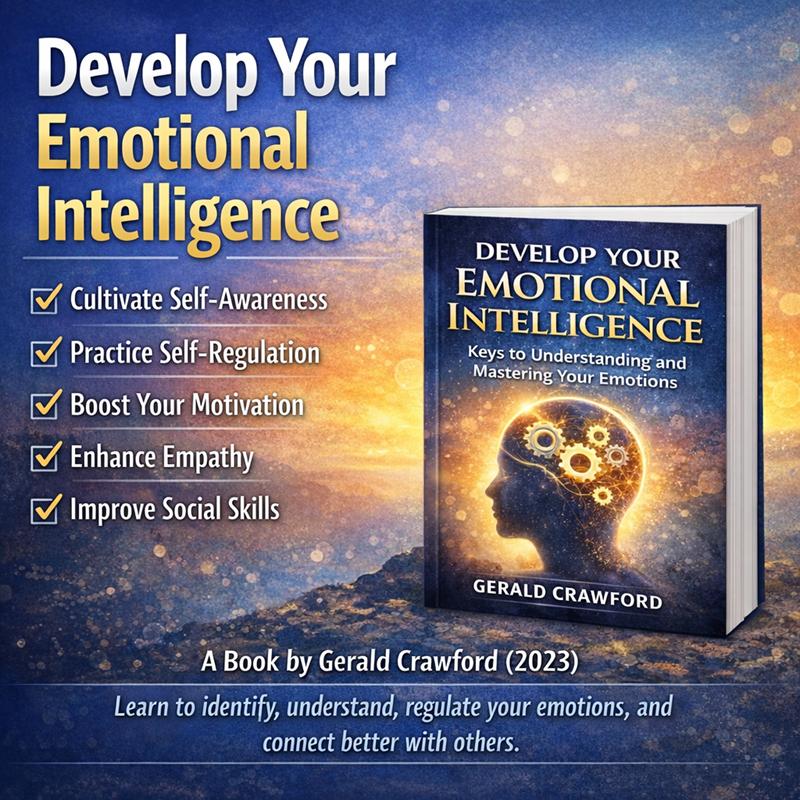
To develop Emotional Intelligence (EI), cultivate self-awareness by identifying and naming your emotions, self-regulation by managing those feelings, motivation by setting goals, empathy by understanding others' perspectives, and improving social skills through active listening and clear communication.

Tag: empathy (Page 1 of 2)

Empathy – Understanding others’ perspectives and emotional states

Empathy is what turns emotional intelligence outward.

It’s the ability to step into someone else’s inner world – to understand what they feel and why – without losing yourself.


What Is Empathy?

Empathy is your ability to:

  • Perceive what someone else is feeling
  • Understand their perspective
  • Feel with them (not just for them)
  • Respond appropriately

It’s not agreement. It’s understanding.


The 3 Layers of Empathy

1. Cognitive Empathy (Understanding)

  • “I see how they’re thinking”
  • You understand their perspective logically

Useful in business, negotiation, leadership


2. Emotional Empathy (Feeling)

  • “I feel what they’re feeling”
  • You emotionally resonate with them

Builds deep human connection


3. Compassionate Empathy (Action)

  • “I understand and want to help”
  • You respond in a supportive, constructive way

This is empathy in motion


1. Listening Beyond Words

Most people listen to reply.
Empathy requires listening to understand.

Pay attention to:

  • Tone of voice
  • Body language
  • What’s not being said
  • Emotional shifts

Often the real message is beneath the words.


2. Perspective-Taking

Ask yourself:

  • What might they be going through right now?
  • What would this situation feel like from their side?
  • What pressures or fears might they have?

Example:

Instead of:

  • “They’re being difficult”

Shift to:

  • “They might feel unheard or under pressure”

This reduces judgment and opens understanding.


3. Reflecting Back

One of the most powerful empathy tools:

  • “It sounds like you’re feeling frustrated because…”
  • “I can see why that would upset you”

People don’t calm down when you fix things.
They calm down when they feel understood.


4. Separating Understanding from Agreement

You can say:

  • “I understand why you feel that way”

Without saying:

  • “You’re right”

Empathy does not mean losing your boundaries.


Common Empathy Killers

  • Interrupting
  • Giving advice too quickly
  • Minimizing (“It’s not that bad”)
  • Making it about you
  • Judging (“You shouldn’t feel like that”)

These shut people down instantly.


Practical Exercise (Daily Use)

In your next conversation:

  1. Listen without interrupting
  2. Identify the emotion
  3. Reflect it back
  4. Ask one deeper question

Example:

  • “You sound stressed—what’s been weighing on you?”

Why Empathy Matters

Without empathy:

  • Miscommunication increases
  • Relationships become transactional
  • Conflict escalates

With empathy:

  • Trust deepens
  • Influence increases
  • Conflict resolves faster

The Balance

Too little empathy → cold, disconnected
Too much empathy (without boundaries) → drained, overwhelmed

The goal is understanding + strength


Deeper Truth

People don’t need you to solve everything.
They need to feel seen, heard, and understood.

That’s what empathy delivers.

Real-world examples of how Emotional Intelligence has improved lives

To help illustrate the practical applications and benefits of Emotional Intelligence (EI), let’s explore some real-world examples and case studies of how EI has improved people’s lives.

These examples are categorized into different aspects of EI, including self-awarenessself-regulationmotivationempathy, and social skills.

Real-World Examples of Emotional Intelligence in Action

The following examples demonstrate how EI can be applied in various contexts to achieve positive outcomes:

Self-Awareness

Steve Jobs: Co-founder of Apple, known for his intense passion and perfectionism. However, his lack of EI led to difficulties in managing his emotions and relationships. After a temporary departure from Apple, Jobs developed his EI through self-reflection and meditation, which helped him become a more effective and empathetic leader.

Self-Regulation

Richard Branson: Founder of Virgin Group, Branson credits his EI for his ability to manage stress and stay calm under pressure. He practices mindfulness and meditation to regulate his emotions and maintain a positive outlook.

Motivation

Arianna Huffington: Founder of The Huffington Post, Huffington emphasizes the importance of EI in her success. She prioritizes self-care, including sleep, exercise, and meditation, to maintain her motivation and focus.

Empathy

Satya Nadella: CEO of Microsoft, Nadella transformed the company’s culture by prioritizing empathy and collaboration. He encourages employees to share their perspectives and listens actively to their concerns, fostering a more positive and inclusive work environment.

Social Skills

Oprah Winfrey: Media executive and former talk show host, Winfrey credits her EI for her ability to connect with people from diverse backgrounds. She practices active listening and empathy to build strong relationships with her guests, audience, and colleagues.

Case Studies: Emotional Intelligence in Action

The following case studies provide more in-depth examples of how EI can be applied in different contexts:

Case Study 1: EI in Leadership – Satya Nadella (Microsoft)

Background: Nadella became CEO of Microsoft in 2014, tasked with transforming the company’s culture.

EI Application: Nadella prioritized empathy and active listening, encouraging employees to share their perspectives and concerns.

Outcome: Microsoft’s culture shifted towards a more collaborative and innovative environment, leading to increased employee engagement and improved business performance.

Case Study 2: EI in Conflict Resolution – A Manager’s Story

Background: A manager at a marketing firm struggled with conflict resolution, often escalating issues with team members.

EI Application: The manager practiced empathy, active listening, and self-regulation to better understand and manage their emotions.

Outcome: The manager became more effective in resolving conflicts, leading to improved team dynamics and increased productivity.

Case Study 3: EI in Personal Relationships – A Mother’s Story

Background: A mother struggled to connect with her teenage daughter, leading to frequent arguments and stress.

EI Application: The mother practiced empathy, active listening, and self-awareness to better understand her daughter’s perspective and emotions.

Outcome: The mother and daughter developed a stronger, more empathetic relationship, reducing conflict and improving communication.

Case Study 4: EI in Customer Service – A Company’s Story

Background: A company struggled with customer complaints and negative reviews.

EI Application: The company trained employees in EI, focusing on empathy, active listening, and self-regulation.

Outcome: Customer satisfaction improved significantly, with a reduction in complaints and an increase in positive reviews.

By examining these real-world examples and case studies, we can see how EI can be applied in various contexts to achieve positive outcomes. Developing EI can lead to improved relationships, increased productivity, and enhanced overall well-being.

Emotional Intelligence and Relationships – Strategies for applying emotional intelligence in relationships: communication, empathy, and conflict resolution

Applying emotional intelligence (EI) in relationships can help individuals build stronger, more meaningful connections with others. Here are some strategies for applying EI in relationships:

Communication:

1. Active listening: Listen carefully to the other person, and respond in a way that shows you understand and care about their feelings.

2. Clear expression: Express yourself clearly and assertively, without being aggressive or passive.

3. Nonverbal communication: Be aware of your nonverbal cues, such as body language and tone of voice, and use them to communicate effectively.

Empathy:

1. Try to understand the other person’s perspective: Put yourself in the other person’s shoes and try to see things from their point of view.

2. Acknowledge their feelings: Acknowledge the other person’s feelings and show that you understand they’re upset.

3. Show compassion: Show compassion and understanding towards the other person.

Conflict Resolution:

1. Stay calm: Stay calm and composed, even in the midst of a conflict.

2. Listen actively: Listen actively to the other person’s concerns and respond in a way that shows you’re willing to work towards a resolution.

3. Seek common ground: Seek common ground and try to find a solution that works for both parties.

Benefits of Applying EI in Relationships:

1. Improved communication: EI can help individuals communicate more effectively, avoiding misunderstandings and conflicts.

2. Increased empathy: EI can help individuals understand and share the feelings of others, leading to increased empathy and compassion.

3. Stronger relationships: EI can help individuals build stronger, more meaningful relationships.

Challenges to Applying EI in Relationships:

1. Emotional labor: Individuals may struggle to manage their emotions, leading to burnout and decreased relationship satisfaction.

2. Conflicting priorities: Individuals may face conflicting priorities, making it challenging to manage their emotions and relationships.

3. Limited resources: Individuals may not have access to resources, such as therapy or support, to develop their EI.

Strategies for Overcoming Challenges:

1. Emotional intelligence training: Provide individuals with EI training, helping them to develop their EI and improve their relationships.

2. Couples therapy: Provide couples with therapy, helping them to develop their EI and improve their communication and conflict resolution skills.

3. Self-reflection: Encourage individuals to engage in self-reflection, helping them to develop their self-awareness and emotional regulation.

By applying EI in relationships, individuals can build stronger, more meaningful connections with others and improve their overall well-being.

Emotional Intelligence and Leadership – Strategies for developing emotional intelligence as a leader: self-awareness, empathy, and communication

Developing emotional intelligence (EI) as a leader is crucial for effective leadership, as it enables leaders to understand and manage their own emotions, as well as the emotions of their team members. Here are some strategies for developing EI as a leader:

Self-Awareness:

1. Reflect on your emotions: Take time to reflect on your emotions, values, and motivations.

2. Identify your strengths and weaknesses: Identify your strengths and weaknesses, and be honest with yourself about areas for improvement.

3. Practice mindfulness: Practice mindfulness to increase your self-awareness and emotional regulation.

Empathy:

1. Put yourself in others’ shoes: Try to see things from others’ perspectives and understand their feelings.

2. Listen actively: Listen actively to others, and show that you care about their concerns.

3. Be open-minded: Be open-minded and non-judgmental, and try to understand others’ viewpoints.

Communication:

1. Communicate clearly and effectively: Communicate clearly and effectively, avoiding misunderstandings and conflicts.

2. Use “I” statements: Use “I” statements to express your thoughts and feelings, rather than “you” statements that can come across as accusatory.

3. Be transparent: Be transparent and honest in your communication, and be willing to share information and feedback.

Benefits of EI in Leadership:

1. Improved leadership effectiveness: EI can help leaders to lead more effectively, making informed decisions and building stronger relationships.

2. Increased employee engagement: EI can help leaders to motivate and engage their team members, leading to increased job satisfaction and reduced turnover.

3. Better communication: EI can help leaders to communicate more effectively, avoiding misunderstandings and conflicts.

Challenges to EI in Leadership:

1. Emotional labor: Leaders may struggle to manage their emotions, leading to burnout and decreased job satisfaction.

2. Conflicting priorities: Leaders may face conflicting priorities, making it challenging to manage their emotions and relationships.

3. Limited resources: Leaders may not have access to resources, such as training or support, to develop their EI.

Strategies for Overcoming Challenges:

1. Emotional intelligence training: Provide leaders with EI training, helping them to develop their EI and lead more effectively.

2. Coaching and feedback: Provide leaders with coaching and feedback on their EI, helping them to improve their skills.

3. Encourage self-care: Encourage leaders to prioritize self-care, reducing stress and improving emotional well-being.

By developing EI, leaders can improve their leadership effectiveness, build stronger relationships with their team members, and achieve greater success.

Conflict Resolution – Strategies for resolving conflicts: active listening, empathy, and problem-solving

Resolving conflicts requires effective communication, active listening, empathy, and problem-solving skills. Here are some strategies for resolving conflicts:

Active Listening:

1. Give the speaker your undivided attention: Make eye contact, put away distractions, and focus on the speaker.

2. Use verbal and nonverbal cues: Nod your head, use phrases like “uh-huh,” and ask open-ended questions to show you’re engaged.

3. Paraphrase and summarize: Repeat back what you’ve heard in your own words to ensure understanding and show you’re paying attention.

Empathy:

1. Try to understand the other person’s perspective: Put yourself in the other person’s shoes and try to see things from their point of view.

2. Acknowledge their feelings: Acknowledge the other person’s feelings and show that you understand they’re upset.

3. Show compassion: Show compassion and understanding towards the other person.

Problem-Solving:

1. Identify the problem: Clearly identify the problem and define it in a way that both parties can understand.

2. Brainstorm solutions: Brainstorm potential solutions and evaluate their pros and cons.

3. Choose a solution: Choose a solution that works for both parties and implement it.

Benefits of Conflict Resolution:

1. Improved relationships: Conflict resolution can help improve relationships and build trust.

2. Increased understanding: Conflict resolution can help increase understanding and empathy between parties.

3. Reduced stress: Conflict resolution can help reduce stress and anxiety.

Challenges to Conflict Resolution:

1. Emotional barriers: Emotions like anger, fear, or sadness can create barriers to conflict resolution.

2. Communication barriers: Communication barriers, such as language or cultural differences, can create challenges for conflict resolution.

3. Power imbalances: Power imbalances, such as differences in authority or status, can create challenges for conflict resolution.

By using these strategies, individuals can effectively resolve conflicts and improve their relationships.

« Older posts

Step-up and get your seat on my VIP Emotional Intelligence Mentorship Program for 2026

X
Back a Buddy Show your Support