
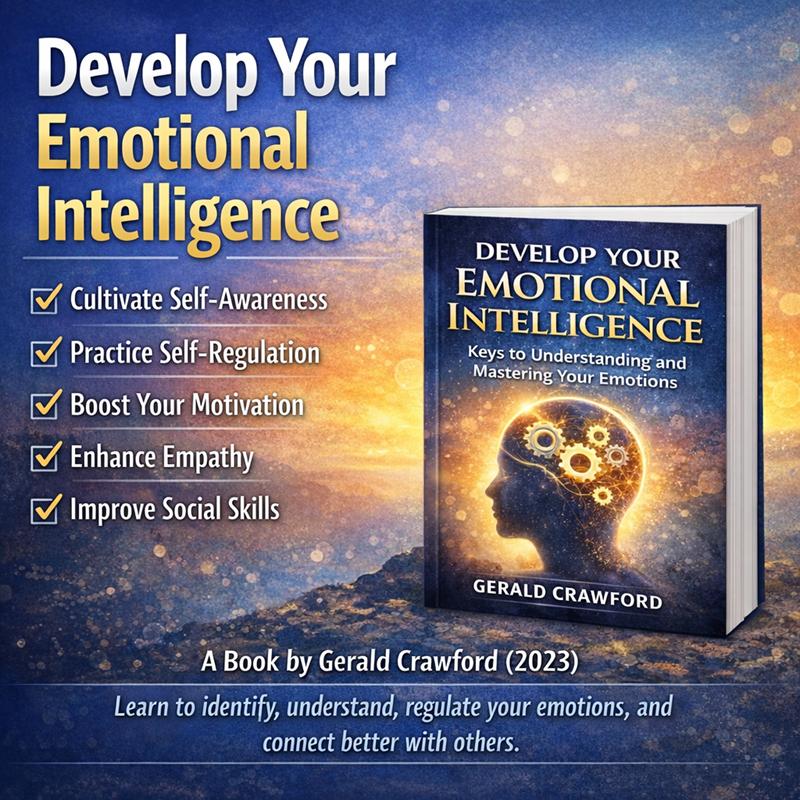
To develop Emotional Intelligence (EI), cultivate self-awareness by identifying and naming your emotions, self-regulation by managing those feelings, motivation by setting goals, empathy by understanding others' perspectives, and improving social skills through active listening and clear communication.

Category: 111 Development your Emotional Intelligence (Page 2 of 7)

EI – Why Does It Matter?

Emotional Intelligence (EI) – Why Does It Matter?

Emotional Intelligence (EI) is the ability to recognize, understand, manage, and use emotions wisely—both your own emotions and the emotions of others.

Developing Emotional Intelligence matters because emotions influence how you think, act, decide, and relate to others—often more powerfully than logic or knowledge ever could.

EI shapes the quality of your life, your relationships, and your inner peace.


1. Emotions Influence Your Decisions

Most decisions are influenced by emotions first and logic second.

Without Emotional Intelligence:

  • Decisions are impulsive

  • Reactions replace thoughtful responses

  • Regret often follows

With Emotional Intelligence:

  • Decisions become thoughtful

  • You pause before acting

  • You respond instead of react

Insight:
People with high EI learn to slow down emotional reactions and allow wisdom to guide action.


2. Emotional Intelligence Improves Relationships

Relationships are built on emotional understanding.

Without EI:

  • Misunderstandings increase

  • Communication breaks down

  • Conflicts escalate

With EI:

  • People feel heard

  • Communication improves

  • Trust grows

Key Understanding:

People rarely remember what you said —
they remember how you made them feel.


3. Emotional Intelligence Builds Self-Control

Emotional Intelligence helps you manage:

  • Anger

  • Fear

  • Anxiety

  • Hurt

  • Stress

Without EI:

  • Emotions control behavior

With EI:

  • You guide your emotions

Self-control is a major sign of Emotional Intelligence.


4. Emotional Intelligence Reduces Stress

Much stress comes from unmanaged emotions.

High EI helps you:

  • Stay calm

  • Think clearly

  • Recover faster

  • Adapt to change

People with Emotional Intelligence are usually more emotionally stable and resilient.


5. Emotional Intelligence Improves Mental Health

Emotional Intelligence helps prevent:

  • Chronic stress

  • Anxiety patterns

  • Emotional overwhelm

  • Relationship trauma

EI helps people:

  • Understand feelings instead of fearing them

  • Process emotions

  • Let go of resentment

  • Heal emotional pain


6. Emotional Intelligence Creates Inner Peace

Inner peace is not the absence of problems —
it is the ability to remain steady through them.

EI allows you to:

  • Accept emotions without being controlled by them

  • Respond wisely

  • Stay balanced


7. Emotional Intelligence Strengthens Self-Awareness

Self-awareness is the foundation of EI.

When you understand yourself:

  • You understand your reactions

  • You understand your fears

  • You understand your needs

  • You understand your patterns

Self-awareness leads to growth.


8. Emotional Intelligence Improves Leadership

Strong leaders use Emotional Intelligence.

They:

  • Listen well

  • Show empathy

  • Stay calm under pressure

  • Inspire others

Leadership without EI often becomes control instead of influence.


9. Emotional Intelligence Helps You Heal

Many emotional wounds remain because emotions are not understood.

EI helps you:

  • Understand pain

  • Release resentment

  • Forgive

  • Grow

Healing requires emotional understanding.


10. Deep Insight About Emotional Intelligence

Knowledge may change what you know.
Emotional Intelligence changes how you live.

A person can be:

  • Educated but unhappy

  • Intelligent but lonely

  • Successful but stressed

But Emotional Intelligence helps create:

  • Healthy relationships

  • Emotional stability

  • Personal peace


11. The Core Truth About EI

Emotional Intelligence is really about:

Learning to live wisely with your emotions.

It means:

  • Feeling anger without becoming destructive

  • Feeling hurt without becoming bitter

  • Feeling fear without becoming trapped

  • Feeling love without becoming dependent


12. Simple Definition

Emotional Intelligence is the ability to:

  1. Know what you feel

  2. Understand why you feel it

  3. Manage your emotions wisely

  4. Understand others’ feelings

  5. Build healthy relationships


13. One Sentence Summary

Emotional Intelligence matters because your emotions shape your life — and learning to understand them gives you the power to live with wisdom, balance, and peace.

Case Study 32: Developing Emotional Intelligence building Love (500): Unconditional, adoration.

Case Study 32: Developing Emotional Intelligence and Building Love

Consciousness Level: Love (500)
Emotional State: Unconditional, adoration


Background

Ayesha (50) has lived through complexity, loss, and deep self-reflection. After years of developing emotional clarity and understanding, she noticed a profound shift: life no longer felt adversarial. People were no longer problems to be solved but human beings to be met.

Love did not arrive as sentimentality. It arrived as presence.


Emotional Landscape at the Level of Love

At the Love level, the core belief is:
“Connection matters more than control.”

Ayesha’s emotional world is characterised by:

  • Deep empathy

  • Emotional warmth

  • Non-judgmental acceptance

  • A sense of inner abundance

Love operates beyond logic, yet includes it.


Impact on Relationships

Love transformed how Ayesha related to others:

  • Those She Loved and Cared For:
    Love was offered freely, without conditions or expectations.

  • Those She Needed:
    Interdependence replaced transaction.

  • Those She Tolerated or Felt Indifferent To:
    Compassion softened emotional distance.

Relationships became sources of nourishment rather than negotiation.


Behavioural Patterns

Behaviour at Love reflects embodied compassion:

  • Listening with full presence

  • Offering kindness without agenda

  • Forgiving without superiority

  • Responding from the heart rather than the ego

Actions flowed naturally, not strategically.


The Turning Point: Love as a Way of Being

Ayesha’s defining insight was:

Love is not something I do — it is who I am when fear dissolves.

This dissolved the inner barriers that once separated her from others.


Developing Emotional Intelligence

At Love, EI is not learned — it is embodied. Still, three capacities deepened:


1. Compassionate Presence

She learned to be fully present without fixing:

  • Allowing others to feel seen and safe

  • Holding space without judgment

Presence became healing.


2. Self-Love Without Narcissism

Her compassion included herself:

  • Gentle self-talk

  • Forgiveness of past selves

  • Acceptance of imperfection

Wholeness replaced self-criticism.


3. Boundaries Rooted in Care

Love did not mean self-sacrifice:

  • Clear boundaries protected energy

  • “No” was expressed with kindness

Love remained sustainable.


Movement Up the Consciousness Scale

Love opened access to higher states:

  • From Love (500) → unity and compassion

  • To Joy (540) → serenity and flow

  • Toward Peace (600) → transcendence of ego

Effort dissolved into grace.


Outcome

Over time, Ayesha experienced:

  • Deep emotional fulfilment

  • Harmonious relationships

  • Reduced fear and resistance

  • A sense of meaning beyond achievement

Life felt interconnected and alive.


Key Learning

Love is not attachment — it is freedom with care.

When emotional intelligence reaches maturity, love becomes an operating system, guiding perception, behaviour, and relationship without force or fear.

Case Study 30: Developing Emotional Intelligence building Acceptance (350): Forgiveness, responsibility.

Case Study 30: Developing Emotional Intelligence and Building Acceptance

Consciousness Level: Acceptance (350)
Emotional State: Forgiveness, responsibility


Background

Naledi (47) has lived enough life to know that blame is exhausting. Earlier in her journey, she oscillated between endurance and effort — doing her best while quietly carrying resentment. Acceptance emerged when she stopped fighting what had already happened.

She did not excuse harm or deny pain. She simply recognised that resisting reality only prolonged suffering.


Emotional Landscape at the Level of Acceptance

At Acceptance, the core belief is:
“I am responsible for my response, not for controlling life.”

Naledi’s emotional world is characterised by:

  • Emotional honesty

  • Accountability without self-blame

  • Forgiveness without forgetting

  • Inner stability during difficulty

Acceptance is grounded, sober, and deeply empowering.


Impact on Relationships

Acceptance profoundly reshaped Naledi’s relationships:

  • Those She Loved and Cared For:
    She released expectations and allowed people to be human.

  • Those She Needed:
    Clear boundaries replaced unspoken resentment.

  • Those She Tolerated or Felt Indifferent To:
    Emotional neutrality gave way to respectful understanding.

Relationships became more authentic and less transactional.


Behavioural Patterns

Behaviour at Acceptance reflects emotional maturity:

  • Taking responsibility for choices and outcomes

  • Making repairs instead of defending positions

  • Setting boundaries without hostility

  • Letting go of the need to be right

Naledi chose peace over power struggles.


The Turning Point: Forgiveness as Self-Liberation

Her pivotal insight was:

Forgiveness is not for others — it is for my freedom.

By releasing blame, she reclaimed energy previously tied to resentment.


Developing Emotional Intelligence

Naledi embodied EI through three foundational practices:


1. Radical Responsibility

She accepted ownership of her reactions:

  • “This is happening — how will I respond?”

  • No victimhood, no self-attack

Responsibility became empowering.


2. Forgiveness Without Collapse

She learned to forgive without re-entering harmful dynamics:

  • Forgiveness as release

  • Boundaries as protection

This balanced compassion with self-respect.


3. Emotional Integration

Rather than suppress emotions, she integrated them:

  • Allowing grief, anger, and fear to be felt

  • Processing instead of projecting

Wholeness replaced fragmentation.


Movement Up the Consciousness Scale

Acceptance created access to higher cognitive clarity:

  • From Acceptance (350) → emotional responsibility

  • To Reason (400) → insight and understanding

  • Toward Love (500) → compassion beyond conditions

The mind and heart aligned.


Outcome

Over time, Naledi experienced:

  • Emotional freedom

  • Reduced resentment

  • Deeper self-respect

  • Greater inner peace

Life became workable — even meaningful — in all its complexity.


Key Learning

Acceptance is not surrender — it is ownership without resistance.

When emotional intelligence is fully embodied, acceptance becomes the doorway to wisdom, compassion, and inner authority.

Case Study 29: Developing Emotional Intelligence building Willingness (310): Optimistic, disciplined.

Case Study 29: Developing Emotional Intelligence and Building Willingness

Consciousness Level: Willingness (310)
Emotional State: Optimistic, disciplined


Background

Thabo (34) is steady, dependable, and quietly motivated. Unlike earlier stages driven by survival, ego, or emotional volatility, Thabo operates from a place of choice. He is not free of challenges — but he meets them with openness rather than resistance.

Willingness developed as he stopped asking, “Why is this happening to me?” and started asking, “What can I learn from this?”


Emotional Landscape at the Level of Willingness

At Willingness, the core belief is:
“Life is workable, and I can participate in it.”

Thabo’s emotional world is characterised by:

  • Optimism grounded in realism

  • Emotional resilience

  • Discipline without rigidity

  • A growth-oriented mindset

Willingness carries forward-moving energy without force.


Impact on Relationships

Willingness reshaped Thabo’s relationships positively:

  • Those He Loved and Cared For:
    He showed up consistently, not conditionally.

  • Those He Needed:
    Cooperation replaced avoidance or control.

  • Those He Tolerated or Felt Indifferent To:
    He engaged respectfully without emotional charge.

Relationships became spaces for contribution rather than negotiation.


Behavioural Patterns

Behaviour at Willingness reflects responsible engagement:

  • Taking initiative without pressure

  • Following through on commitments

  • Practicing self-discipline without self-punishment

  • Responding rather than reacting

Effort felt meaningful, not exhausting.


The Turning Point: From Passive Acceptance to Active Engagement

Thabo realised:

Neutrality kept me balanced — willingness allows me to grow.

He understood that emotional maturity requires participation, not withdrawal.


Developing Emotional Intelligence

Thabo strengthened EI through three key practices:


1. Emotional Ownership

He took responsibility for his internal state:

  • Naming emotions honestly

  • Regulating rather than suppressing

  • Acting from values, not moods

This created inner alignment.


2. Habitual Discipline

Discipline became supportive, not punitive:

  • Small daily commitments

  • Consistency over intensity

  • Progress over perfection

Self-trust grew with each follow-through.


3. Optimistic Framing

Thabo reframed setbacks as feedback:

  • “What is this teaching me?”

  • “How can I respond constructively?”

Hope became practical.


Movement Up the Consciousness Scale

Willingness naturally supported higher development:

  • From Willingness (310) → engagement and effort

  • To Acceptance (350) → accountability and forgiveness

  • Toward Reason (400) → clarity and understanding

Energy became increasingly refined.


Outcome

Over time, Thabo experienced:

  • Increased confidence

  • Reliable self-motivation

  • Stronger personal and professional relationships

  • Emotional stability with forward momentum

Life felt participatory, not burdensome.


Key Learning

Willingness is the bridge between stability and growth.

When emotional intelligence is embodied, willingness becomes disciplined optimism — the quiet power to keep moving forward with integrity.

Case Study 28: Developing Emotional Intelligence building Neutrality (250): Non-judgmental, flexible.

Case Study 28: Developing Emotional Intelligence and Building Neutrality

Consciousness Level: Neutrality (250)
Emotional State: Non-judgmental, flexible


Background

Lindiwe (38) is calm, observant, and quietly grounded. She has lived through emotional extremes — shame, fear, anger, and pride — and learned that fighting reality only increased suffering. Neutrality emerged not as detachment, but as emotional maturity.

She no longer feels the need to control people or outcomes. Instead, she chooses her responses with intention.


Emotional Landscape at the Level of Neutrality

At the Neutrality level, the core belief is:
“I don’t need to resist life to be okay.”

Lindiwe’s emotional world is characterised by:

  • Emotional steadiness

  • Acceptance of difference

  • Reduced reactivity

  • Comfort with uncertainty

Neutrality brings inner balance without passivity.


Impact on Relationships

Neutrality reshaped how Lindiwe related to others:

  • Those She Loved and Cared For:
    She offered presence without attachment or control.

  • Those She Needed:
    Collaboration replaced power struggles.

  • Those She Tolerated or Felt Indifferent To:
    Interactions were polite, clear, and emotionally uncharged.

Relationships became simpler and less draining.


Behavioural Patterns

At Neutrality, behaviour reflects emotional self-regulation:

  • Pausing before responding

  • Letting go of unnecessary conflict

  • Allowing others to be as they are

  • Choosing battles consciously

Lindiwe no longer felt responsible for managing others’ emotions.


The Turning Point: Letting Go of Judgment

Her breakthrough came when she realised:

Judgment binds me to what I judge.

Releasing judgment freed energy and clarity. She discovered that neutrality is not indifference — it is emotional freedom.


Developing Emotional Intelligence

Lindiwe strengthened EI through three core practices:


1. Emotional Detachment Without Disconnection

She learned to stay present without absorbing emotional charge:

  • Observing emotions without identifying with them

  • Remaining engaged without becoming reactive

This preserved empathy without exhaustion.


2. Perspective Flexibility

Neutrality allowed multiple truths:

  • Listening without needing agreement

  • Respecting different viewpoints

  • Adapting without self-betrayal

Flexibility replaced rigidity.


3. Self-Trust

Lindiwe trusted her capacity to respond when needed:

  • Reduced urgency

  • Increased patience

  • Calm confidence

Life no longer felt threatening.


Movement Up the Consciousness Scale

Neutrality created a stable platform for higher growth:

  • From Neutrality (250) → emotional balance

  • To Willingness (310) → proactive engagement

  • Toward Acceptance (350) → responsibility and forgiveness

Neutrality became the emotional ground floor of peace.


Outcome

Over time, Lindiwe experienced:

  • Emotional ease

  • Clearer boundaries

  • Healthier relationships

  • Increased mental clarity

She no longer needed to prove, resist, or escape.


Key Learning

Neutrality is not disengagement — it is freedom from emotional compulsion.

When emotional intelligence is fully embodied, neutrality becomes the foundation for wisdom, compassion, and conscious choice.

« Older posts Newer posts »

Step-up and get your seat on my VIP Emotional Intelligence Mentorship Program for 2026

X
Back a Buddy Show your Support