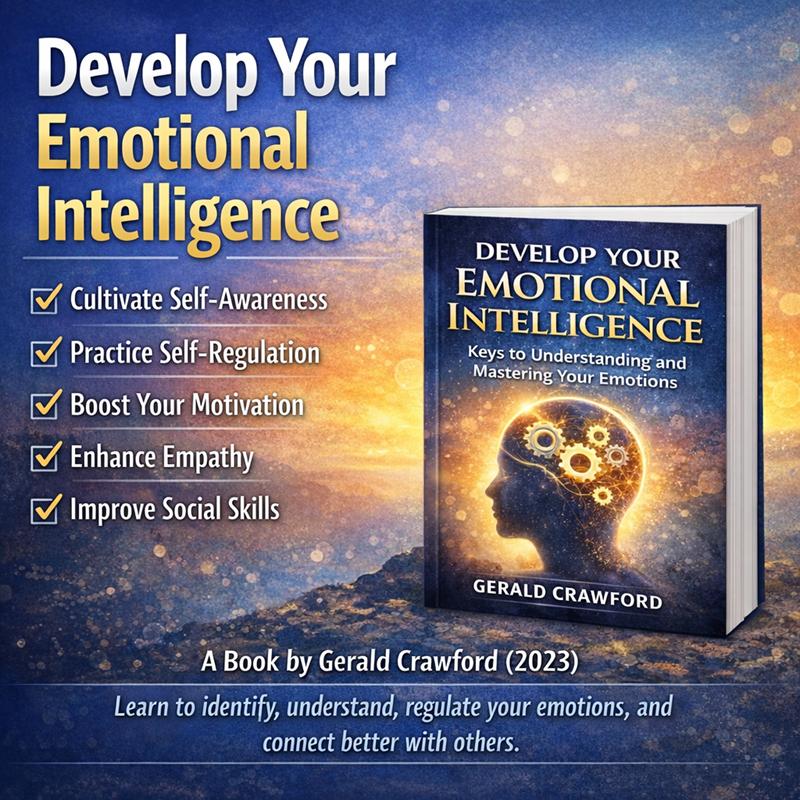
To develop Emotional Intelligence (EI), cultivate self-awareness by identifying and naming your emotions, self-regulation by managing those feelings, motivation by setting goals, empathy by understanding others' perspectives, and improving social skills through active listening and clear communication.

Category: Case Studies (Page 4 of 4)

Case Study 31: Developing Emotional Intelligence building Reason (400): Understanding, logic.

Case Study 31: Developing Emotional Intelligence and Building Reason

Consciousness Level: Reason (400)
Emotional State: Understanding, logic


Background

Johan (52) is thoughtful, analytical, and composed. After years of emotional work — releasing blame, cultivating forgiveness, and taking responsibility — he found himself naturally drawn toward understanding why things happen rather than reacting to that they happen.

Reason became his stabilising force. Life no longer felt chaotic; it felt intelligible.


Emotional Landscape at the Level of Reason

At Reason, the core belief is:
“If I understand, I can respond wisely.”

Johan’s emotional world is characterised by:

  • Intellectual clarity

  • Emotional containment

  • Curiosity over judgment

  • Confidence grounded in comprehension

Reason brings coherence, structure, and order to experience.


Impact on Relationships

Reason reshaped Johan’s relationships in measured ways:

  • Those He Loved and Cared For:
    He listened to understand, not to fix or dominate.

  • Those He Needed:
    Decisions were based on facts, roles, and mutual respect.

  • Those He Tolerated or Felt Indifferent To:
    Emotional distance was replaced by civility and fairness.

Relationships became rational, stable, and predictable.


Behavioural Patterns

Behaviour at Reason reflects strategic thinking:

  • Calm decision-making

  • Evidence-based problem-solving

  • Emotional regulation through insight

  • Planning rather than impulsivity

Johan valued accuracy over emotional intensity.


The Turning Point: Understanding Without Disconnection

His key insight was:

Understanding explains behaviour — it doesn’t replace compassion.

Reason alone was insufficient. Without emotional warmth, relationships risked becoming sterile.


Developing Emotional Intelligence

Johan refined EI through three balancing practices:


1. Cognitive-Emotional Integration

He learned to integrate thought and feeling:

  • Naming emotions without being ruled by them

  • Validating feelings while maintaining logic

This prevented emotional suppression.


2. Perspective Mapping

Johan practiced viewing situations systemically:

  • Context, history, incentives, and limitations

  • Understanding people within their environments

Judgment softened into insight.


3. Humility of Knowledge

He accepted the limits of reason:

  • Recognising uncertainty

  • Remaining open to new information

This kept reason flexible, not rigid.


Movement Up the Consciousness Scale

Reason created a bridge to higher relational consciousness:

  • From Reason (400) → clarity and insight

  • To Love (500) → empathy and connection

  • Toward Joy (540) → meaning and flow

Understanding prepared the ground for compassion.


Outcome

Over time, Johan experienced:

  • Reduced emotional confusion

  • Improved conflict resolution

  • Thoughtful leadership

  • Inner order and predictability

Life made sense — and felt manageable.


Key Learning

Reason organises life — but it does not warm it.

When emotional intelligence fully matures, reason evolves into wisdom guided by compassion, opening the door to deeper connection and meaning.

Real-world examples of how Emotional Intelligence has improved lives

To help illustrate the practical applications and benefits of Emotional Intelligence (EI), let’s explore some real-world examples and case studies of how EI has improved people’s lives.

These examples are categorized into different aspects of EI, including self-awarenessself-regulationmotivationempathy, and social skills.

Real-World Examples of Emotional Intelligence in Action

The following examples demonstrate how EI can be applied in various contexts to achieve positive outcomes:

Self-Awareness

Steve Jobs: Co-founder of Apple, known for his intense passion and perfectionism. However, his lack of EI led to difficulties in managing his emotions and relationships. After a temporary departure from Apple, Jobs developed his EI through self-reflection and meditation, which helped him become a more effective and empathetic leader.

Self-Regulation

Richard Branson: Founder of Virgin Group, Branson credits his EI for his ability to manage stress and stay calm under pressure. He practices mindfulness and meditation to regulate his emotions and maintain a positive outlook.

Motivation

Arianna Huffington: Founder of The Huffington Post, Huffington emphasizes the importance of EI in her success. She prioritizes self-care, including sleep, exercise, and meditation, to maintain her motivation and focus.

Empathy

Satya Nadella: CEO of Microsoft, Nadella transformed the company’s culture by prioritizing empathy and collaboration. He encourages employees to share their perspectives and listens actively to their concerns, fostering a more positive and inclusive work environment.

Social Skills

Oprah Winfrey: Media executive and former talk show host, Winfrey credits her EI for her ability to connect with people from diverse backgrounds. She practices active listening and empathy to build strong relationships with her guests, audience, and colleagues.

Case Studies: Emotional Intelligence in Action

The following case studies provide more in-depth examples of how EI can be applied in different contexts:

Case Study 1: EI in Leadership – Satya Nadella (Microsoft)

Background: Nadella became CEO of Microsoft in 2014, tasked with transforming the company’s culture.

EI Application: Nadella prioritized empathy and active listening, encouraging employees to share their perspectives and concerns.

Outcome: Microsoft’s culture shifted towards a more collaborative and innovative environment, leading to increased employee engagement and improved business performance.

Case Study 2: EI in Conflict Resolution – A Manager’s Story

Background: A manager at a marketing firm struggled with conflict resolution, often escalating issues with team members.

EI Application: The manager practiced empathy, active listening, and self-regulation to better understand and manage their emotions.

Outcome: The manager became more effective in resolving conflicts, leading to improved team dynamics and increased productivity.

Case Study 3: EI in Personal Relationships – A Mother’s Story

Background: A mother struggled to connect with her teenage daughter, leading to frequent arguments and stress.

EI Application: The mother practiced empathy, active listening, and self-awareness to better understand her daughter’s perspective and emotions.

Outcome: The mother and daughter developed a stronger, more empathetic relationship, reducing conflict and improving communication.

Case Study 4: EI in Customer Service – A Company’s Story

Background: A company struggled with customer complaints and negative reviews.

EI Application: The company trained employees in EI, focusing on empathy, active listening, and self-regulation.

Outcome: Customer satisfaction improved significantly, with a reduction in complaints and an increase in positive reviews.

By examining these real-world examples and case studies, we can see how EI can be applied in various contexts to achieve positive outcomes. Developing EI can lead to improved relationships, increased productivity, and enhanced overall well-being.

Newer posts »

Step-up and get your seat on my VIP Emotional Intelligence Mentorship Program for 2026

X
Back a Buddy Show your Support