
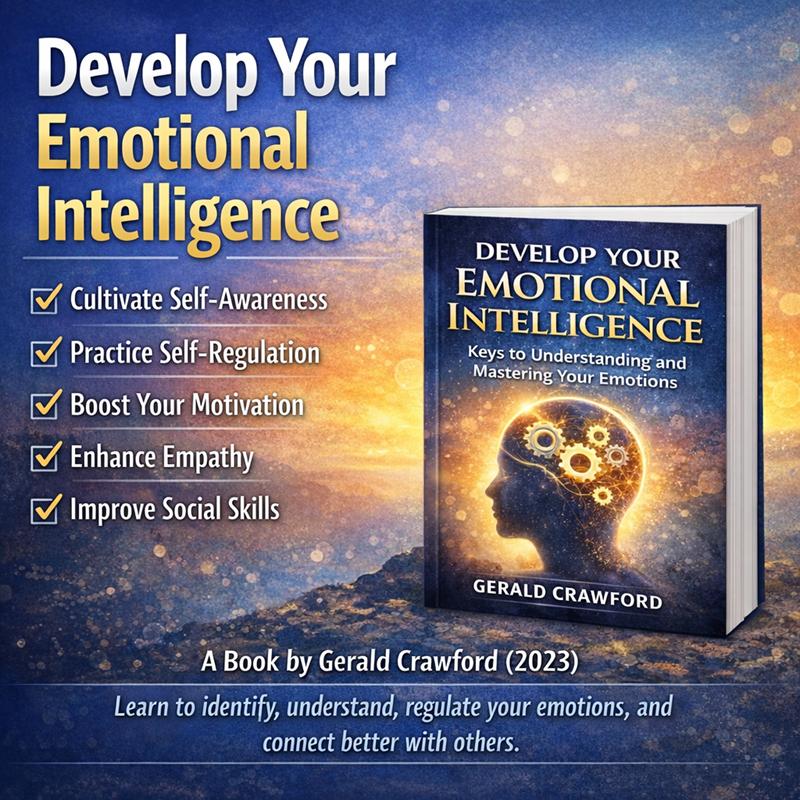
Develop emotional intelligence with Gerald Crawford’s book—build self-awareness, manage emotions, grow empathy, and improve communication for life and work.
Here is the outline for a book titled “Development your Emotional Intelligence Book by Gerald Crawford” with 14 chapters:
* Ask the Author Gerald Crawford a question before you start reading this book of his?
* Forward: Development your Emotional Intelligence Book by Gerald Crawford
Introduction:
* Brief overview of the book’s purpose and benefits
* Explanation of the concept of emotional intelligence mentorship
* Personal story of the author’s journey and inspiration for writing the book
Chapter 1: Introduction to Emotional Intelligence
* Definition of emotional intelligence
* Importance of emotional intelligence in personal and professional life
* Overview of the book’s contents
Chapter 2: Understanding Emotions
* The basics of emotions: recognition, regulation, and expression
* Use the “Wheel of Emotions” to understanding your emotions
* Reading the “Wheel of Emotions” from the outside inwards
* The impact of emotions on behavior and decision-making
* Strategies for managing emotions
Chapter 3: Self-Awareness
* The importance of self-awareness in emotional intelligence
* Techniques for developing self-awareness: journaling, meditation, and self-reflection
* Understanding personal values and motivations
Chapter 4: Emotional Regulation
* Strategies for regulating emotions: deep breathing, mindfulness, and cognitive-behavioral therapy
Chapter 5: Empathy and Compassion
* The importance of empathy and compassion in relationships
* Strategies for developing empathy: active listening, perspective-taking, and emotional validation
* Building compassion and understanding towards others
Chapter 6: Effective Communication
* The importance of effective communication in relationships
* Building strong relationships through effective communication
Chapter 7: Conflict Resolution
* The importance of conflict resolution in relationships
* Strategies for resolving conflicts: active listening, empathy, and problem-solving
* Building strong relationships through conflict resolution
Chapter 8: Emotional Intelligence in the Workplace
* The importance of emotional intelligence in the workplace
* Building a positive work environment through emotional intelligence
Chapter 9: Emotional Intelligence and Leadership
* The importance of emotional intelligence in leadership
* Building a positive and productive team through emotional intelligence
Chapter 10: Emotional Intelligence and Relationships
* The importance of emotional intelligence in relationships
* Building strong and healthy relationships through emotional intelligence
Chapter 11: Overcoming Emotional Challenges
* Strategies for overcoming emotional challenges: anxiety, depression, and trauma
* Building resilience and emotional regulation
* Seeking support and resources
Chapter 12: Mindfulness and Emotional Intelligence
* The importance of mindfulness in emotional intelligence
* Strategies for practicing mindfulness: meditation, deep breathing, and self-reflection
* Building mindfulness and emotional intelligence
Chapter 13: Emotional Intelligence and Personal Growth
* The importance of emotional intelligence in personal growth
* Building a growth mindset through emotional intelligence
Chapter 14: Sustaining Emotional Intelligence
* Building a support network and seeking resources
* Maintaining the development of your emotional intelligence over time.
Conclusion:
* Final words of encouragement and inspiration from the author Gerald Crawford
* Resources and other books to read for further develop your Emotional Intelligence
* Remarks, recommendations and suggestions to the Author Gerald Crawford after reading his book?
This outline provides a comprehensive framework for understanding your Emotional Intelligence. Each chapter can be expanded or modified to provide more in-depth information and practical strategies to develop your Emotional Intelligence.



Recent Comments