
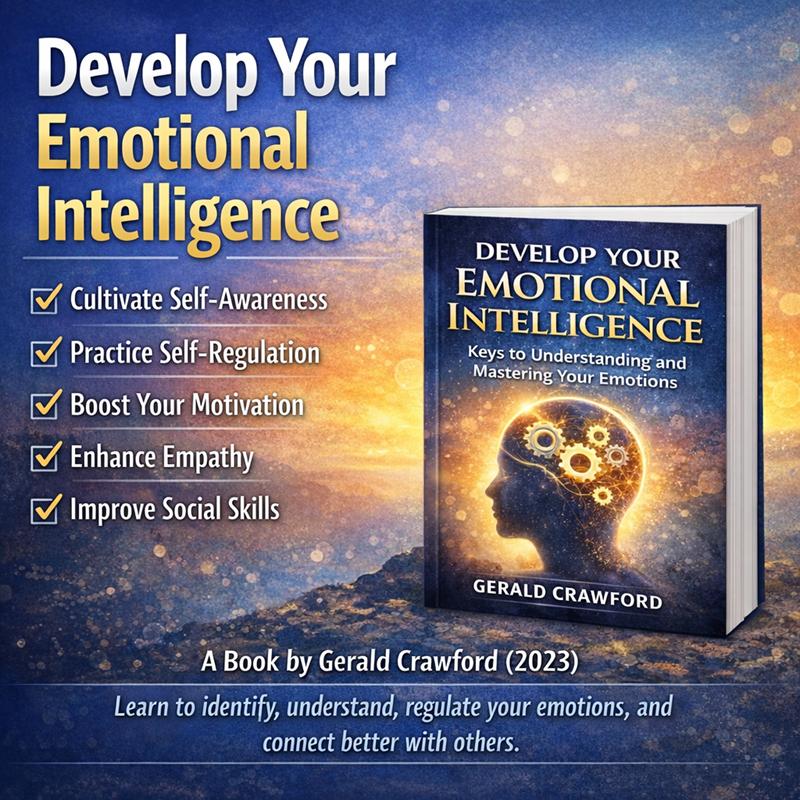
Here are 10 detailed radio-ready interview questions and answers for a South African audience about Development your Emotional Intelligence by Gerald Crawford (2023 edition), with thoughtful, deeper answers perfect for live radio segments:
1) What is emotional intelligence, and why does it matter today?
Answer:
Emotional intelligence is the ability to recognise, understand and manage your own emotions, and to read and respond to others’ feelings. It’s not just soft talk — it impacts how we communicate, lead, resolve conflict and build deeper relationships. In a complex society like ours, EI helps us navigate stress, cultural diversity and social pressures more successfully.
2) Why did you write Development your Emotional Intelligence?
Answer:
I wrote it to help people go beyond intellectual understanding and actually live emotional awareness. Too often we know what we should do emotionally, but we lack practical tools to change patterns, communicate better and build healthier relationships — personally and professionally.
3) What are the key components of emotional intelligence featured in your book?
Answer:
The book focuses on core areas: self-awareness, emotional regulation, motivation, empathy, and social skills — skills that help readers understand themselves and others better, communicate more effectively, and make more mindful choices.
4) How does EI help in everyday relationships?
Answer:
EI improves communication, increases empathy, and equips people to resolve conflict constructively. For example, active listening can diffuse tension, and understanding others’ emotional states builds trust — essential for family, friendships, and workplaces.
5) Can emotional intelligence be developed, or is it something you’re born with?
Answer:
Absolutely — EI is a learned skill. You develop it through self-reflection, active listening, managing reactions and practising empathy. Over time these habits become automatic, helping you navigate hard conversations and stress with greater ease.
6) What’s the first step someone should take if they want to improve their EI?
Answer:
Start with self-awareness: notice your emotions and name them. When you can identify what you’re feeling in the moment — without judgment — you’re empowered to choose how to respond instead of just reacting.
7) How does emotional intelligence impact leadership and workplace success?
Answer:
Leaders with high EI inspire trust, communicate clearly, and handle conflict without escalation. They understand team dynamics and motivate others — which boosts teamwork and retention. High EI also supports adaptability in change and uncertainty.
8) Can you share a real-world example of EI in action?
Answer:
One story in the book shows a manager struggling with team conflict. After practising empathy and active listening, he resolved misunderstandings and improved trust, which increased productivity and reduced stress among his team.
9) What are common challenges people face when building their EI?
Answer:
Many people struggle with emotional self-regulation — especially under stress. We’re often conditioned to suppress emotions or avoid vulnerability. Breaking those old patterns requires patience, consistent practice and sometimes external support like feedback or coaching.
10) What long-term changes can someone expect when they develop their emotional intelligence?
Answer:
Improved self-awareness, stronger relationships, better conflict resolution and more mindful decision-making. Emotionally intelligent people also tend to experience less anxiety, stronger resilience and greater well-being as they adjust more easily to life’s ups and downs.
Presenter Tagline (Optional)
“Development your Emotional Intelligence by Gerald Crawford empowers readers to understand, regulate and apply emotional insight in everyday life — building better relationships and greater personal and professional success.”



Recent Comments