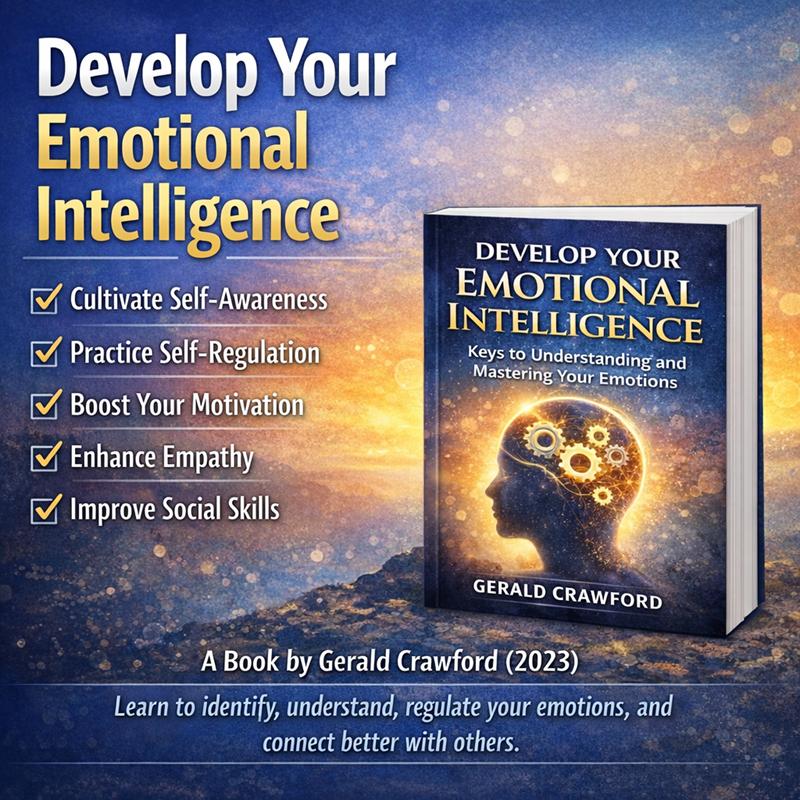
Here is a recap of key takeaways and insights from the “Development your Emotional Intelligence” Book by Gerald Crawford:
Emotional Intelligence (EI):
1. Definition: EI is the ability to recognize and understand emotions in yourself and others, and to use this awareness to guide thought and behavior.
2. Importance: EI is essential for personal and professional growth, as it helps individuals build strong relationships, make informed decisions, and manage stress.
Key Components of EI:
1. Self-awareness: The ability to recognize and understand your own emotions, values, and motivations.
2. Emotional regulation: The ability to manage and regulate your own emotions, impulses, and behaviors.
3. Motivation: The ability to use emotions to drive motivation, achieve goals, and improve performance.
4. Empathy: The ability to understand and share the feelings of others.
5. Social skills: The ability to communicate effectively, build relationships, and manage conflicts.
Strategies for Developing EI:
1. Practice self-reflection: Engage in self-reflection and introspection to develop self-awareness.
2. Seek feedback: Seek feedback from others to gain new insights and perspectives.
3. Develop emotional regulation strategies: Develop strategies to regulate your emotions, such as deep breathing, exercise, or meditation.
4. Practice empathy: Practice empathy by trying to understand and share the feelings of others.
Benefits of EI:
1. Improved relationships: EI can help individuals build stronger, more meaningful relationships.
2. Increased self-awareness: EI can help individuals develop a greater understanding of themselves and their emotions.
3. Better decision-making: EI can help individuals make more informed decisions.
Challenges to Developing EI:
1. Lack of self-awareness: It can be challenging to develop self-awareness and understand your own emotions.
2. Limited access to resources: It can be difficult to access resources and support to develop EI.
Strategies for Overcoming Challenges:
1. Seek support: Seek support from friends, family, or colleagues to help you develop EI.
2. Practice mindfulness: Practice mindfulness and meditation to increase self-awareness and emotional regulation.
By applying these strategies and insights, individuals can develop their emotional intelligence and improve their personal and professional relationships.



Leave a Reply