Skip to the content
Development your Emotional Intelligence - A Book by Gerald Crawford (2023 Edition)

To develop Emotional Intelligence (EI), cultivate self-awareness by identifying and naming your emotions, self-regulation by managing those feelings, motivation by setting goals, empathy by understanding others' perspectives, and improving social skills through active listening and clear communication.

  • Home
  • About The Author
    • Other Books Written by Gerald Crawford
    • Terms and Conditions of Use
    • Privacy Policy
  • Book Content
    • Detailed Definitions of the Emotional Intelligence Therapy and Healing Model (EI Model)
    • Develop your Emotional Intelligence Therapy and Healing Model (EI Model)
    • 10 Radio Interview Questions with concise, radio-ready answers – South African Audience. (EI Model) Press Kit
    • 30 Affirmations to Development your Emotional Intelligence in your Life
    • Testimonies
  • Contact
  • FAQ’s
  • Emotional Intelligence Mentorship
    • 25 Min Motivational Speech on How to Develop your Emotional Intelligence
    • 2 Day Emotional Intelligence Development Program for Corporate Company’s
    • Development your Emotional Intelligence – Talks and Group Program – Cities and Dates
  • Home
  • About The Author
    • Other Books Written by Gerald Crawford
    • Terms and Conditions of Use
    • Privacy Policy
  • Book Content
    • Detailed Definitions of the Emotional Intelligence Therapy and Healing Model (EI Model)
    • Develop your Emotional Intelligence Therapy and Healing Model (EI Model)
    • 10 Radio Interview Questions with concise, radio-ready answers – South African Audience. (EI Model) Press Kit
    • 30 Affirmations to Development your Emotional Intelligence in your Life
    • Testimonies
  • Contact
  • FAQ’s
  • Emotional Intelligence Mentorship
    • 25 Min Motivational Speech on How to Develop your Emotional Intelligence
    • 2 Day Emotional Intelligence Development Program for Corporate Company’s
    • Development your Emotional Intelligence – Talks and Group Program – Cities and Dates

Appointment Booking


0 / 180

Development your Emotional Intelligence Book by Gerald Crawford
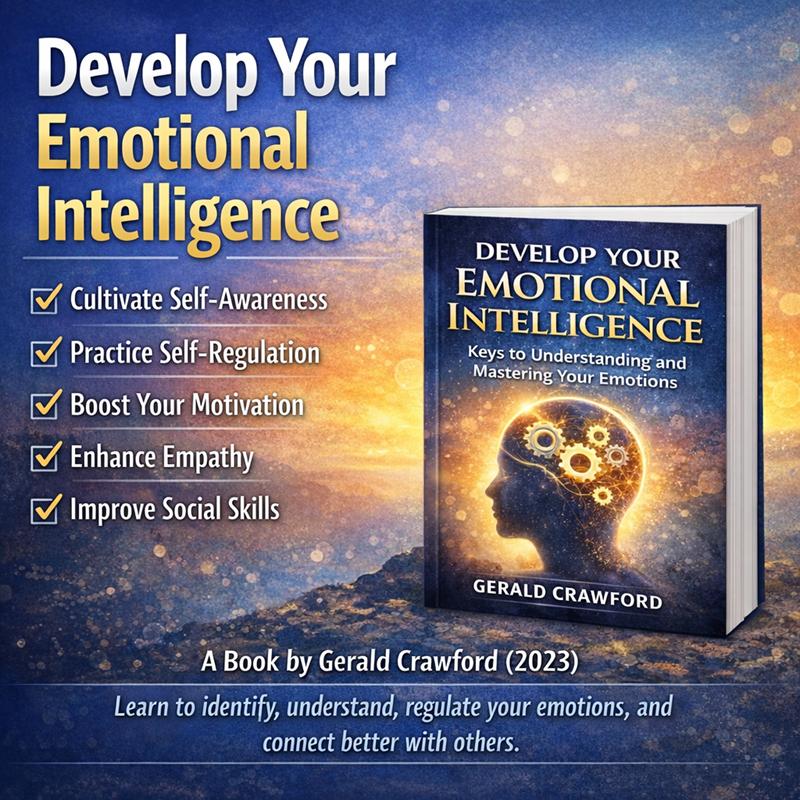
Ei book

Book Your Seat Now for our 2 Day Emotional Intelligence Development Program – 24 and 25/04/2026 – Monte Bello Estate, Bloemfontein

Book NOW!

Click on the button below to make an appointment booking

Book an appointment

Make A Donation and Support the Author

Backabuddy2

Make A Donation to support this website, Support this Free Book. Support the Author Gerald Crawford, Support the maintenance of this Website, Become Support Editor in this website, Become a Partner in this book.

This Banner Space is for Rent with a Hyperlink!

This Banner Space is for Rent with a Hyperlink!

What is Emotional Intelligence?

Emotional intelligence (EI) refers to the ability to recognize and understand emotions in oneself and others, and to use this awareness to guide thought and behavior. Here’s a breakdown of the concept:

Key Components of Emotional Intelligence:

1. Self-Awareness: The ability to recognize and understand one’s own emotions, values, and motivations.

2. Self-Regulation: The ability to control and manage one’s own emotions, impulses, and behaviors.

3. Motivation: The ability to use emotions to drive motivation, achieve goals, and pursue personal growth.

4. Empathy: The ability to recognize and understand the emotions, needs, and perspectives of others.

5. Social Skills: The ability to effectively communicate, interact, and build relationships with others.

Benefits of Emotional Intelligence:

1. Better Relationships: EI helps individuals build stronger, more meaningful relationships with others.

2. Improved Communication: EI enables individuals to communicate more effectively, avoiding misunderstandings and conflicts.

3. Enhanced Decision-Making: EI helps individuals make more informed decisions, taking into account their own emotions and the emotions of others.

4. Increased Self-Awareness: EI promotes self-awareness, allowing individuals to better understand their own strengths, weaknesses, and emotions.

5. Reduced Stress and Anxiety: EI helps individuals manage stress and anxiety, leading to improved mental health and well-being.

Developing Emotional Intelligence:

1. Practice Self-Reflection: Regularly reflect on your emotions, values, and motivations.

2. Develop Active Listening Skills: Pay attention to others, and try to understand their perspectives and emotions.

3. Engage in Empathy-Building Activities: Participate in activities that help you understand and appreciate the experiences of others.

4. Seek Feedback: Ask for feedback from others on your emotional intelligence and areas for improvement.

5. Learn Emotional Regulation Techniques: Develop strategies to manage your emotions, such as meditation, deep breathing, or journaling.

Assessments and Tools:

1. Emotional Intelligence Quotient (EQ-i): A widely used assessment tool that measures EI across various domains.

2. Mayer-Salovey-Caruso Emotional Intelligence Test (MSCEIT): A research-based assessment that evaluates EI across four branches.

3. 360-Degree Feedback: A tool that provides feedback on an individual’s EI from multiple sources, such as colleagues, managers, and peers.

By understanding and developing emotional intelligence, individuals can improve their relationships, decision-making, and overall well-being.

Recent Posts

  • Emotional Intelligence (EI) Strengthens Intrinsic Motivation
  • Unmanaged Emotions often lead to regret, conflict, and poor judgment.
  • EI – Why Does It Matter?
  • Case Study 32: Developing Emotional Intelligence building Love (500): Unconditional, adoration.
  • Case Study 30: Developing Emotional Intelligence building Acceptance (350): Forgiveness, responsibility.
  • Case Study 29: Developing Emotional Intelligence building Willingness (310): Optimistic, disciplined.
  • Case Study 28: Developing Emotional Intelligence building Neutrality (250): Non-judgmental, flexible.
  • Case Study 27: Developing Emotional Intelligence and healing from Pride (175): Arrogance, defensiveness.
  • Case Study 26: Developing Emotional Intelligence and healing from Anger (150): Frustration, can be constructive or destructive.
  • Case Study 25: Developing Emotional Intelligence and healing from Desire (125): Craving, addiction, seeking external fulfillment.
  • Understanding your Emotions Better with Hypnotherapy
  • Case Study 24: Developing Emotional Intelligence and healing from Fear (100): Anxiety, survival-based, contracted.
  • Case Study 23: Developing Emotional Intelligence and healing from Grief (75): Sadness, loss.
  • Nervous System Healing – Visualize the FOREST that grounds, balances, connect, stabilizes
  • Nervous System Healing – Visualize the OCEAN that cleanses, refreshers, invigorate, releases

Recent Comments

  • gcstellenbosch on Introduction to Emotional Intelligence – Overview of the Development your Emotional Intelligence Book contents
  • gcstellenbosch on Empathy and Compassion – The importance of empathy and compassion in relationships
  • gcstellenbosch on Real-world examples of how Emotional Intelligence has improved lives
  • gcstellenbosch on Conflict Resolution – Building strong relationships through conflict resolution
  • Kelly on Conflict Resolution – Building strong relationships through conflict resolution

Categories

  • (EI Model) Press Kit
  • 101 Question and Answer
  • 111 Development your Emotional Intelligence
  • 2 Day Emotional Intelligence Development Program
  • 30-second verbal pitch
  • 5-step Plan
  • Advanced Emotional Intelligence Topics
  • Anger
  • Anxiety
  • As a Leader
  • Attachment Styles
  • Attachment Wounds
  • Behaviour
  • Behaviour and Decision-making
  • Book Reading List
  • Book Release
  • Burnout
  • Case Studies
  • Case Study
  • Communication
  • Conflict
  • Conflict Resolution
  • Core Themes in the Book
  • Core Topics Covered in the Book
  • Corporate Company's
  • Depression
  • Develop your Emotional Intelligence
  • Development Program
  • Difficulty Trusting Others
  • Digestive Issues
  • Effective Communication
  • EFT Tapping Script
  • Emotion Storm
  • Emotional Awareness
  • Emotional Charades
  • Emotional Insight
  • Emotional Intelligence
  • Emotional Intelligence and Leadership
  • Emotional Intelligence and Personal Growth
  • Emotional Intelligence and Relationships
  • Emotional Intelligence Assessment
  • Emotional Intelligence in the Workplace
  • Emotional Intelligence Test
  • Emotional Landscape
  • Emotional Reactions
  • Emotional Regulation
  • Emotional Strengths and Weaknesses
  • Emotional Trauma
  • Emotions
  • Empathy
  • Empathy and Compassion
  • Feelings
  • Feelings Shape your Thoughts
  • Final Project and Evaluation
  • Forest
  • Gerald Crawford
  • Headaches
  • Healing from Emotional Wounds
  • Healing Journey
  • Healing Program
  • Healing your Body
  • Healing your Mind
  • Healing your Spirit
  • Humour
  • Identifying and Naming your Emotions
  • Impact of your Emotions
  • Inner Emotional Landscape
  • Interview Topics
  • Introduction to Emotional Intelligence
  • Jokes
  • Leadership and Emotional Intelligence
  • Leadership Skills
  • Levels of Consciousness
  • Life Balance
  • Meaningful Goals
  • Mindful Maze
  • Mindfulness
  • Mindfulness and Emotional Intelligence
  • Misinterpret
  • Misunderstandings
  • Moon
  • Negative Attachment Styles
  • Negative Emotions
  • Nervous System Healing
  • Ocean
  • Overcoming Emotional Challenges
  • Perfectionism
  • Performance
  • Positive Emotions
  • Press Kit
  • Professional Pitch
  • Releasing Emotional Trauma
  • Resources and other books
  • Self-Awareness
  • Sleep Disturbances
  • Small Group Games
  • Social Withdrawal
  • Strengthens Intrinsic Motivation
  • Struggle Socially
  • Struggle to notice emotional cues
  • Substance Abuse
  • Sun
  • Survival Strategies
  • Sustaining Emotional Intelligence
  • Teamwork Skills
  • The Human Knot
  • Understanding Emotions
  • Understanding your Emotions
  • Unhealed Emotional Wounds
  • Unmanaged Emotions
  • Walk in My Shoes
  • Wheel of Emotions
  • Women’s-centered Healing
  • Words People Use
  • Your Feelings

Tags

(EI Model) Press Kit active listening Anger anxiety Attachment Wounds behaviour Case Study communication Conflict Resolution decision-making Develop your Emotional Intelligence Effective Communication EFT Tapping Script Emotional Intelligence Emotional Intelligence and Leadership Emotional Intelligence and Personal Growth Emotional Intelligence and Relationships Emotional Intelligence Assessment Emotional Intelligence in the Workplace Emotional Intelligence Test Emotional Regulation Emotional Trauma emotions empathy Empathy and Compassion fear Gerald Crawford guilt Inner Emotional Landscape Introduction to Emotional Intelligence Love mindfulness Mindfulness and Emotional Intelligence Nervous System Healing Overcoming Emotional Challenges personal growth relationships Self-Awareness self-reflection shame Survival Strategies Sustaining Emotional Intelligence Understanding Emotions Wheel of Emotions workplace

Archives

Subscribe to my posts


Development your Emotional Intelligence Book by Gerald Crawford

Ei book

This Banner Space is for Rent with a Hyperlink!

This Banner Space is for Rent with a Hyperlink!
  • Home
  • About The Author
    • Other Books Written by Gerald Crawford
    • Terms and Conditions of Use
    • Privacy Policy
  • Book Content
    • Detailed Definitions of the Emotional Intelligence Therapy and Healing Model (EI Model)
    • Develop your Emotional Intelligence Therapy and Healing Model (EI Model)
    • 10 Radio Interview Questions with concise, radio-ready answers – South African Audience. (EI Model) Press Kit
    • 30 Affirmations to Development your Emotional Intelligence in your Life
    • Testimonies
  • Contact
  • FAQ’s
  • Emotional Intelligence Mentorship
    • 25 Min Motivational Speech on How to Develop your Emotional Intelligence
    • 2 Day Emotional Intelligence Development Program for Corporate Company’s
    • Development your Emotional Intelligence – Talks and Group Program – Cities and Dates

Benefits of Developing emotional intelligence:

Developing emotional intelligence (EI) can have numerous benefits in various aspects of life, including:

Personal Benefits:

1. Improved self-awareness: EI helps individuals understand their own emotions, values, and motivations, leading to better self-awareness and personal growth.

2. Enhanced emotional regulation: EI enables individuals to manage their emotions, reducing stress, anxiety, and other negative emotions.

3. Increased resilience: EI helps individuals develop coping strategies and bounce back from adversity, trauma, or significant change.

4. Better relationships: EI promotes empathy, active listening, and effective communication, leading to stronger, more meaningful relationships.

Professional Benefits:

1. Improved communication: EI enables individuals to communicate more effectively, avoiding misunderstandings and conflicts.

2. Enhanced teamwork: EI promotes collaboration, empathy, and understanding among team members, leading to better teamwork and performance.

3. Increased leadership effectiveness: EI helps leaders inspire, motivate, and influence others, leading to improved leadership effectiveness.

4. Better conflict resolution: EI enables individuals to resolve conflicts more effectively, reducing stress and improving relationships.

Social Benefits:

1. Improved relationships with others: EI promotes empathy, understanding, and effective communication, leading to stronger, more meaningful relationships.

2. Increased social connections: EI helps individuals build and maintain social connections, reducing feelings of loneliness and isolation.

3. Better community engagement: EI enables individuals to engage more effectively with their communities, promoting social cohesion and community development.

Health and Well-being Benefits:

1. Reduced stress and anxiety: EI helps individuals manage stress and anxiety, leading to improved mental health and well-being.

2. Improved mental health: EI promotes self-awareness, emotional regulation, and coping strategies, reducing the risk of mental health issues.

3. Increased physical health: EI has been linked to improved physical health, including lower blood pressure, healthier weight, and stronger immune systems.

Other Benefits:

1. Improved decision-making: EI enables individuals to make more informed decisions, taking into account their own emotions and the emotions of others.

2. Increased creativity: EI promotes creativity, innovation, and problem-solving, leading to improved personal and professional outcomes.

3. Better adaptability: EI helps individuals adapt to change, uncertainty, and ambiguity, leading to improved resilience and flexibility.

By developing emotional intelligence, individuals can experience these benefits and improve their overall well-being, relationships, and performance.

What changes will I notice when I am Emotional Intelligence?

When you develop emotional intelligence (EI), you may notice several changes in your thoughts, feelings, and behaviors. Here are some potential changes you might experience:

Changes in Self-Awareness:

1. Increased self-awareness: You’ll become more aware of your emotions, values, and motivations, and how they impact your behavior.

2. Better understanding of your emotions: You’ll be able to recognize and understand your emotions more accurately, and develop strategies to manage them.

3. Improved self-regulation: You’ll become more skilled at regulating your emotions, reducing stress and anxiety, and improving your overall well-being.

Changes in Relationships:

1. Improved communication: You’ll become more effective at communicating your needs, wants, and emotions to others, leading to stronger, more meaningful relationships.

2. Increased empathy: You’ll be more able to understand and appreciate the perspectives and emotions of others, leading to more empathetic and supportive relationships.

3. Better conflict resolution: You’ll become more skilled at resolving conflicts in a constructive and respectful manner, reducing stress and improving relationships.

Changes in Decision-Making:

1. More informed decision-making: You’ll be more able to consider the emotional implications of your decisions, leading to more informed and thoughtful decision-making.

2. Increased intuition: You’ll become more attuned to your intuition, and more able to trust your instincts and make decisions that align with your values and goals.

3. Better risk management: You’ll become more skilled at assessing and managing risk, reducing the potential for negative outcomes and improving your overall well-being.

Changes in Emotional Regulation:

1. Reduced stress and anxiety: You’ll become more skilled at managing stress and anxiety, leading to improved mental and physical health.

2. Improved mood regulation: You’ll become more able to regulate your mood, reducing the impact of negative emotions and improving your overall well-being.

3. Increased resilience: You’ll become more resilient, better able to bounce back from adversity and challenges.

Changes in Personal Growth:

1. Increased self-acceptance: You’ll become more accepting of yourself, including your strengths, weaknesses, and emotions.

2. Improved self-compassion: You’ll become more compassionate and kind towards yourself, reducing self-criticism and improving your overall well-being.

3. Greater sense of purpose: You’ll become more clear about your values, goals, and purpose, leading to a greater sense of direction and fulfillment.

These changes can lead to significant improvements in your personal and professional life, and can help you develop greater emotional intelligence.

(EI Model) Press Kit

  • MEDIA ONE-PAGER / PRESS KIT – Development your Emotional Intelligence – A Book by Gerald Crawford (2023)
  • Detailed Definitions of the Emotional Intelligence Therapy and Healing Model (EI Model)
    • Develop your Emotional Intelligence Therapy and Healing Model (EI Model)
  • Why is Development of your Emotional Intelligence Important? Why does it Matter?
    • Case Study 1: Sara – Real People, Real-world examples of how after Developing There Emotional Intelligence has improved peoples lives
    • 40 Signs that you are Emotionally Intelligent
  • 10 Radio Interview Questions with concise, radio-ready answers – South African Audience. (EI Model) Press Kit
  • 30 Affirmations to Development your Emotional Intelligence in your Life
  • 20 Quotes of wisdom that come from this book? Snippets that is Social media ready.
  • 30-second verbal pitch – Development your Emotional Intelligence – A Book by Gerald Crawford (2023)
  • 5-minute audio script suitable for a book release – Development your Emotional Intelligence – A Book by Gerald Crawford (2023) (EI Model) Press Kit
  • 5-step Plan to Develop your Emotional Intelligence – Small Group Games
  • Core Topics Covered in the Book – Development your Emotional Intelligence – A Book by Gerald Crawford (2023)
  • Core Themes in the Book – Development your Emotional Intelligence – A Book by Gerald Crawford (2023)
  • Professional Pitch with Authors Bio – Develop Your Emotional Intelligence (2023)
  • Book Synopsis
  • About The Author
    • Other Books Written by Gerald Crawford
  • Emotional Intelligence Mentorship
    • 25 Min Motivational Speech on How to Develop your Emotional Intelligence
    • 2 Day Emotional Intelligence Development Program for Group’s
  • 5 Jokes – Humour about “Emotional Intelligence”

© 2026 Development your Emotional Intelligence – A Book by Gerald Crawford (2023 Edition)

Theme by Anders Noren — Up ↑

Back a Buddy Show your Support