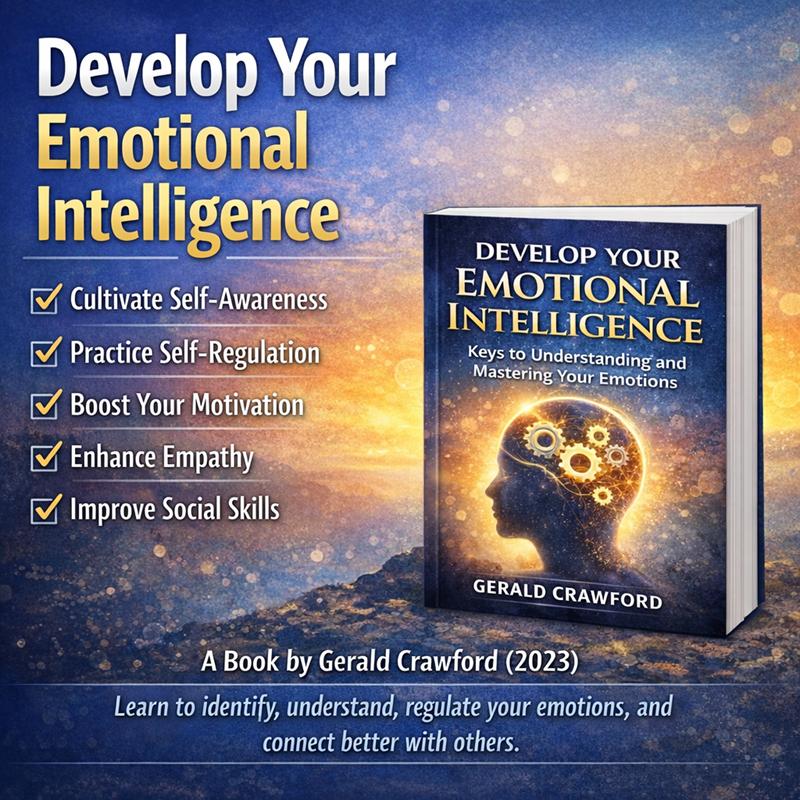
To develop Emotional Intelligence (EI), cultivate self-awareness by identifying and naming your emotions, self-regulation by managing those feelings, motivation by setting goals, empathy by understanding others' perspectives, and improving social skills through active listening and clear communication.

Category: 111 Development your Emotional Intelligence (Page 4 of 6)

Case Study 31: Developing Emotional Intelligence building Reason (400): Understanding, logic.

Case Study 31: Developing Emotional Intelligence and Building Reason

Consciousness Level: Reason (400)
Emotional State: Understanding, logic


Background

Johan (52) is thoughtful, analytical, and composed. After years of emotional work — releasing blame, cultivating forgiveness, and taking responsibility — he found himself naturally drawn toward understanding why things happen rather than reacting to that they happen.

Reason became his stabilising force. Life no longer felt chaotic; it felt intelligible.


Emotional Landscape at the Level of Reason

At Reason, the core belief is:
“If I understand, I can respond wisely.”

Johan’s emotional world is characterised by:

  • Intellectual clarity

  • Emotional containment

  • Curiosity over judgment

  • Confidence grounded in comprehension

Reason brings coherence, structure, and order to experience.


Impact on Relationships

Reason reshaped Johan’s relationships in measured ways:

  • Those He Loved and Cared For:
    He listened to understand, not to fix or dominate.

  • Those He Needed:
    Decisions were based on facts, roles, and mutual respect.

  • Those He Tolerated or Felt Indifferent To:
    Emotional distance was replaced by civility and fairness.

Relationships became rational, stable, and predictable.


Behavioural Patterns

Behaviour at Reason reflects strategic thinking:

  • Calm decision-making

  • Evidence-based problem-solving

  • Emotional regulation through insight

  • Planning rather than impulsivity

Johan valued accuracy over emotional intensity.


The Turning Point: Understanding Without Disconnection

His key insight was:

Understanding explains behaviour — it doesn’t replace compassion.

Reason alone was insufficient. Without emotional warmth, relationships risked becoming sterile.


Developing Emotional Intelligence

Johan refined EI through three balancing practices:


1. Cognitive-Emotional Integration

He learned to integrate thought and feeling:

  • Naming emotions without being ruled by them

  • Validating feelings while maintaining logic

This prevented emotional suppression.


2. Perspective Mapping

Johan practiced viewing situations systemically:

  • Context, history, incentives, and limitations

  • Understanding people within their environments

Judgment softened into insight.


3. Humility of Knowledge

He accepted the limits of reason:

  • Recognising uncertainty

  • Remaining open to new information

This kept reason flexible, not rigid.


Movement Up the Consciousness Scale

Reason created a bridge to higher relational consciousness:

  • From Reason (400) → clarity and insight

  • To Love (500) → empathy and connection

  • Toward Joy (540) → meaning and flow

Understanding prepared the ground for compassion.


Outcome

Over time, Johan experienced:

  • Reduced emotional confusion

  • Improved conflict resolution

  • Thoughtful leadership

  • Inner order and predictability

Life made sense — and felt manageable.


Key Learning

Reason organises life — but it does not warm it.

When emotional intelligence fully matures, reason evolves into wisdom guided by compassion, opening the door to deeper connection and meaning.
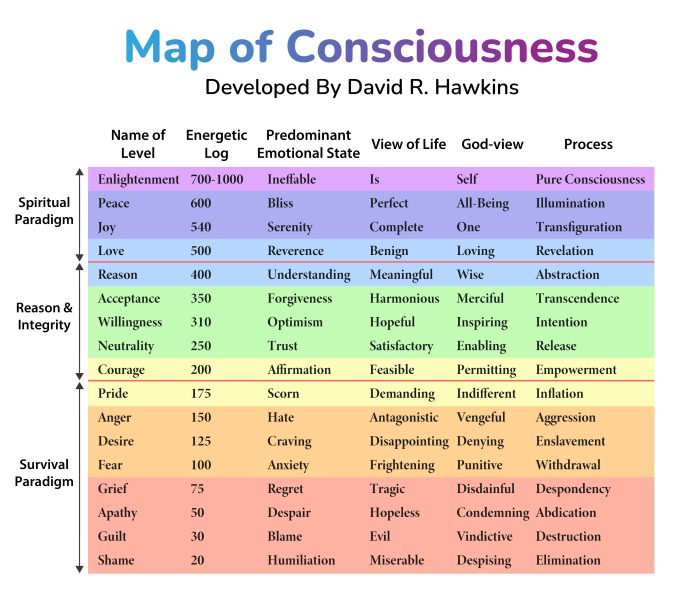

Emotions as they relate to different Levels of Consciousness on the scale low to high

Think of this scale not as good vs bad people, but as states of awareness that shape how emotions are felt, interpreted, and acted upon.


LOWER CONSCIOUSNESS STATES (Below 200)

These levels are dominated by contraction, survival, and ego-defence. Emotions here feel heavy, reactive, and draining.

Shame (20) – Destructive, Self-Loathing

  • Core belief: “I am bad / unworthy.”
  • Emotion turns inward as self-hatred.
  • Often linked to abuse, humiliation, or deep trauma.
  • Behaviour: withdrawal, self-sabotage, secrecy.
  • Consciousness is collapsed — there is little sense of agency.

Guilt (30) – Remorse, Self-Judgment

  • Core belief: “I did something bad.”
  • Less destructive than shame, but still paralyzing.
  • Can lead to punishment cycles and chronic regret.
  • Behaviour: apologising excessively, people-pleasing, stagnation.

Apathy (50) – Hopelessness

  • Core belief: “Nothing matters.”
  • Emotional numbness, depression, learned helplessness.
  • Behaviour: disengagement, minimal effort, passivity.
  • Life feels like something happening to you.

Grief (75) – Sadness, Loss

  • Core belief: “Something important is gone.”
  • More energy than apathy, but still backward-looking.
  • Behaviour: mourning, emotional pain, longing.
  • Healing often begins here — grief acknowledges truth.

Fear (100) – Anxiety, Survival Mode

  • Core belief: “I am not safe.”
  • Constant scanning for threats.
  • Behaviour: avoidance, control, worry, rigidity.
  • Energy is contracted and future-focused.

Desire (125) – Craving, Addiction

  • Core belief: “I’ll be okay when I get…”
  • Motivation driven by lack.
  • Behaviour: chasing pleasure, status, validation.
  • Can be productive, but never satisfying.

Anger (150) – Frustration, Force

  • Core belief: “This is wrong / unfair.”
  • Much more energy than fear or desire.
  • Behaviour: confrontation, blame, activism.
  • Can be destructive or the fuel for change.

Pride (175) – Defensiveness

  • Core belief: “I’m better than others.”
  • Temporary confidence masking insecurity.
  • Behaviour: comparison, superiority, rigidity.
  • Growth is resisted — the ego protects its image.

THE PIVOT POINT

Courage (200) – Empowerment

  • Core belief: “I can handle this.”
  • This is the turning point from force to power.
  • Behaviour: responsibility, action, honesty.
  • Life is no longer something you endure — you engage with it.

HIGHER CONSCIOUSNESS STATES (Above 200)

These levels are characterised by expansion, integration, and inner stability.

Neutrality (250) – Non-Judgment

  • Core belief: “It is what it is.”
  • Emotional flexibility and calm.
  • Behaviour: letting go, adaptability.
  • Drama loses its grip.

Willingness (310) – Optimism, Discipline

  • Core belief: “I want to grow.”
  • Energy becomes cooperative and constructive.
  • Behaviour: learning, helping, persistence.
  • Failure is seen as feedback.

Acceptance (350) – Responsibility

  • Core belief: “I create my experience.”
  • Emotional maturity and forgiveness.
  • Behaviour: ownership, accountability.
  • Victimhood dissolves.

Reason (400) – Understanding

  • Core belief: “There is order and logic.”
  • Emotion is balanced by intellect.
  • Behaviour: problem-solving, systems thinking.
  • Science, law, and rational inquiry flourish here.

TRANSCENDENT STATES

Love (500) – Unconditional Care

  • Core belief: “We are connected.”
  • Emotion is expansive, warm, inclusive.
  • Behaviour: compassion, generosity.
  • Love is a state of being, not an attachment.

Joy (540) – Serenity

  • Core belief: “Life is perfect as it is.”
  • Deep inner happiness without cause.
  • Behaviour: presence, gratitude, service.
  • Little need to prove or protect.

Peace (600) – Bliss

  • Core belief: “All is well.”
  • Silence, stillness, awe.
  • Behaviour: minimalism, contemplation.
  • The sense of a separate self fades.

Enlightenment (700–1000) – Pure Consciousness

  • No belief — only awareness.
  • Emotion transcends polarity.
  • Behaviour: spontaneous wisdom.
  • Rare, non-dual states reported by mystics and sages.

Key Insight

People don’t live permanently at one level.
They move up and down based on stress, awareness, healing, and choice.

The real work is not “being perfect” —
it’s recognising where you are, and choosing the next higher state available to you.

2026 Book Reading List to help you in your Development your Emotional Intelligence this year?

Here’s a 2026 Book Reading List to support and expand your emotional intelligence development this year — ideal if you’re inspired by Development your Emotional Intelligence by Gerald Crawford and want to go deeper into self-awareness, empathy, resilience, relationships, and emotional mastery:


2026 Emotional Intelligence Reading List

1. Emotional Intelligence — Daniel Goleman

The foundational book that popularised EQ, showing how emotional skills shape success in work, relationships, and life more than IQ.
A must-read for understanding the science and real-world impact of emotional intelligence.

2. Permission to Feel — Marc Brackett

Explains how giving yourself and others permission to feel is the first step toward emotional regulation, resilience, and psychological health. Practical frameworks backed by research.

3. Emotional Intelligence 2.0 — Travis Bradberry & Jean Greaves

A hands-on guide with strategies and an online EQ assessment — great for tracking your growth and applying EQ skills day-to-day.

4. Emotional Agility — Susan David

Teaches you how to navigate emotions with flexibility, face tough feelings with curiosity instead of avoidance, and make values-aligned choices.

5. Daring Greatly — Brené Brown

Focuses on vulnerability as a core emotional strength — especially useful for building empathy, courage, and authentic connection.

6. The Language of Emotions — Karla McLaren

Reframes emotions as intelligent messengers rather than obstacles. Helps deepen emotional literacy by understanding what each emotion communicates.

7. Social Intelligence — Daniel Goleman

Expands EI from self-understanding to relational awareness — how our brains are wired for connection and what builds healthy social bonds.

8. The 7 Habits of Highly Effective People — Stephen R. Covey

A classic on personal and interpersonal effectiveness — especially beneficial for emotional self-control and empathetic communication.

9. The Art of Happiness — Dalai Lama & Howard Cutler

Blends psychology and spirituality to teach that happiness comes from inner mental habits, compassion, and emotional balance.

10. EQ Applied: The Real-World Guide to Emotional Intelligence — Justin Bariso

A practical, real-life take on EQ — highly readable with relatable examples and actionable insights.


Bonus Reads (Broaden Your EQ Skillset)

  • Self-Compassion — Kristin Neff – For building self-kindness and emotional resilience, crucial to emotional regulation.
  • The Untethered Soul — Michael A. Singer – Teaches how to observe emotions instead of being controlled by them.
  • Man’s Search for Meaning — Viktor Frankl – Explores emotional strength and meaning-making even in hardship — an enduring emotional growth classic.
  • Nonviolent Communication — Marshall Rosenberg – Helps you communicate needs and feelings clearly and compassionately.

How to Use This List

  • Start with a foundational book like Goleman or Brackett.
  • Mix theory with practice: Pair conceptual reads (Social Intelligence) with application guides (Emotional Intelligence 2.0).
  • Set a monthly reading rhythm: write reflections or apply one skill from each book to your daily life.
  • Pair reading with reflection practices like journaling, mindful pauses, or weekly emotional check-ins.

Why This List Works for 2026

These books cover self-awareness, emotional regulation, empathy, relationships, and resilience — the core pillars of emotional intelligence. Together they offer science-based insights, practical strategies, and deep human wisdom for transformative personal growth this year.

Case Study 2: John – Real People, Real-world examples of how after Developing There Emotional Intelligence has improved peoples lives

Here’s a case study of a real person who developed their emotional intelligence and experienced significant improvements in their life:

Case Study: John

John, a 42-year-old entrepreneur, was struggling to manage his emotions and relationships in his personal and professional life. He would often get angry and frustrated when dealing with difficult situations, and his loved ones would feel the brunt of his emotions. As a result, John’s relationships suffered, and he felt isolated and disconnected from others.

Emotional Intelligence Assessment

John took an emotional intelligence assessment, which revealed that he had low emotional awareness and empathy skills. He struggled to recognize and understand the emotions of others, leading to misunderstandings and conflict.

Development Plan

John worked with a coach to develop his emotional intelligence. The plan included:

1. Emotional awareness training: John learned to recognize and understand his own emotions, including their triggers and patterns.

2. Empathy and active listening exercises: John practiced active listening and empathy-building exercises to improve his ability to understand and connect with others.

3. Conflict resolution and assertive communication training: John learned effective conflict resolution and assertive communication skills to improve his relationships with others.

4. Mindfulness and self-reflection: John practiced mindfulness meditation and self-reflection to increase his self-awareness and self-regulation skills.

Results

After nine months of development, John showed significant improvements in his emotional intelligence. He:

1. Became more emotionally aware: John could recognize and understand his own emotions, including their triggers and patterns.

2. Improved his empathy and communication skills: John could understand and connect with others more effectively, leading to improved relationships and conflict resolution.

3. Enhanced his relationships: John’s loved ones reported significant improvements in his emotional intelligence and relationship skills, leading to stronger and more meaningful connections.

4. Increased his business success: John’s improved emotional intelligence and conflict resolution skills helped him to navigate challenging business situations more effectively, leading to increased success and revenue growth.

Real-world Examples

Here are some real-world examples of how John applied his new emotional intelligence skills:

1. Effective Conflict Resolution: When a business partner disagreed with him, John used active listening and empathy to understand their perspective, and then used assertive communication to resolve the issue.

2. Improved Communication: John practiced effective communication with his loved ones, using “I” statements and active listening to resolve conflicts and improve relationships.

3. Leadership: John took on a leadership role in his industry, using his emotional intelligence to build strong relationships with his team, stakeholders, and customers, leading to increased loyalty and business success.

Impact on Life

Developing his emotional intelligence had a profound impact on John’s life:

1. Improved relationships: John’s relationships with his loved ones and business partners improved significantly, leading to stronger and more meaningful connections.

2. Increased confidence: John felt more confident in his ability to manage difficult situations and build strong relationships.

3. Better work-life balance: John was able to balance his work and personal life more effectively, leading to increased overall well-being and life satisfaction.

Conclusion

John’s case study demonstrates the power of emotional intelligence development in improving relationships, communication, and overall well-being. By recognizing the importance of emotional intelligence and taking steps to develop his skills, John was able to transform his life and achieve greater success and fulfillment.

Case Study 4: David – Real People, Real-world examples of how after Developing There Emotional Intelligence has improved peoples lives

Here’s a case study of a real person who developed their emotional intelligence and experienced significant improvements in their life:

Case Study: David

David, a 40-year-old executive, was struggling to manage his emotions and relationships in the workplace. He would often get angry and frustrated when dealing with difficult situations, and his employees would feel the brunt of his emotions. As a result, David’s relationships with his team suffered, and he felt like he was not being an effective leader.

Emotional Intelligence Assessment

David took an emotional intelligence assessment, which revealed that he had low emotional awareness and empathy skills. He struggled to recognize and understand the emotions of others, leading to misunderstandings and conflict.

Development Plan

David worked with a coach to develop his emotional intelligence. The plan included:

1. Emotional awareness training: David learned to recognize and understand his own emotions, including their triggers and patterns.

2. Empathy and active listening exercises: David practiced active listening and empathy-building exercises to improve his ability to understand and connect with others.

3. Conflict resolution and assertive communication training: David learned effective conflict resolution and assertive communication skills to improve his relationships with his team and other stakeholders.

4. Mindfulness and self-reflection: David practiced mindfulness meditation and self-reflection to increase his self-awareness and self-regulation skills.

Results

After nine months of development, David showed significant improvements in his emotional intelligence. He:

1. Became more emotionally aware: David could recognize and understand his own emotions, including their triggers and patterns.

2. Improved his empathy and communication skills: David could understand and connect with others more effectively, leading to improved relationships and conflict resolution.

3. Enhanced his leadership: David’s improved emotional intelligence and leadership skills helped him to build trust and credibility with his team, leading to increased job satisfaction and productivity.

4. Increased his business success: David’s improved emotional intelligence and decision-making skills helped him to make more informed and strategic decisions, leading to increased business success and revenue growth.

Real-world Examples

Here are some real-world examples of how David applied his new emotional intelligence skills:

1. Effective Conflict Resolution: When a team member disagreed with him, David used active listening and empathy to understand their perspective, and then used assertive communication to resolve the issue.

2. Improved Communication: David practiced effective communication with his team, using “I” statements and active listening to resolve conflicts and improve relationships.

3. Leadership: David took on a leadership role in his organization, using his emotional intelligence to build strong relationships with his team, stakeholders, and customers, leading to increased loyalty and business success.

Impact on Life

Developing his emotional intelligence had a profound impact on David’s life:

1. Improved relationships: David’s relationships with his team, stakeholders, and customers improved significantly, leading to increased job satisfaction and a sense of fulfillment.

2. Increased confidence: David felt more confident in his ability to lead and manage his team, leading to increased self-efficacy and motivation.

3. Better work-life balance: David was able to balance his work and personal life more effectively, leading to increased overall well-being and life satisfaction.

Conclusion

David’s case study demonstrates the power of emotional intelligence development in improving relationships, communication, and overall well-being. By recognizing the importance of emotional intelligence and taking steps to develop his skills, David was able to transform his life and achieve greater success and fulfillment in his role as an executive.

« Older posts Newer posts »
Back a Buddy Show your Support