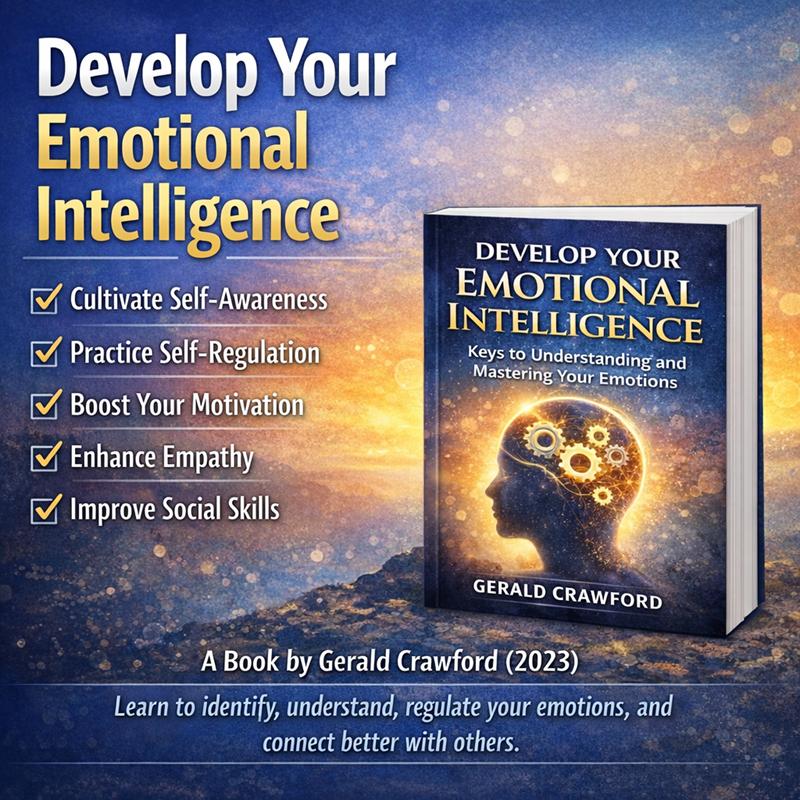
To develop Emotional Intelligence (EI), cultivate self-awareness by identifying and naming your emotions, self-regulation by managing those feelings, motivation by setting goals, empathy by understanding others' perspectives, and improving social skills through active listening and clear communication.

Category: Case Study (Page 3 of 4)

Case Study 21: Developing Emotional Intelligence and healing from Guilt (30): Remorse, self-judgment.

Case Study 21: Developing Emotional Intelligence and Healing from Guilt

Consciousness Level: Guilt (30)
Emotional State: Remorse, self-judgment


Background

Naledi (38) is a dedicated professional and mother who is widely seen as responsible and caring. Yet internally, she carries a persistent sense of having failed — as a partner, a parent, and a person. Unlike shame, which attacks identity, Naledi’s emotional struggle focuses on actions she believes she “should have done differently.”

Her upbringing emphasised moral correctness and duty. Mistakes were not met with punishment, but with disappointment. Over time, Naledi learned that being “good” meant never letting anyone down. When she did, guilt quickly filled the space.


Emotional Landscape at the Level of Guilt

At the Guilt level, the dominant belief is:
“I did something wrong.”

Naledi’s emotional world was marked by:

  • Persistent self-blame

  • Rumination over past decisions

  • Difficulty forgiving herself

  • A sense of owing others emotional repayment

Unlike shame, guilt still allows a sense of self — but it is heavily burdened.


Impact on Relationships

Guilt shaped Naledi’s relationships in subtle but powerful ways:

  • Those She Loved and Cared For:
    She over-compensated, often sacrificing her own needs to “make up” for perceived failures.

  • Those She Needed:
    She feared disappointing authority figures and avoided honest conversations.

  • Those She Tolerated or Felt Indifferent To:
    She took responsibility for emotions that were not hers to carry.

Guilt blurred boundaries, turning care into obligation.


Behavioural Patterns

Naledi’s behaviour was driven by an internal moral accountant that never balanced:

  • Excessive apologising

  • Difficulty saying no

  • Over-functioning in relationships

  • Avoidance of situations that might trigger criticism

While these behaviours appeared selfless, they quietly drained her emotional energy.


The Turning Point: Responsibility Without Punishment

Naledi’s growth began when she learned that responsibility does not require self-punishment.

Through coaching, she was introduced to a key EI distinction:

Responsibility asks, “What can I do now?”
Guilt asks, “How bad should I feel?”

This insight marked the beginning of emotional maturity.


Developing Emotional Intelligence

Naledi strengthened her EI through three core practices:


1. Emotional Differentiation

She learned to distinguish:

  • Healthy remorse (signals values)

  • Unhealthy guilt (endless self-judgment)

This allowed her to respond constructively instead of looping in regret.


2. Self-Forgiveness

Naledi practiced acknowledging mistakes once, then releasing them:

  • “I see what happened.”

  • “I accept my humanity.”

  • “I choose to move forward.”

Forgiveness became an act of responsibility, not indulgence.


3. Boundary Awareness

She learned that:

  • Saying no is not wrongdoing

  • Disappointing others is not moral failure

  • Adults manage their own emotions

This shifted her from over-giving to balanced relating.


Movement Up the Consciousness Scale

Naledi’s emotional development followed a natural progression:

  • From Guilt (30) → conscious accountability

  • To Courage (200) → self-trust and honest action

  • Toward Acceptance (350) → emotional responsibility without blame

The key shift was from judging the past to choosing the present.


Outcome

Over time, Naledi experienced:

  • Reduced emotional fatigue

  • Greater self-respect

  • Clearer boundaries in relationships

  • A calmer internal dialogue

She remained conscientious — but no longer self-punishing.


Key Learning

Guilt becomes toxic when it outlives its usefulness.
Its healthy role is to guide correction — not to define identity.

Emotional intelligence transforms guilt into learning, repair, and forward movement.

Case Study 20: Developing Emotional Intelligence and healing from Shame (20): Destructive, self-loathing.

Case Study 20: Developing Emotional Intelligence and Healing from Shame

Consciousness Level: Shame (20)
Emotional State: Destructive, self-loathing


Background

Thabo (42) is a mid-level manager who outwardly appears competent and reliable. Internally, however, he lives with a constant sense of unworthiness. He believes that if people truly knew him, they would reject him. This belief has shaped his relationships, career choices, and emotional life for decades.

Thabo grew up in an environment where affection was conditional and mistakes were met with humiliation rather than correction. Praise was rare; criticism was public. Over time, he internalised the message:
“I am fundamentally flawed.”

This belief did not operate consciously — it lived beneath his thoughts, quietly directing his behaviour.


Emotional Landscape at the Level of Shame

At the Shame level, emotions are not just painful — they are identity-defining.

Thabo’s dominant internal experiences included:

  • Chronic self-criticism

  • Persistent feelings of inferiority

  • Fear of being exposed or “found out”

  • Emotional withdrawal and isolation

Rather than thinking “I made a mistake,” he thought:
“I am a mistake.”

This distinction is central to understanding shame.


Impact on Relationships

Thabo’s shame influenced how he related to others across all relationship levels:

  • Those He Loved and Cared For:
    He struggled to receive love, often mistrusting affection or sabotaging closeness.

  • Those He Needed:
    He over-relied on approval from authority figures, tying his worth to performance.

  • Those He Tolerated or Felt Indifferent To:
    He perceived neutral interactions as rejection or judgment, reinforcing his self-loathing.

Shame distorted reality — neutral events felt personal, and minor feedback felt devastating.


Behavioural Patterns

From the outside, Thabo appeared quiet and agreeable. Internally, he was in constant emotional distress.

Common behaviours included:

  • Avoiding conflict at all costs

  • People-pleasing and over-apologising

  • Procrastination driven by fear of failure

  • Self-sabotage when success felt undeserved

These behaviours temporarily reduced anxiety but reinforced shame long-term.


Turning Point: Awareness Without Judgment

Healing did not begin with confidence — it began with awareness.

Through counselling, Thabo learned to:

  • Name shame as an emotional state, not a truth

  • Separate identity from behaviour

  • Recognise the inner voice of self-attack as learned, not factual

This marked the first step in developing emotional intelligence:

“I am feeling shame”
instead of
“I am shameful.”

This shift alone reduced the intensity of his emotional suffering.


Developing Emotional Intelligence

Thabo focused on three core EI skills:

1. Emotional Recognition

He learned to identify shame in his body:

  • Tight chest

  • Avoidant eye contact

  • Urge to withdraw

Recognising the emotion early prevented spirals of self-destruction.


2. Emotional Regulation

Rather than suppressing shame, he practiced:

  • Self-compassionate language

  • Grounding techniques

  • Allowing emotions without acting on them

This softened the internal attack cycle.


3. Cognitive Reframing

He challenged automatic thoughts such as:

  • “I’m not good enough”

  • “I don’t belong”

Replacing them with neutral truths:

  • “I am learning.”

  • “I made an error, not a moral failure.”

This slowly moved him toward Guilt (30) — a healthier level where responsibility replaces identity collapse.


Movement Up the Consciousness Scale

Progress was gradual but real:

  • From Shame (20) → awareness and naming

  • To Guilt (30) → recognising behaviour without self-destruction

  • Toward Courage (200) → taking responsibility without self-hatred

The key was self-compassion, not self-improvement.


Outcome

After sustained effort, Thabo experienced:

  • Increased emotional resilience

  • Healthier boundaries in relationships

  • Reduced fear of judgment

  • A growing sense of self-worth independent of performance

Shame no longer defined him — it became an emotion he could recognise, tolerate, and release.


Key Learning

Shame is not healed by success, approval, or perfection.
It is healed through awareness, compassion, and emotional literacy.

When people learn to observe shame rather than identify with it, they reclaim choice, agency, and dignity.

Case Study 31: Developing Emotional Intelligence building Reason (400): Understanding, logic.

Case Study 31: Developing Emotional Intelligence and Building Reason

Consciousness Level: Reason (400)
Emotional State: Understanding, logic


Background

Johan (52) is thoughtful, analytical, and composed. After years of emotional work — releasing blame, cultivating forgiveness, and taking responsibility — he found himself naturally drawn toward understanding why things happen rather than reacting to that they happen.

Reason became his stabilising force. Life no longer felt chaotic; it felt intelligible.


Emotional Landscape at the Level of Reason

At Reason, the core belief is:
“If I understand, I can respond wisely.”

Johan’s emotional world is characterised by:

  • Intellectual clarity

  • Emotional containment

  • Curiosity over judgment

  • Confidence grounded in comprehension

Reason brings coherence, structure, and order to experience.


Impact on Relationships

Reason reshaped Johan’s relationships in measured ways:

  • Those He Loved and Cared For:
    He listened to understand, not to fix or dominate.

  • Those He Needed:
    Decisions were based on facts, roles, and mutual respect.

  • Those He Tolerated or Felt Indifferent To:
    Emotional distance was replaced by civility and fairness.

Relationships became rational, stable, and predictable.


Behavioural Patterns

Behaviour at Reason reflects strategic thinking:

  • Calm decision-making

  • Evidence-based problem-solving

  • Emotional regulation through insight

  • Planning rather than impulsivity

Johan valued accuracy over emotional intensity.


The Turning Point: Understanding Without Disconnection

His key insight was:

Understanding explains behaviour — it doesn’t replace compassion.

Reason alone was insufficient. Without emotional warmth, relationships risked becoming sterile.


Developing Emotional Intelligence

Johan refined EI through three balancing practices:


1. Cognitive-Emotional Integration

He learned to integrate thought and feeling:

  • Naming emotions without being ruled by them

  • Validating feelings while maintaining logic

This prevented emotional suppression.


2. Perspective Mapping

Johan practiced viewing situations systemically:

  • Context, history, incentives, and limitations

  • Understanding people within their environments

Judgment softened into insight.


3. Humility of Knowledge

He accepted the limits of reason:

  • Recognising uncertainty

  • Remaining open to new information

This kept reason flexible, not rigid.


Movement Up the Consciousness Scale

Reason created a bridge to higher relational consciousness:

  • From Reason (400) → clarity and insight

  • To Love (500) → empathy and connection

  • Toward Joy (540) → meaning and flow

Understanding prepared the ground for compassion.


Outcome

Over time, Johan experienced:

  • Reduced emotional confusion

  • Improved conflict resolution

  • Thoughtful leadership

  • Inner order and predictability

Life made sense — and felt manageable.


Key Learning

Reason organises life — but it does not warm it.

When emotional intelligence fully matures, reason evolves into wisdom guided by compassion, opening the door to deeper connection and meaning.

Case Study 1: Sara – Real People, Real-world examples of how after Developing There Emotional Intelligence has improved peoples lives

Here’s a case study of a real person who developed their emotional intelligence and experienced significant improvements in their life:

Case Study: Sarah

Sarah, a 35-year-old marketing manager, was struggling to manage her emotions and relationships at work. She would often get defensive and angry when receiving feedback, and her coworkers would avoid giving her constructive criticism. As a result, Sarah’s performance suffered, and she felt undervalued and unappreciated.

Emotional Intelligence Assessment

Sarah took an emotional intelligence assessment, which revealed that she had low self-awareness and self-regulation skills. She struggled to recognize and manage her emotions, leading to impulsive and reactive behavior.

Development Plan

Sarah worked with a coach to develop her emotional intelligence. The plan included:

1. Self-awareness training: Sarah learned to recognize and understand her emotions, including their triggers and patterns.

2. Mindfulness and self-regulation exercises: Sarah practiced mindfulness meditation and deep breathing exercises to improve her ability to manage stress and impulsivity.

3. Feedback and self-reflection: Sarah received regular feedback from her coach and engaged in self-reflection to identify areas for improvement.

4. Role-playing and social skills training: Sarah practiced assertive communication and conflict resolution skills to improve her relationships with coworkers.

Results

After six months of development, Sarah showed significant improvements in her emotional intelligence. She:

1. Became more self-aware: Sarah could recognize and understand her emotions, including their triggers and patterns.

2. Improved her self-regulation: Sarah could manage her stress and impulsivity, responding to situations more thoughtfully and calmly.

3. Enhanced her relationships: Sarah’s coworkers reported significant improvements in her communication style and conflict resolution skills.

4. Increased her job satisfaction: Sarah felt more confident and valued in her role, leading to increased motivation and performance.

Real-world Examples

Here are some real-world examples of how Sarah applied her new emotional intelligence skills:

1. Effective Feedback: When a coworker provided feedback on a project, Sarah listened calmly and responded thoughtfully, asking questions to clarify and understand the feedback.

2. Conflict Resolution: When a team member disagreed with her idea, Sarah used active listening and assertive communication to resolve the issue, finding a mutually beneficial solution.

3. Leadership: Sarah took on a leadership role in a cross-functional project, using her emotional intelligence to manage team dynamics, facilitate effective communication, and drive results.

Impact on Life

Developing her emotional intelligence had a profound impact on Sarah’s life:

1. Improved relationships: Sarah’s relationships with her coworkers improved significantly, leading to a more positive and supportive work environment.

2. Increased confidence: Sarah felt more confident in her abilities, leading to increased motivation and job satisfaction.

3. Better work-life balance: Sarah was able to manage her stress and emotions more effectively, leading to a better balance between her work and personal life.

Conclusion

Sarah’s case study demonstrates the power of emotional intelligence development in improving relationships, job satisfaction, and overall well-being. By recognizing the importance of emotional intelligence and taking steps to develop her skills, Sarah was able to transform her life and achieve greater success and fulfillment.

Case Study 2: John – Real People, Real-world examples of how after Developing There Emotional Intelligence has improved peoples lives

Here’s a case study of a real person who developed their emotional intelligence and experienced significant improvements in their life:

Case Study: John

John, a 42-year-old entrepreneur, was struggling to manage his emotions and relationships in his personal and professional life. He would often get angry and frustrated when dealing with difficult situations, and his loved ones would feel the brunt of his emotions. As a result, John’s relationships suffered, and he felt isolated and disconnected from others.

Emotional Intelligence Assessment

John took an emotional intelligence assessment, which revealed that he had low emotional awareness and empathy skills. He struggled to recognize and understand the emotions of others, leading to misunderstandings and conflict.

Development Plan

John worked with a coach to develop his emotional intelligence. The plan included:

1. Emotional awareness training: John learned to recognize and understand his own emotions, including their triggers and patterns.

2. Empathy and active listening exercises: John practiced active listening and empathy-building exercises to improve his ability to understand and connect with others.

3. Conflict resolution and assertive communication training: John learned effective conflict resolution and assertive communication skills to improve his relationships with others.

4. Mindfulness and self-reflection: John practiced mindfulness meditation and self-reflection to increase his self-awareness and self-regulation skills.

Results

After nine months of development, John showed significant improvements in his emotional intelligence. He:

1. Became more emotionally aware: John could recognize and understand his own emotions, including their triggers and patterns.

2. Improved his empathy and communication skills: John could understand and connect with others more effectively, leading to improved relationships and conflict resolution.

3. Enhanced his relationships: John’s loved ones reported significant improvements in his emotional intelligence and relationship skills, leading to stronger and more meaningful connections.

4. Increased his business success: John’s improved emotional intelligence and conflict resolution skills helped him to navigate challenging business situations more effectively, leading to increased success and revenue growth.

Real-world Examples

Here are some real-world examples of how John applied his new emotional intelligence skills:

1. Effective Conflict Resolution: When a business partner disagreed with him, John used active listening and empathy to understand their perspective, and then used assertive communication to resolve the issue.

2. Improved Communication: John practiced effective communication with his loved ones, using “I” statements and active listening to resolve conflicts and improve relationships.

3. Leadership: John took on a leadership role in his industry, using his emotional intelligence to build strong relationships with his team, stakeholders, and customers, leading to increased loyalty and business success.

Impact on Life

Developing his emotional intelligence had a profound impact on John’s life:

1. Improved relationships: John’s relationships with his loved ones and business partners improved significantly, leading to stronger and more meaningful connections.

2. Increased confidence: John felt more confident in his ability to manage difficult situations and build strong relationships.

3. Better work-life balance: John was able to balance his work and personal life more effectively, leading to increased overall well-being and life satisfaction.

Conclusion

John’s case study demonstrates the power of emotional intelligence development in improving relationships, communication, and overall well-being. By recognizing the importance of emotional intelligence and taking steps to develop his skills, John was able to transform his life and achieve greater success and fulfillment.

« Older posts Newer posts »
Back a Buddy Show your Support