
To develop Emotional Intelligence (EI), cultivate self-awareness by identifying and naming your emotions, self-regulation by managing those feelings, motivation by setting goals, empathy by understanding others' perspectives, and improving social skills through active listening and clear communication.

Category: Gerald Crawford (Page 1 of 3)

Forward to the book Development your Emotional Intelligence by Gerald Crawford

Emotional intelligence (EI) is a vital skill that can have a profound impact on our personal and professional lives. It is the ability to recognize and understand emotions in ourselves and others, and to use this awareness to guide our thoughts and actions.

In today’s fast-paced and ever-changing world, EI is more important than ever. It can help us navigate complex relationships, make informed decisions, and achieve our goals.

I am thrilled to introduce “Development your Emotional Intelligence” by Gerald Crawford, a comprehensive guide to developing EI. This book provides a practical and accessible roadmap for individuals looking to improve their emotional intelligence.

The Author’s Expertise:

Gerald Crawford is a highly experienced and knowledgeable expert in the field of emotional intelligence. He has spent years studying and applying EI in various settings, and has a deep understanding of the complexities and nuances of human emotions.

The Book’s Content:

The book covers a wide range of topics related to EI, including self-awareness, emotional regulation, empathy, and social skills. It provides a wealth of practical strategies and techniques for developing EI, as well as real-world examples and case studies.

The Book’s Benefits:

By reading this book, you will gain a deeper understanding of emotional intelligence and how to develop it. You will learn practical strategies for improving your relationships, managing stress, and achieving your goals.

The Author’s Hope:

Gerald hopes that this book will inspire and empower you to take control of your emotional intelligence. He believes that by developing EI, you can improve your personal and professional relationships, and achieve greater success and happiness.

I highly recommend “Development your Emotional Intelligence” to anyone looking to improve their emotional intelligence and achieve greater success and happiness.

[David Brown]
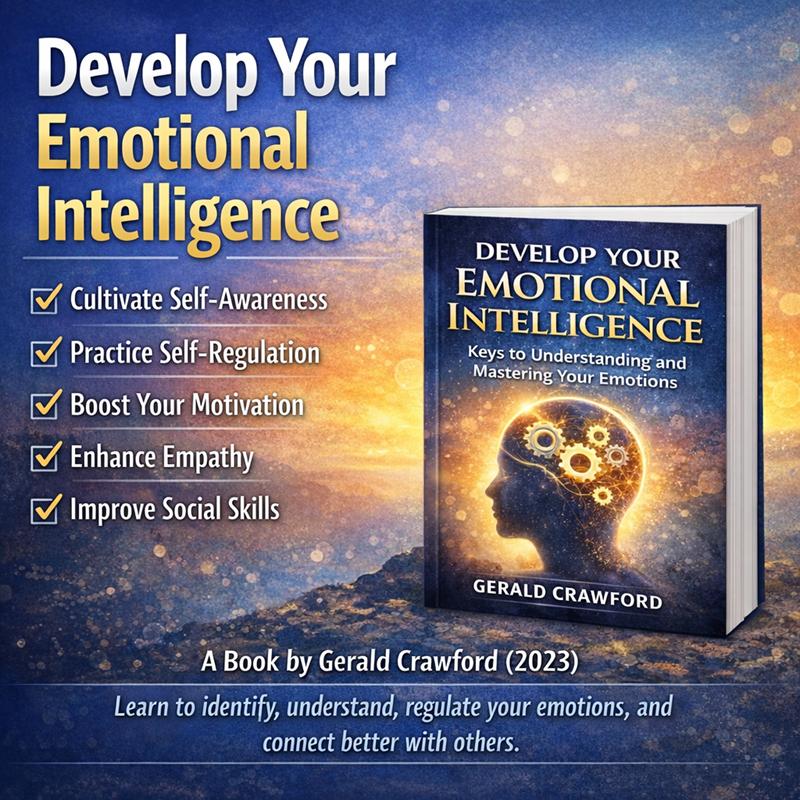
5-minute audio script suitable for a book release – Development your Emotional Intelligence – A Book by Gerald Crawford (2023) (EI Model) Press Kit

Here’s a calm, professional, and engaging 5-minute audio script suitable for a book release announcement. It’s written to sound natural when spoken aloud—warm, reflective, and confident.


[Opening – slow, grounded tone]

Hello,

My name is Gerald Crawford, and I’m pleased to introduce my book, Develop Your Emotional Intelligence.

This book was written for anyone who has ever felt overwhelmed by their emotions, misunderstood in relationships, or unsure how to respond rather than react. Emotional intelligence isn’t about suppressing feelings or pretending everything is fine—it’s about learning how to understand, manage, and use our emotions in ways that support healthier lives and relationships.


[Purpose of the Book]

Emotional intelligence, often referred to as EI, is one of the most important life skills we can develop—yet it’s rarely taught in a practical, everyday way. This book exists to change that.

Develop Your Emotional Intelligence explores EI as a skill shaped through real life experience—through what we do, what we see, and what we feel. Our emotions are not obstacles to overcome; they are signals and teachers that shape our character, choices, and connections with others.


[Core Themes]

The book focuses on five core areas of emotional intelligence.

First, self-awareness—learning to identify and name what you are feeling. When emotions remain unnamed, they quietly influence behaviour. Awareness brings clarity.

Second, self-regulation—the ability to manage emotions rather than be controlled by them. This doesn’t mean suppressing feelings, but responding with intention instead of impulse.

Third, motivation—understanding how emotions drive action. When aligned properly, emotions can support goal-setting, persistence, and resilience rather than sabotage them.

Fourth, empathy—the capacity to understand others’ perspectives and emotional experiences. Empathy deepens connection, improves communication, and reduces unnecessary conflict.

And finally, social skills—the outward expression of emotional intelligence. Through active listening, clear communication, and emotional awareness, relationships become more respectful, effective, and meaningful.


[Why This Book Matters]

We live in a time of constant stimulation, pressure, and emotional overload. Many people are reacting rather than responding, speaking rather than listening, and feeling disconnected despite being constantly connected.

Emotional intelligence offers a different way forward—a way to slow down, understand what’s happening inside, and choose responses that reflect maturity, self-control, and care for others.

This book is not theoretical. It’s grounded in lived experience and practical reflection, making it accessible for everyday life—whether at home, at work, or in personal relationships.


[Who the Book Is For]

Develop Your Emotional Intelligence is for anyone seeking:

  • Greater emotional clarity
  • Healthier relationships
  • Better communication
  • Increased self-control and resilience
  • Personal growth rooted in real life, not perfection

You don’t need a background in psychology. You just need a willingness to reflect, learn, grow and chance direction.


[Closing]

Emotional intelligence is not about becoming someone else. It’s about becoming more aware, more intentional, and more human in how you live and relate.

Thank you for taking the time to listen, and for your interest in Develop Your Emotional Intelligence.

You can learn more about the book and related resources at http://emotional-intelligence.co.za/.


Audio Clip: Click here to download and listen to.

Video Clip: Click here to download and view.

Core Topics Covered in the Book – Development your Emotional Intelligence – A Book by Gerald Crawford (2023)

  1. Fundamentals of Emotional Intelligence
    – What EI is and why it matters in life and relationships.
    – The foundations: self-awareness, self-regulation, motivation, empathy, and social skills.

  2. Self-Awareness — Identifying & Naming Emotions
    – Learning to recognize your emotional states.
    – Understanding how emotions affect thoughts and behaviour.

  3. Self-Regulation — Managing Feelings & Impulses
    – Techniques for regulating emotional reactions.
    – Developing emotional balance and resilience.

  4. Motivation — Setting & Pursuing Goals Through Emotion
    – How internal drivers shape action and achievement.
    – Linking emotions to purposeful behaviour.

  5. Empathy — Understanding Others’ Perspectives
    – Practicing empathy in day-to-day interactions.
    – Awareness of other people’s emotional experience.

  6. Social Skills — Communicating Effectively
    – Active listening, clear expression, and healthy social interaction.
    – Practical skills for building rapport and managing conflict.

  7. Emotional Intelligence in Relationships
    – Applying EI skills to strengthen personal and professional connections.
    – Communication, conflict resolution, and trust building.

  8. Practical Case Studies & Real-World Examples
    – How EI has been applied in leadership, parenting, customer service, and everyday life.
    – Case examples showing EI’s benefits in behaviour and outcomes.

  9. Applications & Benefits of Emotional Intelligence
    – How EI improves mental health, resilience, relationship quality, decision-making, and social connection.

Core Themes in the Book – Development your Emotional Intelligence – A Book by Gerald Crawford (2023)

1. Understanding Emotional Intelligence (EI)
An introduction to EI—what it is, why it matters, and how it influences behaviour, relationships, decision-making, and wellbeing.

2. Self-Awareness
Learning to identify and name your emotions, understand where they come from, and notice how they shape your thoughts and actions. This foundational theme helps build emotional insight and personal growth.

3. Self-Regulation
Developing the skill to manage strong feelings and impulses, maintain emotional balance under stress, and respond thoughtfully rather than reactively.

4. Motivation
Using emotions to fuel purposeful goals, sustain personal drive, and cultivate optimism and resilience in the face of challenges.

5. Empathy
Understanding and appreciating the emotional experience of others—seeing the world from their perspective and enhancing compassion in relationships.

6. Social Skills
Improving interpersonal effectiveness through active listening, clear communication, conflict resolution, and building trust and connection with others.

7. Application of EI in Relationships
Exploring how emotional intelligence strengthens bonds, improves communication, and supports respectful and constructive interactions in personal and professional contexts.

8. Real-World Case Studies
Examples showing how EI principles play out in leadership, conflict resolution, team dynamics, and everyday life—illustrating practical outcomes of developing emotional intelligence.

9. Practical Strategies for Growth
Tools and exercises to practice EI every day—like active listening, reflective self-awareness, emotion regulation techniques, and empathy practices.

Final words of encouragement and inspiration from the author Gerald Crawford

Here are some final words of encouragement and inspiration from the author, Gerald Crawford:

“Development your Emotional Intelligence” Book:

As you conclude your journey through this book, I encourage you to remember that developing emotional intelligence is a lifelong process. It takes time, effort, and practice to develop self-awareness, emotional regulation, and empathy.

Key Takeaways:

1. Emotional intelligence is essential: Emotional intelligence is essential for personal and professional growth, as it helps individuals build strong relationships, make informed decisions, and manage stress.

2. Self-awareness is key: Self-awareness is the foundation of emotional intelligence. It helps individuals understand their own emotions, values, and motivations.

3. Emotional regulation is crucial: Emotional regulation is critical for managing stress, anxiety, and other negative emotions.

4. Empathy is essential: Empathy is essential for building strong relationships and understanding the emotions and needs of others.

Final Words of Encouragement:

1. Be patient and kind to yourself: Developing emotional intelligence takes time and effort. Be patient and kind to yourself as you work through this process.

2. Seek support: Seek support from friends, family, or colleagues to help you develop emotional intelligence.

3. Practice mindfulness: Practice mindfulness and meditation to increase self-awareness and emotional regulation.

Inspiration:

1. You are capable of growth: You are capable of growth and development. Believe in yourself and your ability to learn and improve.

2. Emotional intelligence is a skill: Emotional intelligence is a skill that can be developed and improved with practice and effort.

3. The benefits are worth it: The benefits of developing emotional intelligence are well worth the effort. You will experience improved relationships, increased self-awareness, and better decision-making.

I hope these final words of encouragement and inspiration have been helpful. Remember to be patient, kind, and compassionate with yourself as you continue on your journey of developing emotional intelligence.

« Older posts
Back a Buddy Show your Support