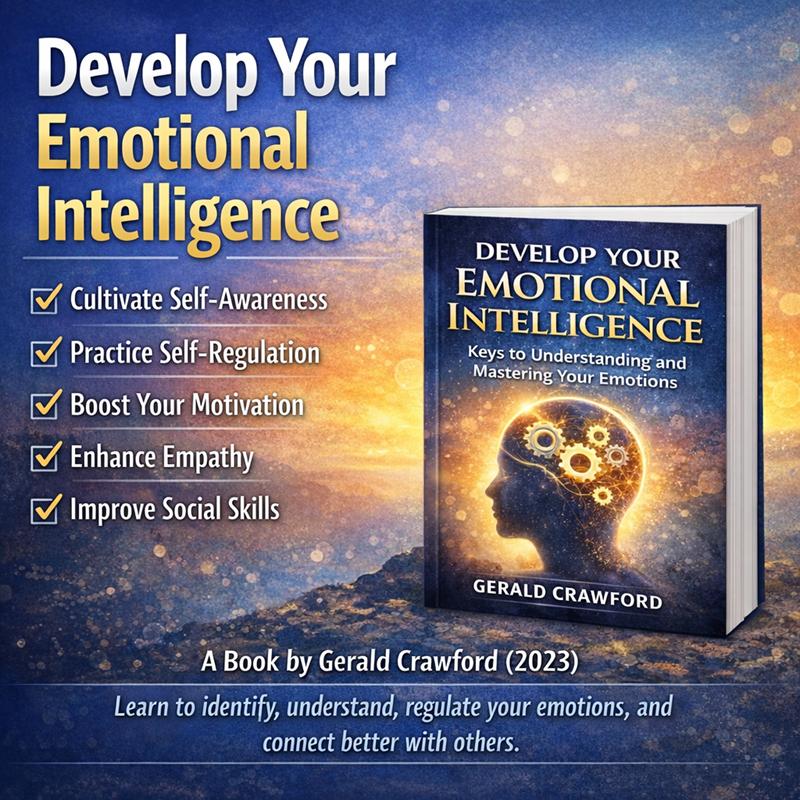
To develop Emotional Intelligence (EI), cultivate self-awareness by identifying and naming your emotions, self-regulation by managing those feelings, motivation by setting goals, empathy by understanding others' perspectives, and improving social skills through active listening and clear communication.

Category: Emotions (Page 3 of 5)

Let go of Jealousy, Insecurity emotions with Hypnotherapy

Here’s a hypnotherapy script to help let go of jealousy and insecurity emotions:

Introduction

(Soft, calming music starts playing. Speak in a gentle, soothing tone.)

“Welcome to this hypnotherapy session, where you’ll embark on a journey to release the emotions of jealousy and insecurity that have been holding you back. Allow yourself to relax, breathe deeply, and let go of any tension or stress. You’re safe, and you’re in control. Find a comfortable position, either sitting or lying down, and take a deep breath in… and out… Feel the air fill your lungs, and then release it slowly. As you exhale, imagine any worries or concerns leaving your body.”

Induction

“Close your eyes and begin to focus on your breath. Feel the sensation of the air moving in and out of your nostrils. Imagine a warm, soothing light beginning to fill your body, starting at the crown of your head. As this light travels down through your face, neck, and shoulders, it melts away any tension or stress, leaving you feeling calm and relaxed. Allow this light to continue down through your arms, hands, chest, abdomen, lower back, and finally, your legs and feet. With each breath, feel yourself becoming more and more relaxed, more and more at ease.”

Deepening

“Imagine yourself standing at the top of a staircase, with each step representing a deeper level of relaxation. With each breath, take a step down, feeling yourself becoming more relaxed, more calm, and more focused. As you descend, repeat the following phrase to yourself: ‘I am letting go, I am releasing, I am free.’ Take another step down, and another, feeling yourself becoming more and more relaxed. You’re now at a peaceful, serene place, where you can confront and release the emotions of jealousy and insecurity.”

Confronting Jealousy and Insecurity

“Imagine a large, empty box in front of you. This box represents the container for your jealousy and insecurity. Visualize all the times you’ve felt jealous or insecure, all the situations that have triggered these emotions. See the faces, hear the voices, and relive the feelings. But this time, as you recall these experiences, imagine yourself observing them from a detached perspective. You’re not reliving the emotions; you’re simply acknowledging them. Now, imagine taking each of these memories, and gently placing them into the box. As you do, say to yourself: ‘I release you, I let you go, I am free from your grasp.'”

Releasing the Emotions

“Imagine a bright, warm light beginning to fill the box. This light represents your inner strength, your confidence, and your self-worth. As the light grows, it dissolves the memories, the emotions, and the thoughts that have been holding you back. The box begins to shrink, becoming smaller and smaller, until it disappears completely. You’re left with a sense of emptiness, a sense of release, and a sense of freedom. Repeat the following phrase to yourself: ‘I am enough, I am worthy, I am free from jealousy and insecurity.'”

Empowerment

“Imagine a new, empowered version of yourself emerging. This version is confident, self-assured, and free from the burdens of jealousy and insecurity. See yourself handling situations with ease, responding to challenges with confidence, and trusting yourself completely. Feel the sense of pride, the sense of accomplishment, and the sense of freedom that comes with knowing you’re in control. Repeat the following phrase to yourself: ‘I trust myself, I trust my abilities, I am capable and competent.'”

Counting Up and Awakening

“Take a deep breath in, and as you exhale, begin to slowly count up from one to five. With each number, feel yourself becoming more and more alert, more and more focused. When you reach the number five, you’ll be fully awake, feeling refreshed, renewed, and empowered. One… You’re beginning to stir, feeling a sense of calm and relaxation. Two… You’re becoming more alert, more focused. Three… You’re starting to feel more energized, more motivated. Four… You’re almost fully awake, feeling refreshed and renewed. Five… You’re now fully awake, feeling empowered, confident, and free from the emotions of jealousy and insecurity. Take a deep breath in, and when you’re ready, you can open your eyes.”

Conclusion

“Remember, the feelings of jealousy and insecurity are not a part of your true nature. You are enough, you are worthy, and you are free. Whenever you feel these emotions arising, take a deep breath, and remind yourself of the empowerment you’ve experienced in this session. You can return to this peaceful, serene place whenever you need to, and you can always trust yourself to handle any situation with confidence and ease.”


Impact of Emotions on Decision-Making – Emotional Regulation

Emotional Regulation: Emotional regulation involves managing and regulating one’s own emotions and the emotions of others.

let’s explore the impact of emotions on decision-making, focusing on emotional regulation. Emotional regulation refers to the ability to manage and modulate our emotional responses to various situations, and it plays a crucial role in decision-making.

What is Emotional Regulation?

Emotional regulation involves the processes by which we manage, modify, and modulate our emotional responses to achieve our goals, well-being, and social norms. It includes strategies such as reappraisal, suppression, and mindfulness to manage our emotional states.

Importance of Emotional Regulation in Decision-Making

1. Reducing Impulsive Decisions: Emotional regulation helps us reduce impulsive decisions by allowing us to take a step back, assess the situation, and consider alternative options.

2. Improving Cognitive Function: Emotional regulation enhances cognitive function by reducing the impact of emotional biases, such as confirmation bias, anchoring bias, and availability heuristic.

3. Increasing Self-Awareness: Emotional regulation increases self-awareness, which is essential for recognizing our emotions, values, and goals, and making decisions that align with them.

4. Enhancing Creativity: Emotional regulation can enhance creativity by allowing us to explore different options, take calculated risks, and consider novel solutions.

5. Fostering Better Relationships: Emotional regulation helps us navigate social situations, build stronger relationships, and communicate more effectively, all of which are essential for making decisions that involve others.

Strategies for Emotional Regulation

1. Mindfulness: Practice mindfulness techniques, such as meditation or deep breathing, to become more aware of your emotions and thoughts.

2. Self-Monitoring: Regularly self-monitor your emotions, thoughts, and physical sensations to recognize patterns and triggers.

3. Reappraisal: Engage in cognitive reappraisal, which involves reinterpreting the meaning of a situation to reduce its emotional impact.

4. Suppression: Use emotional suppression strategies, such as distraction or reframing, to manage intense emotions and prevent impulsive decisions.

5. Emotional Labeling: Label and acknowledge your emotions, which can help reduce their intensity and increase self-awareness.

Examples of Emotional Regulation in Decision-Making

1. Investment Decisions: An investor may use emotional regulation to manage their fear of loss and make more rational investment decisions.

2. Career Choices: A professional may use emotional regulation to manage their anxiety about a new job opportunity and make a more informed decision about their career.

3. Relationship Decisions: A person may use emotional regulation to manage their emotions and make a more rational decision about whether to end a relationship.

4. Health Decisions: A patient may use emotional regulation to manage their anxiety about a medical diagnosis and make a more informed decision about their treatment options.

Benefits of Emotional Regulation in Decision-Making

1. Better Decision Outcomes: Emotional regulation can lead to better decision outcomes by reducing the impact of emotional biases and impulsive decisions.

2. Increased Confidence: Emotional regulation can increase confidence in decision-making by allowing individuals to trust their thoughts, feelings, and values.

3. Improved Well-being: Emotional regulation can improve overall well-being by reducing stress, anxiety, and other negative emotions that can interfere with decision-making.

4. Enhanced Creativity: Emotional regulation can enhance creativity by allowing individuals to explore novel solutions and consider alternative options.

By developing emotional regulation skills, you can make more informed, rational, and effective decisions that align with your goals, values, and well-being.

Impact of Emotions on Decision-Making – Empathy and Compassion

Empathy and Compassion: Empathy and compassion are essential for building strong, supportive relationships.

let’s explore the impact of emotions on decision-making, focusing on empathy and compassion. Empathy and compassion are essential emotions that can significantly influence our decision-making, particularly in situations involving other people or living beings.

What is Empathy?

Empathy is the ability to understand and share the feelings of others, often by putting oneself in their perspective. It involves being able to imagine how someone else might be thinking or feeling, and using that understanding to guide our actions and decisions.

What is Compassion?

Compassion is the feeling of sympathy and concern for the suffering or well-being of others. It involves a desire to help alleviate the suffering of others, and to promote their happiness and well-being.

Impact of Empathy and Compassion on Decision-Making

1. Improved Relationships: Empathy and compassion can lead to stronger, more meaningful relationships, as we’re better able to understand and support the people around us.

2. More Informed Decisions: By considering the perspectives and feelings of others, we can make more informed decisions that take into account the potential impacts on all parties involved.

3. Increased Cooperation: Empathy and compassion can foster cooperation and collaboration, as we’re more likely to work together and find mutually beneficial solutions.

4. Better Conflict Resolution: Empathy and compassion can help us resolve conflicts more effectively, by understanding the underlying needs and concerns of all parties involved.

5. More Ethical Decisions: By considering the well-being of others, we’re more likely to make decisions that are ethical and responsible.

Examples of Empathy and Compassion in Decision-Making

1. Business Decisions: A company may decide to implement a new policy that benefits its employees, such as flexible working hours or mental health support, due to empathy and compassion for their well-being.

2. Personal Relationships: A person may decide to end a relationship, not because they don’t care about the other person, but because they empathize with their own needs and realize it’s not a healthy partnership.

3. Environmental Decisions: A community may decide to adopt sustainable practices, such as reducing waste or conserving energy, due to compassion for the planet and its inhabitants.

4. Social Justice: A social movement may advocate for policy changes, such as equal rights or access to education, due to empathy and compassion for marginalized communities.

Strategies for Cultivating Empathy and Compassion

1. Active Listening: Practice active listening, by fully engaging with others and seeking to understand their perspectives and feelings.

2. Perspective-Taking: Engage in perspective-taking, by imagining how others might be thinking or feeling, and using that understanding to guide your decisions.

3. Mindfulness: Cultivate mindfulness, by being present and fully engaged in the moment, and using that awareness to inform your decisions.

4. Self-Reflection: Engage in self-reflection, by examining your own thoughts, feelings, and biases, and using that understanding to develop empathy and compassion for others.

5. Education and Exposure: Seek out diverse perspectives and experiences, through education, travel, or volunteering, to broaden your understanding and empathy for others.

By cultivating empathy and compassion, you can make more informed, responsible, and compassionate decisions that consider the well-being of all parties involved.

Impact of Emotions on Decision-Making – Emotional Contagion

Emotional Contagion: Emotions can be contagious, influencing the emotions and behaviors of others.

let’s explore the impact of emotions on decision-making, focusing on emotional contagion. Emotional contagion refers to the phenomenon where we “catch” and mirror the emotions of others, often unconsciously, and how this can influence our decision-making.

What is Emotional Contagion?

Emotional contagion is a process where we automatically and unconsciously mimic the emotions of others, often through facial expressions, body language, tone of voice, and other nonverbal cues. This can lead to a convergence of emotional states, where we feel what others are feeling, even if we’re not consciously aware of it.

How Emotional Contagion Influences Decision-Making

1. Social Influence: Emotional contagion can lead to social influence, where we’re more likely to adopt the opinions, behaviors, and decisions of others, simply because we’re feeling the same emotions.

2. Emotional Priming: Emotional contagion can prime us with certain emotions, making us more receptive to certain ideas, messages, or decisions that align with those emotions.

3. Decision-Making Biases: Emotional contagion can introduce biases into our decision-making, such as confirmation bias, where we seek out information that confirms our emotional state, or anchor bias, where we rely too heavily on the emotions of others.

4. Risk-Taking: Emotional contagion can influence our risk-taking behavior, with some emotions (e.g., excitement, enthusiasm) encouraging more risk-taking, and others (e.g., fear, anxiety) promoting more cautious behavior.

Examples of Emotional Contagion in Decision-Making

1. Group Decisions: In a meeting, if one person expresses enthusiasm and confidence about a project, others may “catch” this emotion and become more supportive of the idea.

2. Marketing and Advertising: Marketers often use emotional contagion to create an emotional connection with their audience, making them more receptive to their message and more likely to make a purchase.

3. Investing and Finance: Investors may be influenced by the emotions of others, such as fear or greed, when making investment decisions, leading to herd behavior and potential market instability.

4. Personal Relationships: Emotional contagion can play a significant role in personal relationships, where we may “catch” the emotions of our partner, family member, or friend, and adjust our decisions accordingly.

Strategies for Managing Emotional Contagion

1. Self-Awareness: Develop self-awareness of your emotions and how they’re influencing your decision-making, recognizing when you’re “catching” emotions from others.

2. Emotional Regulation: Learn to regulate your emotions, taking a step back to assess the situation objectively, rather than simply mirroring the emotions of others.

3. Diverse Perspectives: Seek out diverse perspectives and experiences to reduce the influence of emotional contagion and make more informed decisions.

4. Critical Thinking: Practice critical thinking and analysis, evaluating information objectively, rather than relying on emotional cues from others.

5. Mindfulness: Cultivate mindfulness and emotional intelligence to become more aware of your emotions and the emotions of others, making more intentional decisions.

By understanding emotional contagion and its impact on decision-making, you can develop strategies to manage its influence and make more informed, intentional decisions.

Impact of Emotions on Decision-Making – Decision-Making Styles

Decision-Making Styles: Emotions can influence our decision-making styles, leading to more impulsive or more deliberate decisions.

let’s explore the impact of emotions on decision-making, focusing on decision-making styles. Decision-making styles refer to the ways in which individuals approach and make decisions, and emotions play a significant role in shaping these styles.

Decision-Making Styles

1. Rational Style: This style involves a systematic, analytical approach to decision-making, where emotions are set aside in favor of objective evaluation.

2. Intuitive Style: This style relies on instinct, gut feelings, and emotional intuition to guide decision-making, often with a more rapid and spontaneous approach.

3. Emotive Style: This style prioritizes emotional considerations, such as personal values, feelings, and relationships, in the decision-making process.

4. Avoidant Style: This style involves avoiding decisions or procrastinating, often due to emotional discomfort, fear, or anxiety.

5. Spontaneous Style: This style involves making quick, impulsive decisions, often driven by emotions such as excitement, enthusiasm, or impulsivity.

Emotional Influences on Decision-Making Styles

1. Emotional Intelligence: Individuals with high emotional intelligence tend to use a more rational and intuitive decision-making style, as they are better able to recognize and manage their emotions.

2. Personality Traits: Certain personality traits, such as neuroticism or extraversion, can influence decision-making styles, with more emotional individuals tending towards an emotive or spontaneous style.

3. Cultural Background: Cultural background and upbringing can shape decision-making styles, with some cultures emphasizing rationality and others emphasizing emotional considerations.

4. Contextual Factors: Contextual factors, such as time pressure, stress, or social influence, can also impact decision-making styles, with individuals tending towards a more avoidant or spontaneous style in high-pressure situations.

Examples of Decision-Making Styles

1. Business Decisions: A CEO may use a rational decision-making style to evaluate business opportunities, while a marketing manager may use an intuitive style to develop creative campaigns.

2. Personal Relationships: An individual may use an emotive decision-making style when choosing a romantic partner, while a friend may use a spontaneous style when deciding on social plans.

3. Financial Decisions: An investor may use a rational decision-making style to evaluate investment opportunities, while a consumer may use an avoidant style when faced with complex financial decisions.

Strategies for Adaptive Decision-Making

1. Self-Awareness: Develop self-awareness of your decision-making style and emotional tendencies to recognize when emotions are influencing your decisions.

2. Emotional Regulation: Learn to manage and regulate your emotions to adopt a more adaptive decision-making style, such as switching from an emotive to a rational style in high-stakes situations.

3. Decision-Making Frameworks: Use structured decision-making frameworks, such as cost-benefit analysis or decision trees, to support more rational and intuitive decision-making.

4. Diverse Perspectives: Seek out diverse perspectives and experiences to broaden your emotional repertoire and inform your decision-making.

5. Reflection and Learning: Regularly reflect on your decisions and outcomes to learn from your experiences and refine your decision-making style.

By understanding your decision-making style and the emotional influences that shape it, you can develop more effective and adaptive decision-making strategies.

« Older posts Newer posts »
Back a Buddy Show your Support