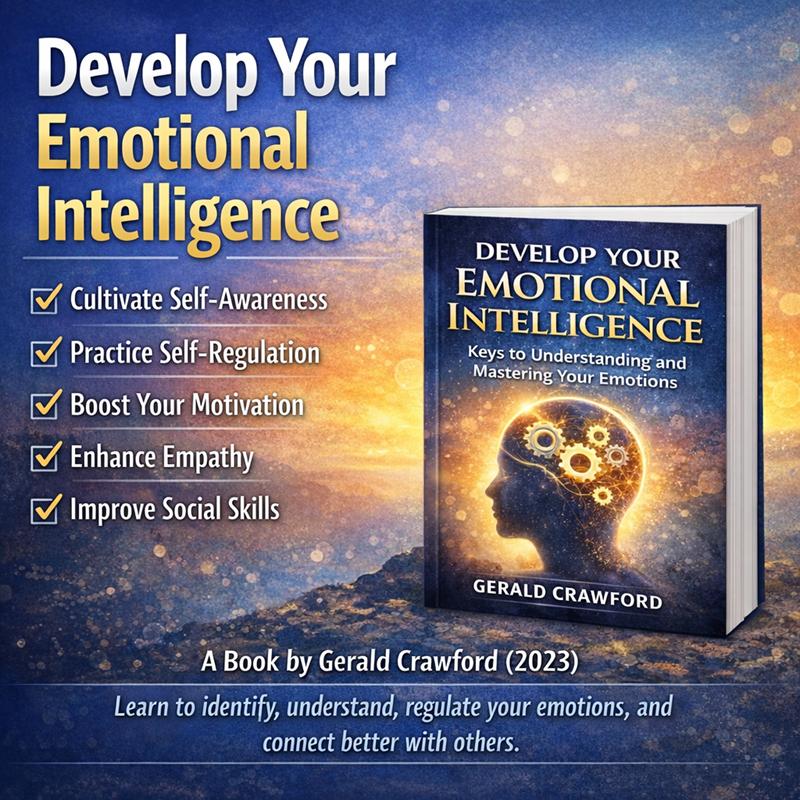
To develop Emotional Intelligence (EI), cultivate self-awareness by identifying and naming your emotions, self-regulation by managing those feelings, motivation by setting goals, empathy by understanding others' perspectives, and improving social skills through active listening and clear communication.

Category: Emotional Intelligence Assessment (Page 1 of 2)

Benefits of Emotional Intelligence Assessment

Emotional Intelligence (EI) assessments can have numerous benefits for individuals, organizations, and society as a whole.

Here are some of the benefits of EI assessments:

Individual Benefits:

1. Self-Awareness: EI assessments can help individuals understand their strengths and weaknesses, and identify areas for improvement.

2. Personal Growth: By understanding their emotional intelligence, individuals can develop strategies to improve their relationships, decision-making, and overall well-being.

3. Career Development: EI assessments can help individuals understand their career strengths and weaknesses, and identify potential career paths that align with their emotional intelligence.

4. Improved Relationships: EI assessments can help individuals understand how to communicate more effectively, build stronger relationships, and manage conflict.

5. Better Decision-Making: EI assessments can help individuals understand how to make more informed decisions that take into account their emotions, values, and goals.

Organizational Benefits:

1. Improved Leadership: EI assessments can help organizations identify and develop leaders who possess high emotional intelligence, leading to more effective management and decision-making.

2. Enhanced Teamwork: EI assessments can help teams understand each other’s strengths and weaknesses, leading to more effective communication, collaboration, and conflict resolution.

3. Increased Employee Engagement: EI assessments can help organizations understand their employees’ emotional needs, leading to increased employee satisfaction, engagement, and retention.

4. Better Customer Service: EI assessments can help organizations develop customer-facing staff who possess high emotional intelligence, leading to improved customer satisfaction and loyalty.

5. Improved Organizational Culture: EI assessments can help organizations create a positive and supportive culture that values emotional intelligence, leading to improved morale, productivity, and performance.

Societal Benefits:

1. Improved Mental Health: EI assessments can help individuals understand their emotional needs, leading to improved mental health and well-being.

2. Reduced Conflict: EI assessments can help individuals understand how to manage conflict and improve relationships, leading to reduced violence, crime, and social unrest.

3. Improved Education: EI assessments can help educators understand their students’ emotional needs, leading to improved teaching methods, student engagement, and academic performance.

4. Better Community Relationships: EI assessments can help community leaders and organizations understand the emotional needs of their constituents, leading to improved community relationships, social cohesion, and civic engagement.

5. Increased Global Understanding: EI assessments can help individuals understand and appreciate cultural differences, leading to increased global understanding, tolerance, and cooperation.

Business Benefits:

1. Improved Performance: EI assessments can help organizations identify and develop high-performing employees, leading to improved productivity, efficiency, and effectiveness.

2. Increased Revenue: EI assessments can help organizations develop sales teams who possess high emotional intelligence, leading to increased sales, revenue, and customer loyalty.

3. Reduced Turnover: EI assessments can help organizations understand their employees’ emotional needs, leading to reduced turnover, absenteeism, and recruitment costs.

4. Improved Brand Reputation: EI assessments can help organizations develop customer-facing staff who possess high emotional intelligence, leading to improved brand reputation, customer satisfaction, and loyalty.

5. Competitive Advantage: EI assessments can help organizations develop a competitive advantage by identifying and developing employees who possess high emotional intelligence, leading to improved innovation, creativity, and adaptability.

Overall, EI assessments can have a significant impact on individuals, organizations, and society as a whole, leading to improved relationships, decision-making, and overall well-being.


Emotional Intelligence Assessment – Limitations and Criticisms

Emotional Intelligence (EI) assessments have been widely used in various settings, including education, employment, and personal development. However, like any other assessment tool, EI assessments have limitations and criticisms that need to be considered.

Limitations of EI Assessments:

1. Self-report bias: Many EI assessments rely on self-report data, which can be influenced by biases, such as social desirability bias or impression management.

2. Lack of standardization: There is no universally accepted standard for EI assessments, which can make it difficult to compare results across different assessments.

3. Cultural limitations: EI assessments may not be applicable or generalizable to all cultural contexts, as emotional intelligence can vary across cultures.

4. Limited scope: EI assessments may only assess a limited range of emotional intelligence skills, such as self-awareness or empathy, and may not capture the full range of emotional intelligence.

5. Test-retest reliability: EI assessments may not have high test-retest reliability, which can make it difficult to establish the stability of emotional intelligence over time.

Criticisms of EI Assessments:

1. Lack of theoretical clarity: The concept of emotional intelligence is not yet fully understood, and there is ongoing debate about its definition and measurement.

2. Overemphasis on individual differences: EI assessments may overemphasize individual differences in emotional intelligence, which can lead to a focus on deficits rather than strengths.

3. Limited predictive validity: EI assessments may not have strong predictive validity, which can make it difficult to establish the relationship between emotional intelligence and outcomes such as job performance or academic achievement.

4. Overuse and misuse: EI assessments may be overused or misused, such as in employment settings where they may be used as a sole criterion for hiring or promotion.

5. Lack of cultural sensitivity: EI assessments may not be culturally sensitive, which can lead to biases and unfairness in the assessment process.

Criticisms of Popular EI Assessments:

1. Mayer-Salovey-Caruso Emotional Intelligence Test (MSCEIT): The MSCEIT has been criticized for its lack of standardization and limited scope.

2. Bar-On Emotional Quotient Inventory (EQ-i): The EQ-i has been criticized for its self-report bias and lack of predictive validity.

3. Thomas-Kilmann Conflict Mode Instrument (TKI): The TKI has been criticized for its limited scope and lack of standardization.

Future Directions:

1. Develop more comprehensive and culturally sensitive EI assessments: Future EI assessments should aim to capture a broader range of emotional intelligence skills and be culturally sensitive.

2. Establish clear standards for EI assessment: There is a need for clear standards and guidelines for EI assessment to ensure consistency and fairness.

3. Investigate the predictive validity of EI assessments: More research is needed to establish the predictive validity of EI assessments and their relationship to outcomes such as job performance or academic achievement.

4. Use EI assessments in conjunction with other assessment tools: EI assessments should be used in conjunction with other assessment tools, such as cognitive ability tests or personality assessments, to provide a more comprehensive picture of an individual’s abilities and strengths.

Conclusion:

While EI assessments have been widely used and have shown promise in various settings, they are not without limitations and criticisms. It is essential to consider these limitations and criticisms when using EI assessments and to strive for more comprehensive, culturally sensitive, and theoretically sound assessments in the future.

Emotional Intelligence Test 4 – Thomas-Kilmann Conflict Mode Instrument (TKI)

A survey that assesses an individual’s conflict resolution style and emotional intelligence.

The Thomas-Kilmann Conflict Mode Instrument (TKI) is a widely used assessment tool that helps individuals understand their conflict handling styles and behaviors. Developed by Kenneth Thomas and Ralph Kilmann, the TKI is based on the idea that individuals have different preferences for handling conflict, which can be grouped into five distinct modes.

What are the five conflict modes?

The TKI identifies five conflict modes, which are:

1. Competing: This mode involves standing up for one’s own interests and trying to win at all costs. Individuals who prefer this mode tend to be assertive, competitive, and sometimes aggressive.

2. Collaborating: This mode involves working together with others to find a mutually beneficial solution. Individuals who prefer this mode tend to be cooperative, creative, and solution-focused.

3. Compromising: This mode involves finding a middle ground and making concessions to reach a settlement. Individuals who prefer this mode tend to be diplomatic, flexible, and willing to negotiate.

4. Avoiding: This mode involves staying away from conflict or delaying its resolution. Individuals who prefer this mode tend to be indirect, evasive, and sometimes passive.

5. Accommodating: This mode involves giving in to others’ needs and wants, often at the expense of one’s own interests. Individuals who prefer this mode tend to be cooperative, supportive, and sometimes self-sacrificing.

How is the TKI assessment administered?

The TKI assessment is typically administered online or in a paper-and-pencil format, and consists of 30 questions that ask individuals to indicate their preferred conflict handling style in different situations. The assessment takes around 10-15 minutes to complete.

What are the benefits of the TKI?

The TKI has several benefits, including:

1. Improved conflict resolution: By understanding individual conflict handling styles, teams and organizations can develop more effective conflict resolution strategies.

2. Enhanced communication: The TKI can help individuals communicate more effectively and understand each other’s needs and perspectives.

3. Increased collaboration: The TKI can help teams and organizations work together more effectively by identifying and leveraging individual strengths and preferences.

4. Better decision-making: The TKI can help individuals and teams make more informed decisions by considering multiple perspectives and approaches.

What are the limitations of the TKI?

The TKI has several limitations, including:

1. Situational dependence: The TKI is based on self-report data, which can be influenced by situational factors and may not reflect an individual’s actual behavior.

2. Limited scope: The TKI only assesses conflict handling styles and may not capture other important aspects of conflict resolution, such as communication or negotiation skills.

3. Cultural limitations: The TKI was developed in a Western cultural context and may not be applicable or generalizable to other cultural contexts.

How is the TKI used in practice?

The TKI is widely used in various settings, including:

1. Organizational development: The TKI is used to improve team collaboration, communication, and conflict resolution.

2. Leadership development: The TKI is used to help leaders understand their conflict handling style and develop more effective conflict resolution strategies.

3. Mediation and dispute resolution: The TKI is used to help mediators and disputants understand their conflict handling styles and develop more effective conflict resolution strategies.

4. Education and research: The TKI is used in educational and research settings to study conflict resolution, communication, and negotiation.

Conclusion

The Thomas-Kilmann Conflict Mode Instrument (TKI) is a widely used and respected assessment tool that helps individuals understand their conflict handling styles and behaviors. While it has its limitations, the TKI can be a valuable tool for improving conflict resolution, communication, and collaboration in various settings.

Emotional Intelligence Test 3 – Goleman’s Emotional Competence Inventory (ECI):

A 360-degree feedback tool that assesses emotional intelligence across 12 competencies, including self-awareness, self-regulation, and social skills.

Goleman’s Emotional Competence Inventory (ECI) is a widely used framework for assessing emotional intelligence (EI) in individuals. Developed by Daniel Goleman, a renowned psychologist and author, the ECI is based on his model of emotional intelligence, which consists of five components:

1. Self-Awareness: The ability to recognize and understand one’s own emotions, values, and motivations.

2. Self-Regulation: The ability to control and manage one’s own emotions, impulses, and behaviors.

3. Motivation: The ability to use emotions to drive motivation, goal-setting, and achievement.

4. Empathy: The ability to recognize and understand emotions in others.

5. Social Skills: The ability to effectively communicate and interact with others, including building strong relationships, managing conflict, and influencing others.

Components of the ECI

The ECI is a 360-degree feedback instrument that assesses an individual’s emotional competence across 12 key areas, which are grouped into the five components:

1. Self-Awareness:

* Emotional Awareness: Recognizing and understanding one’s own emotions.

* Accurate Self-Assessment: Having a realistic understanding of one’s own strengths and weaknesses.

2. Self-Regulation:

* Self-Control: Managing one’s own emotions, impulses, and behaviors.

* Trustworthiness: Demonstrating integrity, reliability, and dependability.

3. Motivation:

* Achievement Drive: Being motivated to achieve goals and succeed.

* Commitment: Being committed to a cause, organization, or team.

4. Empathy:

* Empathy: Recognizing and understanding emotions in others.

* Organizational Awareness: Understanding the emotional tone and politics of an organization.

5. Social Skills:

* Influence: Effectively communicating and persuading others.

* Leadership: Inspiring and guiding others towards a shared vision.

* Communication: Effectively communicating and interacting with others.

* Change Catalyst: Initiating and managing change.

* Conflict Management: Managing and resolving conflicts effectively.

* Building Bonds: Building and maintaining strong relationships.

How the ECI is administered

The ECI is typically administered as a 360-degree feedback process, where an individual receives feedback from multiple sources, including:

1. Self-Assessment: The individual completes a self-assessment questionnaire to provide their own ratings.

2. Manager’s Feedback: The individual’s manager provides feedback on their performance and emotional competence.

3. Peer Feedback: The individual’s peers provide feedback on their performance and emotional competence.

4. Direct Report Feedback: The individual’s direct reports provide feedback on their performance and emotional competence.

Scoring and interpretation

The ECI is scored using a normative database, which provides a benchmark for emotional competence. The scores are then used to identify areas of strength and weakness, and to provide a framework for development and improvement.

Benefits of the ECI

The ECI has several benefits, including:

1. Comprehensive framework: The ECI provides a comprehensive framework for assessing emotional intelligence and emotional competence.

2. 360-degree feedback: The ECI provides a 360-degree view of an individual’s emotional competence, which can help identify areas for development and improvement.

3. Development-focused: The ECI is designed to help individuals develop and improve their emotional competence, rather than simply assessing their abilities.

4. Research-backed: The ECI is backed by extensive research on emotional intelligence and emotional competence.

Limitations of the ECI

The ECI has several limitations, including:

1. Subjective nature: The ECI is based on self-report and observer ratings, which can be subjective and influenced by biases.

2. Limited generalizability: The ECI may not be applicable to all cultures, contexts, or populations.

3. Need for trained administrators: The ECI requires trained administrators to ensure that the feedback is accurate and effective.

Conclusion

The ECI is a widely used and respected framework for assessing emotional intelligence and emotional competence. While it has its limitations, it provides a comprehensive framework for understanding and developing emotional competence, and can be a valuable tool for individuals, teams, and organizations seeking to improve their emotional intelligence and performance.

Emotional Intelligence Test 2 – Bar-On Emotional Quotient Inventory (EQ-i):

A self-report questionnaire that assesses emotional intelligence across five dimensions: self-awareness, self-regulation, motivation, empathy, and social skills.

The Bar-On Emotional Quotient Inventory (EQ-i) is a widely used, self-report measure of emotional intelligence (EI) that was developed by Reuven Bar-On in 1980. The EQ-i is designed to assess an individual’s emotional and social abilities, and it has been used in a variety of settings, including education, employment, and personal development.

What is the EQ-i?

The EQ-i is a 133-item questionnaire that is divided into five main components, which are:

1. Intrapersonal Skills: The ability to understand and recognize one’s own emotions, motivations, and behaviors.

2. Interpersonal Skills: The ability to understand and recognize the emotions, motivations, and behaviors of others.

3. Adaptability: The ability to adapt to changing situations and circumstances.

4. Stress Management: The ability to manage and regulate one’s own stress and emotions.

5. General Mood: The overall mood and disposition of the individual.

How is the EQ-i scored?

The EQ-i is scored on a scale of 0-100, with higher scores indicating higher levels of emotional intelligence. The test yields a total score, as well as subscores for each of the five main components.

What are the strengths and limitations of the EQ-i?

The EQ-i has several strengths, including:

* It is a well-researched and validated measure of emotional intelligence.

* It has been used in a wide range of studies and has been shown to be reliable and effective.

* It provides a comprehensive assessment of emotional intelligence, including intrapersonal, interpersonal, adaptability, stress management, and general mood.

However, the EQ-i also has some limitations, including:

* It is a self-report measure, which can be subject to biases and inaccuracies.

* It requires a relatively high level of cognitive ability and reading comprehension, which can make it inaccessible to some individuals.

* It has been criticized for its lack of theoretical rigor and its failure to provide a clear and concise definition of emotional intelligence.

What are the applications of the EQ-i?

The EQ-i has a wide range of applications, including:

Personal Development: The EQ-i can be used to identify areas for personal growth and development, and to provide a framework for improving emotional intelligence.

Education: The EQ-i can be used in educational settings to assess and develop the emotional intelligence of students.

Employment: The EQ-i can be used in employment settings to assess and develop the emotional intelligence of employees, and to provide a framework for improving job performance.

Research: The EQ-i can be used in research studies to investigate the relationship between emotional intelligence and various outcomes, such as job performance, academic achievement, and mental health.

Comparison to other emotional intelligence measures

The EQ-i is one of several widely used measures of emotional intelligence, including the Mayer-Salovey-Caruso Emotional Intelligence Test (MSCEIT) and the Emotional Competence Inventory (ECI). Each of these measures has its own strengths and limitations, and the choice of which one to use will depend on the specific needs and goals of the user.

Conclusion

The EQ-i is a widely used and well-respected measure of emotional intelligence that provides a comprehensive assessment of an individual’s emotional and social abilities. While it has some limitations, it is a valuable tool for researchers, educators, and practitioners who are interested in understanding and developing emotional intelligence.

« Older posts
Back a Buddy Show your Support