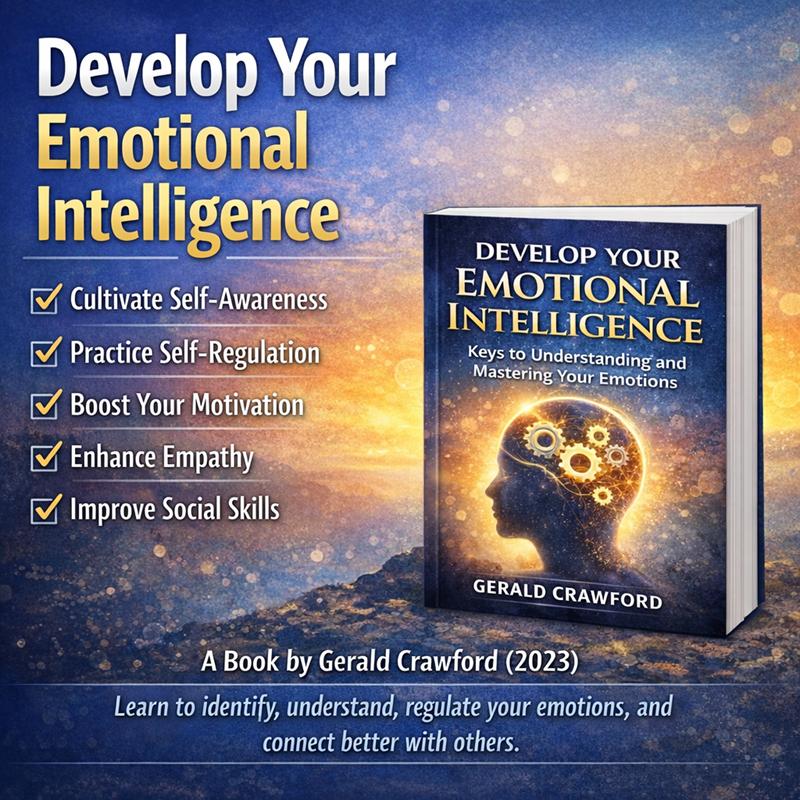
To develop Emotional Intelligence (EI), cultivate self-awareness by identifying and naming your emotions, self-regulation by managing those feelings, motivation by setting goals, empathy by understanding others' perspectives, and improving social skills through active listening and clear communication.

Category: 111 Development your Emotional Intelligence (Page 3 of 6)

Case Study 24: Developing Emotional Intelligence and healing from Fear (100): Anxiety, survival-based, contracted.

Case Study 24: Developing Emotional Intelligence and Healing from Fear

Consciousness Level: Fear (100)
Emotional State: Anxiety, survival-based, contracted


Background

Sipho (35) is capable, intelligent, and cautious — often described by others as “responsible.” Internally, however, his life is governed by anxiety. Every decision is filtered through the question: “What could go wrong?”

Sipho grew up in an unpredictable environment where safety was uncertain and mistakes carried consequences. Over time, his nervous system learned to stay alert. Fear became not just an emotion, but a way of orienting to life.


Emotional Landscape at the Level of Fear

At the Fear level, the core belief is:
“I am not safe.”

Sipho’s emotional world was characterised by:

  • Persistent anxiety and worry

  • Anticipation of loss or danger

  • Mental rehearsal of worst-case scenarios

  • Difficulty relaxing, even in safe conditions

Fear narrowed his attention. The future felt threatening, and the present was rarely experienced fully.


Impact on Relationships

Fear strongly shaped Sipho’s relational patterns:

  • Those He Loved and Cared For:
    He worried excessively about losing them, which led to control or emotional distance.

  • Those He Needed:
    He relied heavily on reassurance, sometimes mistaking safety for dependency.

  • Those He Tolerated or Felt Indifferent To:
    Neutral interactions were interpreted as potential threats or judgments.

Fear distorted perception — ambiguity was experienced as danger.


Behavioural Patterns

Sipho’s behaviour reflected survival orientation:

  • Avoidance of risk and change

  • Over-planning and excessive preparation

  • Difficulty making decisions

  • Tension in the body and shallow breathing

While these behaviours reduced anxiety short-term, they reinforced fear long-term.


The Turning Point: Distinguishing Danger from Discomfort

Sipho’s healing began with a crucial EI insight:

Fear often confuses discomfort with danger.

Through therapy, he learned to ask:

  • “Am I unsafe — or just uncomfortable?”

  • “Is this a real threat or an imagined one?”

This question alone created space between emotion and reaction.


Developing Emotional Intelligence

Sipho developed EI through three foundational skills:


1. Nervous System Awareness

He learned to recognise fear in his body:

  • Tight chest

  • Rapid thoughts

  • Shallow breathing

This shifted fear from an identity to a physiological state.


2. Emotional Regulation

Sipho practiced calming techniques:

  • Slow breathing

  • Grounding in the present

  • Naming fear without acting on it

Regulation reduced fear’s intensity and urgency.


3. Courageous Micro-Actions

Rather than eliminating fear, Sipho practiced acting with fear:

  • Speaking up once

  • Taking small risks

  • Allowing uncertainty

Each action weakened fear’s authority.


Movement Up the Consciousness Scale

Sipho’s growth followed a clear progression:

  • From Fear (100) → awareness and regulation

  • To Desire (125) → motivation and forward movement

  • Toward Courage (200) → empowered action despite uncertainty

Fear softened as confidence grew.


Outcome

Over time, Sipho experienced:

  • Reduced baseline anxiety

  • Increased trust in himself

  • More spontaneous engagement with life

  • Healthier, less controlling relationships

Fear no longer ran his life — it became a signal, not a command.


Key Learning

Fear is not a flaw — it is a protective system that has not yet been updated.
Emotional intelligence teaches us to honour fear without obeying it.

When fear is regulated and understood, it becomes the doorway to courage rather than a barrier to living.

Case Study 23: Developing Emotional Intelligence and healing from Grief (75): Sadness, loss.

Case Study 23: Developing Emotional Intelligence and Healing from Grief

Consciousness Level: Grief (75)
Emotional State: Sadness, loss


Background

Mariam (51) experienced a profound loss within a short period: the death of her mother, followed by the end of a long-standing marriage. While she continued to function in daily life, an undercurrent of sadness coloured everything. Her grief was not chaotic or dramatic — it was persistent, quietly reshaping how she saw the world.

Unlike apathy, Mariam still felt deeply. Her pain was a sign that something meaningful had been lost — but she did not yet know how to integrate that loss.


Emotional Landscape at the Level of Grief

At the Grief level, the core belief is:
“Something important is gone, and I don’t know how to live without it.”

Mariam’s emotional experience included:

  • Deep sadness and longing

  • Waves of nostalgia and regret

  • Tearfulness triggered by memories

  • Difficulty imagining a meaningful future

Grief contains more energy than apathy — but that energy is directed backward.


Impact on Relationships

Grief reshaped Mariam’s relationships in complex ways:

  • Those She Loved and Cared For:
    She sought comfort but also withdrew, fearing she was a burden.

  • Those She Needed:
    She relied heavily on a small circle, sometimes feeling guilty for needing support.

  • Those She Tolerated or Felt Indifferent To:
    Neutral interactions felt hollow and effortful.

Grief narrowed her relational world — depth increased, breadth decreased.


Behavioural Patterns

Mariam’s behaviours reflected mourning and emotional processing:

  • Replaying memories

  • Avoiding new commitments

  • Reduced interest in future planning

  • Clinging to familiar routines

These behaviours were not dysfunctional — they were part of emotional digestion.


The Turning Point: Allowing Grief Without Collapse

Healing began when Mariam stopped trying to “move on” and instead learned to stay present with grief without being consumed by it.

A pivotal insight emerged:

Grief does not need to be fixed — it needs to be felt.

This marked a shift from resistance to emotional acceptance.


Developing Emotional Intelligence

Mariam strengthened EI through three key capacities:


1. Emotional Allowance

She practiced letting sadness rise and fall without judgment:

  • Crying without shame

  • Speaking openly about loss

  • Naming emotions as they appeared

This prevented grief from becoming frozen or suppressed.


2. Meaning-Making

Mariam began asking:

  • “What did this loss teach me?”

  • “How has love shaped who I am?”

This reframed grief as evidence of connection rather than failure.


3. Gradual Reorientation

She gently reintroduced forward-looking actions:

  • Small plans

  • New interests

  • Social engagements without pressure

The future was approached softly, not forced.


Movement Up the Consciousness Scale

Mariam’s healing followed a natural arc:

  • From Grief (75) → emotional expression

  • To Fear (100) → uncertainty about the future

  • Toward Courage (200) → choosing engagement despite pain

Grief did not disappear — it transformed.


Outcome

Over time, Mariam experienced:

  • A softer relationship with loss

  • Renewed emotional depth without overwhelm

  • Increased openness to new meaning

  • Stronger emotional authenticity

Her grief became integrated, not erased.


Key Learning

Grief is not weakness — it is the cost of love.
When met with emotional intelligence, grief becomes a bridge between loss and growth.

Healing does not mean forgetting.
It means carrying love forward in a new form.

Case Study 22: Developing Emotional Intelligence and healing from Apathy (50): Giving up on life, hopelessness.

Case Study 22: Developing Emotional Intelligence and Healing from Apathy

Consciousness Level: Apathy (50)
Emotional State: Giving up on life, hopelessness


Background

Joseph (46) once described himself as “tired in a way sleep doesn’t fix.”
He was employed, physically healthy, and socially functional — yet emotionally disengaged from life. Nothing felt meaningful. Goals that once motivated him now felt pointless. He wasn’t actively depressed in a dramatic sense; he had simply stopped expecting life to improve.

Joseph had experienced years of quiet disappointments: career stagnation, the end of a long-term relationship, and repeated efforts that led nowhere. Over time, hope eroded. What remained was emotional shutdown.


Emotional Landscape at the Level of Apathy

At the Apathy level, the core belief is:
“Nothing I do will make a difference.”

Joseph’s emotional world was characterised by:

  • Emotional numbness

  • Low energy and motivation

  • Withdrawal from meaningful engagement

  • A sense of futility rather than sadness

Unlike grief, which feels heavy, apathy feels empty.


Impact on Relationships

Apathy reshaped Joseph’s relationships by removing emotional presence:

  • Those He Loved and Cared For:
    He became distant, not out of anger, but exhaustion. Loved ones felt shut out.

  • Those He Needed:
    He stopped advocating for himself, accepting poor treatment passively.

  • Those He Tolerated or Felt Indifferent To:
    He drifted into social invisibility, neither engaging nor resisting.

Apathy flattened relational dynamics — there was no conflict, but no connection either.


Behavioural Patterns

Joseph’s behaviours reflected emotional surrender:

  • Procrastination without anxiety

  • Neglect of long-term goals

  • Passive acceptance of unsatisfying situations

  • Minimal emotional expression

These behaviours were often misinterpreted as laziness, when in fact they signalled emotional depletion.


The Turning Point: Reintroducing Choice

Healing from apathy did not begin with passion or optimism.
It began with choice.

In therapy, Joseph was asked a deceptively simple question:

“What is one small action you could take today that contradicts giving up?”

This reframed life from an overwhelming burden to a series of manageable moments.


Developing Emotional Intelligence

Joseph rebuilt EI through three foundational steps:


1. Emotional Reconnection

Rather than forcing motivation, he focused on feeling anything:

  • Walking daily without goals

  • Listening to music mindfully

  • Naming bodily sensations

This gently reawakened emotional awareness.


2. Agency Restoration

Joseph practiced making small, deliberate choices:

  • Choosing when to engage

  • Choosing when to rest

  • Choosing what to tolerate

Each choice, however minor, weakened the belief that he was powerless.


3. Meaning Through Action

Meaning followed action — not the other way around.
Joseph committed to simple routines:

  • Regular meals

  • Light physical movement

  • Structured days

Consistency restored trust in himself.


Movement Up the Consciousness Scale

Joseph’s progression was subtle but transformative:

  • From Apathy (50) → emotional reconnection

  • To Grief (75) → allowing sadness and loss

  • Toward Courage (200) → reclaiming responsibility and engagement

Apathy lifted not through inspiration, but through participation.


Outcome

Over time, Joseph experienced:

  • Gradual return of emotional responsiveness

  • Renewed interest in life’s small details

  • Stronger relational presence

  • A growing sense of purpose

Hope did not arrive suddenly — it emerged quietly as he re-entered life.


Key Learning

Apathy is not the absence of feeling — it is the absence of hope.
It heals when people experience agency, choice, and incremental success.

Emotional intelligence restores life by teaching people that engagement precedes meaning.

Case Study 21: Developing Emotional Intelligence and healing from Guilt (30): Remorse, self-judgment.

Case Study 21: Developing Emotional Intelligence and Healing from Guilt

Consciousness Level: Guilt (30)
Emotional State: Remorse, self-judgment


Background

Naledi (38) is a dedicated professional and mother who is widely seen as responsible and caring. Yet internally, she carries a persistent sense of having failed — as a partner, a parent, and a person. Unlike shame, which attacks identity, Naledi’s emotional struggle focuses on actions she believes she “should have done differently.”

Her upbringing emphasised moral correctness and duty. Mistakes were not met with punishment, but with disappointment. Over time, Naledi learned that being “good” meant never letting anyone down. When she did, guilt quickly filled the space.


Emotional Landscape at the Level of Guilt

At the Guilt level, the dominant belief is:
“I did something wrong.”

Naledi’s emotional world was marked by:

  • Persistent self-blame

  • Rumination over past decisions

  • Difficulty forgiving herself

  • A sense of owing others emotional repayment

Unlike shame, guilt still allows a sense of self — but it is heavily burdened.


Impact on Relationships

Guilt shaped Naledi’s relationships in subtle but powerful ways:

  • Those She Loved and Cared For:
    She over-compensated, often sacrificing her own needs to “make up” for perceived failures.

  • Those She Needed:
    She feared disappointing authority figures and avoided honest conversations.

  • Those She Tolerated or Felt Indifferent To:
    She took responsibility for emotions that were not hers to carry.

Guilt blurred boundaries, turning care into obligation.


Behavioural Patterns

Naledi’s behaviour was driven by an internal moral accountant that never balanced:

  • Excessive apologising

  • Difficulty saying no

  • Over-functioning in relationships

  • Avoidance of situations that might trigger criticism

While these behaviours appeared selfless, they quietly drained her emotional energy.


The Turning Point: Responsibility Without Punishment

Naledi’s growth began when she learned that responsibility does not require self-punishment.

Through coaching, she was introduced to a key EI distinction:

Responsibility asks, “What can I do now?”
Guilt asks, “How bad should I feel?”

This insight marked the beginning of emotional maturity.


Developing Emotional Intelligence

Naledi strengthened her EI through three core practices:


1. Emotional Differentiation

She learned to distinguish:

  • Healthy remorse (signals values)

  • Unhealthy guilt (endless self-judgment)

This allowed her to respond constructively instead of looping in regret.


2. Self-Forgiveness

Naledi practiced acknowledging mistakes once, then releasing them:

  • “I see what happened.”

  • “I accept my humanity.”

  • “I choose to move forward.”

Forgiveness became an act of responsibility, not indulgence.


3. Boundary Awareness

She learned that:

  • Saying no is not wrongdoing

  • Disappointing others is not moral failure

  • Adults manage their own emotions

This shifted her from over-giving to balanced relating.


Movement Up the Consciousness Scale

Naledi’s emotional development followed a natural progression:

  • From Guilt (30) → conscious accountability

  • To Courage (200) → self-trust and honest action

  • Toward Acceptance (350) → emotional responsibility without blame

The key shift was from judging the past to choosing the present.


Outcome

Over time, Naledi experienced:

  • Reduced emotional fatigue

  • Greater self-respect

  • Clearer boundaries in relationships

  • A calmer internal dialogue

She remained conscientious — but no longer self-punishing.


Key Learning

Guilt becomes toxic when it outlives its usefulness.
Its healthy role is to guide correction — not to define identity.

Emotional intelligence transforms guilt into learning, repair, and forward movement.

Case Study 20: Developing Emotional Intelligence and healing from Shame (20): Destructive, self-loathing.

Case Study 20: Developing Emotional Intelligence and Healing from Shame

Consciousness Level: Shame (20)
Emotional State: Destructive, self-loathing


Background

Thabo (42) is a mid-level manager who outwardly appears competent and reliable. Internally, however, he lives with a constant sense of unworthiness. He believes that if people truly knew him, they would reject him. This belief has shaped his relationships, career choices, and emotional life for decades.

Thabo grew up in an environment where affection was conditional and mistakes were met with humiliation rather than correction. Praise was rare; criticism was public. Over time, he internalised the message:
“I am fundamentally flawed.”

This belief did not operate consciously — it lived beneath his thoughts, quietly directing his behaviour.


Emotional Landscape at the Level of Shame

At the Shame level, emotions are not just painful — they are identity-defining.

Thabo’s dominant internal experiences included:

  • Chronic self-criticism

  • Persistent feelings of inferiority

  • Fear of being exposed or “found out”

  • Emotional withdrawal and isolation

Rather than thinking “I made a mistake,” he thought:
“I am a mistake.”

This distinction is central to understanding shame.


Impact on Relationships

Thabo’s shame influenced how he related to others across all relationship levels:

  • Those He Loved and Cared For:
    He struggled to receive love, often mistrusting affection or sabotaging closeness.

  • Those He Needed:
    He over-relied on approval from authority figures, tying his worth to performance.

  • Those He Tolerated or Felt Indifferent To:
    He perceived neutral interactions as rejection or judgment, reinforcing his self-loathing.

Shame distorted reality — neutral events felt personal, and minor feedback felt devastating.


Behavioural Patterns

From the outside, Thabo appeared quiet and agreeable. Internally, he was in constant emotional distress.

Common behaviours included:

  • Avoiding conflict at all costs

  • People-pleasing and over-apologising

  • Procrastination driven by fear of failure

  • Self-sabotage when success felt undeserved

These behaviours temporarily reduced anxiety but reinforced shame long-term.


Turning Point: Awareness Without Judgment

Healing did not begin with confidence — it began with awareness.

Through counselling, Thabo learned to:

  • Name shame as an emotional state, not a truth

  • Separate identity from behaviour

  • Recognise the inner voice of self-attack as learned, not factual

This marked the first step in developing emotional intelligence:

“I am feeling shame”
instead of
“I am shameful.”

This shift alone reduced the intensity of his emotional suffering.


Developing Emotional Intelligence

Thabo focused on three core EI skills:

1. Emotional Recognition

He learned to identify shame in his body:

  • Tight chest

  • Avoidant eye contact

  • Urge to withdraw

Recognising the emotion early prevented spirals of self-destruction.


2. Emotional Regulation

Rather than suppressing shame, he practiced:

  • Self-compassionate language

  • Grounding techniques

  • Allowing emotions without acting on them

This softened the internal attack cycle.


3. Cognitive Reframing

He challenged automatic thoughts such as:

  • “I’m not good enough”

  • “I don’t belong”

Replacing them with neutral truths:

  • “I am learning.”

  • “I made an error, not a moral failure.”

This slowly moved him toward Guilt (30) — a healthier level where responsibility replaces identity collapse.


Movement Up the Consciousness Scale

Progress was gradual but real:

  • From Shame (20) → awareness and naming

  • To Guilt (30) → recognising behaviour without self-destruction

  • Toward Courage (200) → taking responsibility without self-hatred

The key was self-compassion, not self-improvement.


Outcome

After sustained effort, Thabo experienced:

  • Increased emotional resilience

  • Healthier boundaries in relationships

  • Reduced fear of judgment

  • A growing sense of self-worth independent of performance

Shame no longer defined him — it became an emotion he could recognise, tolerate, and release.


Key Learning

Shame is not healed by success, approval, or perfection.
It is healed through awareness, compassion, and emotional literacy.

When people learn to observe shame rather than identify with it, they reclaim choice, agency, and dignity.

« Older posts Newer posts »
Back a Buddy Show your Support