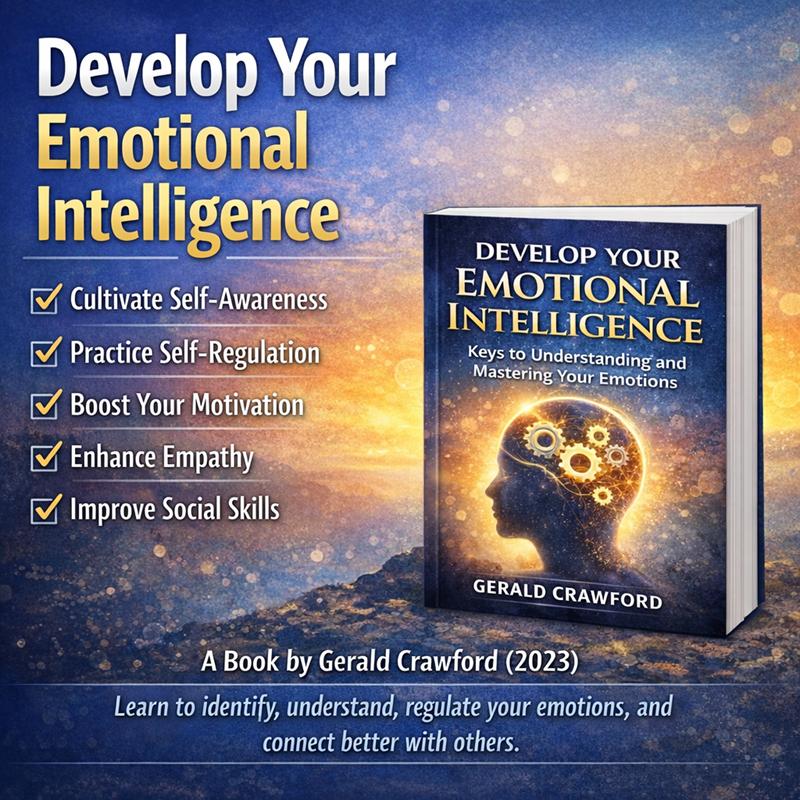
To develop Emotional Intelligence (EI), cultivate self-awareness by identifying and naming your emotions, self-regulation by managing those feelings, motivation by setting goals, empathy by understanding others' perspectives, and improving social skills through active listening and clear communication.

Category: Case Studies (Page 2 of 3)

Case Study 26: Developing Emotional Intelligence and healing from Anger (150): Frustration, can be constructive or destructive.

Case Study 26: Developing Emotional Intelligence and Healing from Anger

Consciousness Level: Anger (150)
Emotional State: Frustration, force that can be constructive or destructive


Background

Michael (40) is outspoken, passionate, and driven. He is often described as “intense.” When things don’t go as expected, his frustration surfaces quickly — sharp words, raised voice, and a strong need to correct what he sees as wrong.

Michael grew up in an environment where power came through dominance. Emotions were expressed loudly, and calm communication was often mistaken for weakness. Anger became his primary way of asserting control and protecting himself.


Emotional Landscape at the Level of Anger

At the Anger level, the core belief is:
“Something is wrong, and I must force change.”

Michael’s emotional world was characterised by:

  • Irritability and impatience

  • Strong reactions to perceived injustice

  • A sense of moral superiority

  • Difficulty tolerating opposition or delay

Anger carries significantly more energy than fear or desire — but it is volatile.


Impact on Relationships

Anger deeply influenced Michael’s relationships:

  • Those He Loved and Cared For:
    He oscillated between loyalty and outbursts, leaving loved ones emotionally unsafe.

  • Those He Needed:
    Authority figures were often challenged, leading to conflict and resistance.

  • Those He Tolerated or Felt Indifferent To:
    Minor inconveniences triggered disproportionate reactions.

Anger pushed people away while convincing Michael he was “just being honest.”


Behavioural Patterns

Michael’s behaviours reflected force-driven action:

  • Confrontational communication

  • Blame and defensiveness

  • Impulsive decisions

  • Difficulty listening or pausing

While anger created movement, it often damaged trust and collaboration.


The Turning Point: Anger as Information, Not Identity

Michael’s shift began when he learned a crucial EI distinction:

Anger is a signal — not a strategy.

Through coaching, he discovered that beneath anger often lived:

  • Fear of being ignored

  • Frustration with powerlessness

  • Unmet needs or violated values

Recognising anger as information reduced its explosiveness.


Developing Emotional Intelligence

Michael developed EI through three essential skills:


1. Emotional Decompression

He learned to pause before reacting:

  • Slowing his breathing

  • Creating space between stimulus and response

  • Naming the emotion internally

This pause prevented automatic escalation.


2. Needs Identification

Instead of expressing anger as attack, he learned to ask:

  • “What boundary was crossed?”

  • “What value feels threatened?”

Anger became a guide to unmet needs rather than a weapon.


3. Assertive Communication

Michael practiced expressing himself without force:

  • Clear requests

  • Calm firmness

  • Willingness to listen

This preserved power without aggression.


Movement Up the Consciousness Scale

Michael’s emotional growth followed a decisive progression:

  • From Anger (150) → awareness and restraint

  • To Pride (175) → self-respect and confidence

  • Toward Courage (200) → grounded, empowered action

Force slowly transformed into strength.


Outcome

Over time, Michael experienced:

  • Reduced conflict

  • Stronger, safer relationships

  • Increased influence without intimidation

  • Greater emotional self-control

Anger no longer controlled him — it served him.


Key Learning

Anger becomes destructive when it is unconscious.
When met with emotional intelligence, anger becomes clarity, boundaries, and purposeful action.

True power does not come from force — it comes from self-mastery.
Case Study 25: Developing Emotional Intelligence and healing from Desire (125): Craving, addiction, seeking external fulfillment.

Case Study 25: Developing Emotional Intelligence and Healing from Desire

Consciousness Level: Desire (125)
Emotional State: Craving, addiction, seeking external fulfilment


Background

Lerato (33) is energetic, ambitious, and constantly in motion. From the outside, her life looks full — busy social calendar, career goals, active online presence. Internally, however, she feels restless and dissatisfied. Each achievement or pleasure brings a brief high, followed quickly by emptiness and the urge for more.

Lerato learned early that validation came from performance, attention, and acquisition. Success, admiration, and excitement became emotional fuel. Desire was not just motivation — it became her identity.


Emotional Landscape at the Level of Desire

At the Desire level, the core belief is:
“I will be happy when I get what I want.”

Lerato’s emotional world was characterised by:

  • Persistent craving and restlessness

  • Emotional highs followed by crashes

  • Fear of missing out (FOMO)

  • Dependence on external rewards for self-worth

Desire creates forward motion, but rarely satisfaction.


Impact on Relationships

Desire shaped Lerato’s relationships in subtle but powerful ways:

  • Those She Loved and Cared For:
    She sought validation through closeness, often confusing intensity with intimacy.

  • Those She Needed:
    Relationships became sources of reassurance, status, or emotional supply.

  • Those She Used:
    Some interactions became transactional — valued for what they provided rather than who they were.

Desire turned connection into consumption.


Behavioural Patterns

Lerato’s behaviour reflected compulsive seeking:

  • Overworking to achieve recognition

  • Addictive use of social media or stimulation

  • Difficulty being alone or still

  • Jumping quickly from one goal or relationship to another

While productive on the surface, these behaviours prevented emotional rest.


The Turning Point: Recognising the Cost of Constant Wanting

Lerato’s shift began with a moment of exhaustion rather than insight. After reaching a long-desired milestone, she felt… nothing.

In coaching, she was asked:

“What are you afraid will happen if you stop wanting?”

The question exposed a deeper fear:
Without desire, she didn’t know who she was.


Developing Emotional Intelligence

Lerato developed EI through three critical capacities:


1. Awareness of Craving

She learned to observe desire without acting on it:

  • Noticing urges in the body

  • Naming the emotion: “This is craving.”

  • Allowing the urge to rise and fall

This weakened desire’s compulsive grip.


2. Internal Fulfilment

Lerato practiced generating internal states rather than chasing external ones:

  • Stillness without distraction

  • Self-approval without performance

  • Enjoyment without posting or proving

Fulfilment shifted from acquisition to presence.


3. Value-Based Action

Instead of asking “What do I want?” she began asking:

  • “What matters?”

  • “What aligns with who I want to become?”

This redirected energy toward meaning rather than gratification.


Movement Up the Consciousness Scale

Lerato’s emotional development followed a clear arc:

  • From Desire (125) → awareness of craving

  • To Anger (150) → frustration with emptiness and false promises

  • Toward Courage (200) → acting from values rather than lack

Desire softened as self-trust increased.


Outcome

Over time, Lerato experienced:

  • Reduced compulsive behaviour

  • Greater emotional steadiness

  • More authentic relationships

  • Satisfaction that did not depend on constant stimulation

She still wanted things — but wanting no longer ruled her.


Key Learning

Desire is not wrong — it becomes destructive when it is mistaken for fulfilment.
Emotional intelligence teaches us to experience desire without being driven by it.

True satisfaction emerges not from getting more, but from needing less.

Case Study 24: Developing Emotional Intelligence and healing from Fear (100): Anxiety, survival-based, contracted.

Case Study 24: Developing Emotional Intelligence and Healing from Fear

Consciousness Level: Fear (100)
Emotional State: Anxiety, survival-based, contracted


Background

Sipho (35) is capable, intelligent, and cautious — often described by others as “responsible.” Internally, however, his life is governed by anxiety. Every decision is filtered through the question: “What could go wrong?”

Sipho grew up in an unpredictable environment where safety was uncertain and mistakes carried consequences. Over time, his nervous system learned to stay alert. Fear became not just an emotion, but a way of orienting to life.


Emotional Landscape at the Level of Fear

At the Fear level, the core belief is:
“I am not safe.”

Sipho’s emotional world was characterised by:

  • Persistent anxiety and worry

  • Anticipation of loss or danger

  • Mental rehearsal of worst-case scenarios

  • Difficulty relaxing, even in safe conditions

Fear narrowed his attention. The future felt threatening, and the present was rarely experienced fully.


Impact on Relationships

Fear strongly shaped Sipho’s relational patterns:

  • Those He Loved and Cared For:
    He worried excessively about losing them, which led to control or emotional distance.

  • Those He Needed:
    He relied heavily on reassurance, sometimes mistaking safety for dependency.

  • Those He Tolerated or Felt Indifferent To:
    Neutral interactions were interpreted as potential threats or judgments.

Fear distorted perception — ambiguity was experienced as danger.


Behavioural Patterns

Sipho’s behaviour reflected survival orientation:

  • Avoidance of risk and change

  • Over-planning and excessive preparation

  • Difficulty making decisions

  • Tension in the body and shallow breathing

While these behaviours reduced anxiety short-term, they reinforced fear long-term.


The Turning Point: Distinguishing Danger from Discomfort

Sipho’s healing began with a crucial EI insight:

Fear often confuses discomfort with danger.

Through therapy, he learned to ask:

  • “Am I unsafe — or just uncomfortable?”

  • “Is this a real threat or an imagined one?”

This question alone created space between emotion and reaction.


Developing Emotional Intelligence

Sipho developed EI through three foundational skills:


1. Nervous System Awareness

He learned to recognise fear in his body:

  • Tight chest

  • Rapid thoughts

  • Shallow breathing

This shifted fear from an identity to a physiological state.


2. Emotional Regulation

Sipho practiced calming techniques:

  • Slow breathing

  • Grounding in the present

  • Naming fear without acting on it

Regulation reduced fear’s intensity and urgency.


3. Courageous Micro-Actions

Rather than eliminating fear, Sipho practiced acting with fear:

  • Speaking up once

  • Taking small risks

  • Allowing uncertainty

Each action weakened fear’s authority.


Movement Up the Consciousness Scale

Sipho’s growth followed a clear progression:

  • From Fear (100) → awareness and regulation

  • To Desire (125) → motivation and forward movement

  • Toward Courage (200) → empowered action despite uncertainty

Fear softened as confidence grew.


Outcome

Over time, Sipho experienced:

  • Reduced baseline anxiety

  • Increased trust in himself

  • More spontaneous engagement with life

  • Healthier, less controlling relationships

Fear no longer ran his life — it became a signal, not a command.


Key Learning

Fear is not a flaw — it is a protective system that has not yet been updated.
Emotional intelligence teaches us to honour fear without obeying it.

When fear is regulated and understood, it becomes the doorway to courage rather than a barrier to living.

Case Study 23: Developing Emotional Intelligence and healing from Grief (75): Sadness, loss.

Case Study 23: Developing Emotional Intelligence and Healing from Grief

Consciousness Level: Grief (75)
Emotional State: Sadness, loss


Background

Mariam (51) experienced a profound loss within a short period: the death of her mother, followed by the end of a long-standing marriage. While she continued to function in daily life, an undercurrent of sadness coloured everything. Her grief was not chaotic or dramatic — it was persistent, quietly reshaping how she saw the world.

Unlike apathy, Mariam still felt deeply. Her pain was a sign that something meaningful had been lost — but she did not yet know how to integrate that loss.


Emotional Landscape at the Level of Grief

At the Grief level, the core belief is:
“Something important is gone, and I don’t know how to live without it.”

Mariam’s emotional experience included:

  • Deep sadness and longing

  • Waves of nostalgia and regret

  • Tearfulness triggered by memories

  • Difficulty imagining a meaningful future

Grief contains more energy than apathy — but that energy is directed backward.


Impact on Relationships

Grief reshaped Mariam’s relationships in complex ways:

  • Those She Loved and Cared For:
    She sought comfort but also withdrew, fearing she was a burden.

  • Those She Needed:
    She relied heavily on a small circle, sometimes feeling guilty for needing support.

  • Those She Tolerated or Felt Indifferent To:
    Neutral interactions felt hollow and effortful.

Grief narrowed her relational world — depth increased, breadth decreased.


Behavioural Patterns

Mariam’s behaviours reflected mourning and emotional processing:

  • Replaying memories

  • Avoiding new commitments

  • Reduced interest in future planning

  • Clinging to familiar routines

These behaviours were not dysfunctional — they were part of emotional digestion.


The Turning Point: Allowing Grief Without Collapse

Healing began when Mariam stopped trying to “move on” and instead learned to stay present with grief without being consumed by it.

A pivotal insight emerged:

Grief does not need to be fixed — it needs to be felt.

This marked a shift from resistance to emotional acceptance.


Developing Emotional Intelligence

Mariam strengthened EI through three key capacities:


1. Emotional Allowance

She practiced letting sadness rise and fall without judgment:

  • Crying without shame

  • Speaking openly about loss

  • Naming emotions as they appeared

This prevented grief from becoming frozen or suppressed.


2. Meaning-Making

Mariam began asking:

  • “What did this loss teach me?”

  • “How has love shaped who I am?”

This reframed grief as evidence of connection rather than failure.


3. Gradual Reorientation

She gently reintroduced forward-looking actions:

  • Small plans

  • New interests

  • Social engagements without pressure

The future was approached softly, not forced.


Movement Up the Consciousness Scale

Mariam’s healing followed a natural arc:

  • From Grief (75) → emotional expression

  • To Fear (100) → uncertainty about the future

  • Toward Courage (200) → choosing engagement despite pain

Grief did not disappear — it transformed.


Outcome

Over time, Mariam experienced:

  • A softer relationship with loss

  • Renewed emotional depth without overwhelm

  • Increased openness to new meaning

  • Stronger emotional authenticity

Her grief became integrated, not erased.


Key Learning

Grief is not weakness — it is the cost of love.
When met with emotional intelligence, grief becomes a bridge between loss and growth.

Healing does not mean forgetting.
It means carrying love forward in a new form.

Case Study 22: Developing Emotional Intelligence and healing from Apathy (50): Giving up on life, hopelessness.

Case Study 22: Developing Emotional Intelligence and Healing from Apathy

Consciousness Level: Apathy (50)
Emotional State: Giving up on life, hopelessness


Background

Joseph (46) once described himself as “tired in a way sleep doesn’t fix.”
He was employed, physically healthy, and socially functional — yet emotionally disengaged from life. Nothing felt meaningful. Goals that once motivated him now felt pointless. He wasn’t actively depressed in a dramatic sense; he had simply stopped expecting life to improve.

Joseph had experienced years of quiet disappointments: career stagnation, the end of a long-term relationship, and repeated efforts that led nowhere. Over time, hope eroded. What remained was emotional shutdown.


Emotional Landscape at the Level of Apathy

At the Apathy level, the core belief is:
“Nothing I do will make a difference.”

Joseph’s emotional world was characterised by:

  • Emotional numbness

  • Low energy and motivation

  • Withdrawal from meaningful engagement

  • A sense of futility rather than sadness

Unlike grief, which feels heavy, apathy feels empty.


Impact on Relationships

Apathy reshaped Joseph’s relationships by removing emotional presence:

  • Those He Loved and Cared For:
    He became distant, not out of anger, but exhaustion. Loved ones felt shut out.

  • Those He Needed:
    He stopped advocating for himself, accepting poor treatment passively.

  • Those He Tolerated or Felt Indifferent To:
    He drifted into social invisibility, neither engaging nor resisting.

Apathy flattened relational dynamics — there was no conflict, but no connection either.


Behavioural Patterns

Joseph’s behaviours reflected emotional surrender:

  • Procrastination without anxiety

  • Neglect of long-term goals

  • Passive acceptance of unsatisfying situations

  • Minimal emotional expression

These behaviours were often misinterpreted as laziness, when in fact they signalled emotional depletion.


The Turning Point: Reintroducing Choice

Healing from apathy did not begin with passion or optimism.
It began with choice.

In therapy, Joseph was asked a deceptively simple question:

“What is one small action you could take today that contradicts giving up?”

This reframed life from an overwhelming burden to a series of manageable moments.


Developing Emotional Intelligence

Joseph rebuilt EI through three foundational steps:


1. Emotional Reconnection

Rather than forcing motivation, he focused on feeling anything:

  • Walking daily without goals

  • Listening to music mindfully

  • Naming bodily sensations

This gently reawakened emotional awareness.


2. Agency Restoration

Joseph practiced making small, deliberate choices:

  • Choosing when to engage

  • Choosing when to rest

  • Choosing what to tolerate

Each choice, however minor, weakened the belief that he was powerless.


3. Meaning Through Action

Meaning followed action — not the other way around.
Joseph committed to simple routines:

  • Regular meals

  • Light physical movement

  • Structured days

Consistency restored trust in himself.


Movement Up the Consciousness Scale

Joseph’s progression was subtle but transformative:

  • From Apathy (50) → emotional reconnection

  • To Grief (75) → allowing sadness and loss

  • Toward Courage (200) → reclaiming responsibility and engagement

Apathy lifted not through inspiration, but through participation.


Outcome

Over time, Joseph experienced:

  • Gradual return of emotional responsiveness

  • Renewed interest in life’s small details

  • Stronger relational presence

  • A growing sense of purpose

Hope did not arrive suddenly — it emerged quietly as he re-entered life.


Key Learning

Apathy is not the absence of feeling — it is the absence of hope.
It heals when people experience agency, choice, and incremental success.

Emotional intelligence restores life by teaching people that engagement precedes meaning.

« Older posts Newer posts »
Back a Buddy Show your Support