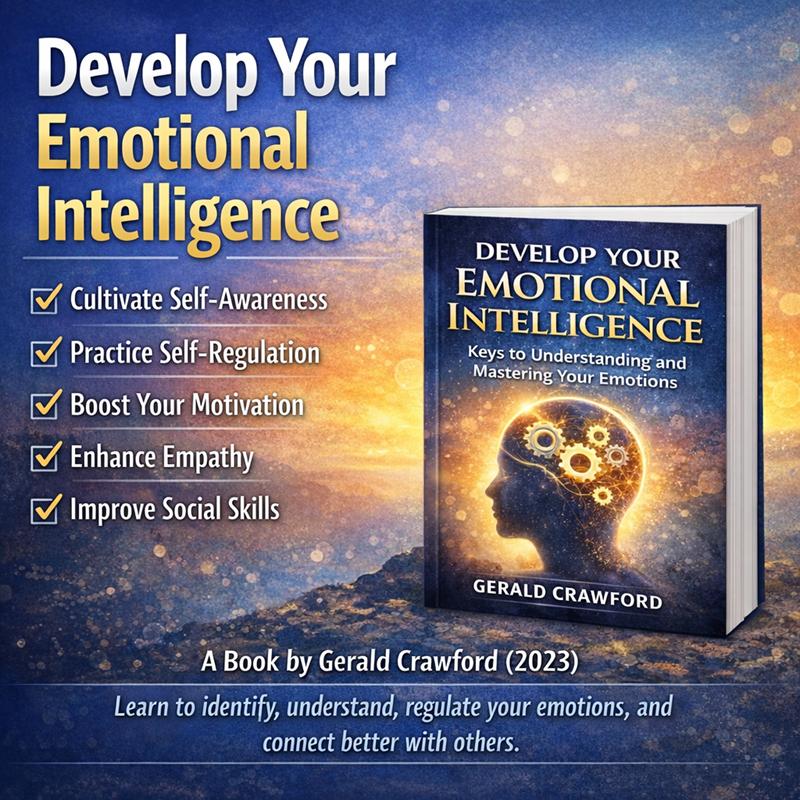
To develop Emotional Intelligence (EI), cultivate self-awareness by identifying and naming your emotions, self-regulation by managing those feelings, motivation by setting goals, empathy by understanding others' perspectives, and improving social skills through active listening and clear communication.

Category: 101 Question and Answer (Page 2 of 6)

Question and Answer: Do you want to improving your communication and listening skills? How can I address this by development my Emotional Intelligence?

Q: Do you want to improve your communication and listening skills?

A: Many people find it challenging to communicate clearly, listen fully, or engage in meaningful conversations—especially in fast-paced or emotionally charged environments. You may notice that you:

  • Struggle to articulate thoughts clearly
  • Interrupt without meaning to
  • Listen only to respond rather than understand
  • Miss emotional cues behind people’s words
  • Get distracted during conversations
  • Speak in a way that others misinterpret
  • Feel unheard or misunderstood
  • Avoid difficult conversations

These challenges often stem not from lack of intelligence, but from gaps in Emotional Intelligence (EI)—specifically self-awareness, empathy, and relationship management.

The good news? EI can dramatically strengthen both communication and listening skills.


Q: How can I address this by developing my Emotional Intelligence?

Emotional Intelligence helps you understand your emotions, the emotions of others, and the impact of communication on relationships.
When EI improves, communication becomes clearer, calmer, and more effective.

Here’s how EI development supports stronger communication and listening:


1. Strengthen Self-Awareness

Self-awareness helps you understand how your words, tone, and emotional state affect your communication.

EI Practices:

  • Notice your communication habits (e.g., interrupting, talking fast).
  • Identify how your emotions influence your speaking style.
  • Ask yourself: “What message am I trying to send?”
  • Reflect on how others respond to you.

Impact:
You speak with clarity and intention instead of reacting automatically.


2. Improve Self-Management

Communication often breaks down when emotions interfere with your ability to stay calm and present.

EI Practices:

  • Stay aware of emotional triggers during conversations.
  • Practice pausing before responding, especially in conflict.
  • Use grounding or deep breathing to stay composed.
  • Choose words thoughtfully rather than impulsively.

Impact:
You communicate calmly, even under stress or pressure.


3. Build Social Awareness (Empathy)

Listening deeply is impossible without empathy.

EI Practices:

  • Pay full attention—listen to understand, not to reply.
  • Focus on tone, body language, and what’s not being said.
  • Ask clarifying questions: “What I’m hearing is… Is that correct?”
  • Validate feelings: “That sounds important” or “I understand why you feel that way.”

Impact:
People feel heard, respected, and understood—leading to better collaboration and trust.


4. Strengthen Relationship Management

This skill helps you handle conversations with confidence, clarity, and emotional intelligence.

EI Practices:

  • Use assertive communication: clear, calm, and respectful.
  • Express your needs without blaming or criticizing.
  • Navigate difficult conversations with empathy and structure.
  • Build rapport through curiosity, appreciation, and positive language.

Impact:
Your communication becomes influential, trustworthy, and consistent.


Practical EI Tools to Improve Communication & Listening

  • The “Listen → Reflect → Respond” method
  • Use open-ended questions to deepen understanding
  • Mirror and summarize what you heard
  • Practice nonverbal awareness (eye contact, posture, tone)
  • Slow down—silence is a powerful communication tool
  • Develop emotional vocabulary to express yourself clearly
  • Avoid multitasking when listening

What benefits will I see as my Emotional Intelligence improves?

You will experience:

  • Clearer, more confident communication
  • Stronger listening and understanding
  • Reduced misunderstandings and conflict
  • More meaningful conversations
  • Increased influence and credibility
  • Better teamwork and collaboration
  • Deeper personal and professional relationships
  • Greater emotional connection with others

Improving EI doesn’t just improve communication—it transforms how you connect, lead, and relate to the world.


Question and Answer: Do you want to managing your emotional reactions and impulsivity? How can I address this by development my Emotional Intelligence?

Q: Do you want to manage your emotional reactions and impulsivity?

A: Many people struggle with reacting too quickly when emotions run high—saying things they regret, making snap decisions, or becoming overwhelmed.
You may notice that you:

  • Speak impulsively without thinking
  • Overreact to small frustrations
  • Feel your emotions escalate quickly
  • Struggle to stay calm under pressure
  • Make decisions you later regret
  • Have difficulty pausing before responding
  • Let stress or anger drive your behavior

This doesn’t mean you’re “too emotional.”
It simply means your Emotional Intelligence (EI)—especially emotional regulation—needs strengthening.

The good news? Managing emotional reactions is one of the most trainable EI skills.


Q: How can I address emotional reactivity and impulsivity by developing my Emotional Intelligence?

Emotional Intelligence helps you understand your emotions, regulate them, and respond intentionally instead of automatically.

Here’s how each EI component contributes to better emotional control:


1. Build Self-Awareness

Self-awareness helps you notice emotions before they take over.

EI Practices:

  • Identify early physical signs (tight jaw, fast heartbeat, tension).
  • Pause and ask: “What am I feeling in this moment?”
  • Notice your triggers—situations or people that spark strong reactions.
  • Reflect after emotional moments to understand what happened.

Impact:
You gain the ability to catch yourself before reacting impulsively.


2. Strengthen Self-Management

This is the core of regulating emotional reactions.

EI Practices:

  • Practice pausing techniques before responding.
  • Use breathing exercises to reduce emotional intensity.
  • Step away for a moment when emotions rise.
  • Replace reactive thoughts with calmer, grounded thinking.
  • Create a “cool-down routine” when overwhelmed.

Impact:
You maintain control, calm, and clarity even during emotional moments.


3. Increase Social Awareness (Empathy)

Understanding others’ emotions helps you respond more thoughtfully.

EI Practices:

  • Pay attention to body language and emotional cues.
  • Ask yourself: “What might this person be feeling?”
  • Seek to understand instead of immediately reacting.
  • Slow down and listen more intentionally.

Impact:
Reactivity decreases because you’re guided by understanding, not assumptions.


4. Strengthen Relationship Management

Managing relationships well helps reduce conflict and emotional escalations.

EI Practices:

  • Use calm, respectful communication even during tough conversations.
  • Express emotions using “I” statements rather than blaming.
  • Repair quickly if you react strongly: “I’m sorry—let me restate that more clearly.”
  • Set boundaries that prevent emotional overload.

Impact:
Your communication becomes clearer, calmer, and more effective.


Practical EI Tools to Manage Emotional Reactions

  • The 10-Second Pause before responding
  • 4–6 breathing (inhale 4, exhale 6) to calm the nervous system
  • Label your emotions (“I’m irritated, not angry”)
  • Grounding techniques (feel your feet, relax your shoulders)
  • Reframing thoughts to reduce emotional spikes
  • Journaling to understand emotional patterns
  • Removing yourself briefly from escalating situations

What benefits will I see as my Emotional Intelligence improves?

You will experience:

  • Better emotional stability
  • Fewer impulsive reactions
  • More thoughtful decision-making
  • Stronger communication
  • Reduced conflict
  • Better relationships
  • Greater confidence and self-control
  • Improved resilience under stress

Developing Emotional Intelligence empowers you to respond, not react—helping you stay grounded, clear-minded, and effective no matter the situation.

Question and Answer: Is it hard for you to set meaningful goals or stay motivated? How can I address this by development my Emotional Intelligence?

Q: Is it hard for you to set meaningful goals or stay motivated?

A: Many people struggle with motivation and goal-setting, especially when they feel overwhelmed, unclear, or emotionally drained. You might notice that you:

  • Set goals but lose motivation quickly
  • Don’t know what goals truly matter to you
  • Feel stuck, unfocused, or directionless
  • Struggle to follow through on plans
  • Start strong but burn out fast
  • Avoid goals because they feel too big or stressful
  • Feel discouraged by past failures
  • Have trouble connecting daily actions to long-term purpose

This difficulty often stems from gaps in Emotional Intelligence (EI)—particularly self-awareness, self-management, and intrinsic motivation.

The good news? Strengthening EI can dramatically improve your ability to set meaningful goals and stay motivated to achieve them.


Q: How can I address this by developing my Emotional Intelligence?

Emotional Intelligence helps you understand what drives you, manage your emotions through challenges, and connect your goals to a deeper sense of purpose.

Here’s how each EI skill contributes:


1. Strengthen Self-Awareness

Without self-awareness, goals often feel vague, misaligned, or unmotivating.

EI Practices:

  • Reflect on what truly matters to you—not what others expect
  • Identify your strengths, values, and interests
  • Notice which activities energize you and which drain you
  • Ask yourself: “Why is this goal important to me?”

Impact:
You set goals that feel meaningful and personally aligned, increasing long-term motivation.


2. Improve Self-Management

Self-management helps you follow through even when motivation fluctuates.

EI Practices:

  • Break goals into smaller, manageable steps
  • Use routines to stay consistent
  • Prioritize tasks based on energy levels and focus
  • Use emotional regulation strategies when frustration or procrastination arises
  • Celebrate progress, not just completion

Impact:
You stay disciplined and resilient, even when emotions shift.


3. Build Intrinsic Motivation (an EI sub-skill)

True motivation comes from within—not from pressure, guilt, or external rewards.

EI Practices:

  • Connect your goals to long-term purpose and personal meaning
  • Visualize the outcome and why it matters
  • Track progress to stay encouraged
  • Align goals with your identity: “This is who I’m becoming.”

Impact:
You become self-driven rather than relying on external motivation.


4. Increase Social Awareness and Support

Understanding the emotional impact of your environment helps you stay on track.

EI Practices:

  • Recognize which people inspire or drain your motivation
  • Seek accountability partners who encourage growth
  • Observe how your emotions shift around others

Impact:
You build a support system that reinforces your goals.


5. Strengthen Relationship Management

Healthy communication helps you express your goals clearly and get support.

EI Practices:

  • Share your goals with trusted people
  • Ask for help, guidance, or feedback
  • Set healthy boundaries to protect your time and focus

Impact:
You create a motivating environment that supports consistent progress.


Practical EI Tools to Improve Goal-Setting & Motivation

  • The “Why → What → How” method
  • Value-based goal setting
  • Daily emotional check-ins
  • SMART goal structure with emotional relevance
  • Progress tracking to boost dopamine and motivation
  • Visual reminders of your goals
  • Reflection rituals: What did I learn today?

What benefits will I see as my Emotional Intelligence grows?

You will experience:

  • More meaningful, purpose-driven goals
  • Consistent motivation
  • Better discipline and follow-through
  • Reduced procrastination
  • Increased clarity and direction
  • Stronger resilience during setbacks
  • A deeper sense of identity and purpose
  • Greater satisfaction with your progress and achievements

Improving EI transforms goal-setting from something you “should do” into something you’re genuinely inspired to pursue.

Question and Answer: Do you struggle with emotional insight? How can I address this by development my Emotional Intelligence?

Q: Do you struggle with emotional insight?

A: Emotional insight means understanding why you feel a certain way, what your emotions are trying to tell you, and how those emotions influence your decisions, relationships, and behavior.
If you struggle with emotional insight, you might:

  • Have trouble identifying your emotions in the moment
  • Not understand where strong feelings come from
  • React without knowing the underlying cause
  • Feel overwhelmed but unsure why
  • Repeat the same emotional patterns without realizing it
  • Struggle to understand how your emotions influence your choices
  • Lose clarity during conflict or stress
  • Miss the “big picture” behind your emotional reactions

A lack of emotional insight doesn’t mean anything is wrong with you — it simply means your Emotional Intelligence (EI) needs strengthening in the areas of self-awareness and emotional understanding.


Q: How can I address this by developing my Emotional Intelligence?

Building Emotional Intelligence helps you understand your emotions more clearly and use that understanding to improve your decisions, relationships, and overall well-being.

Here’s how EI development builds emotional insight:


1. Strengthen Self-Awareness

Self-awareness helps you recognize and name your emotions accurately, which is the first step toward insight.

EI Practices:

  • Pause and identify what you feel: “Am I stressed, frustrated, or disappointed?”
  • Reflect on the cause: “What triggered this emotion?”
  • Notice patterns: “When does this feeling usually show up?”
  • Use an emotion journal to track triggers and reactions

Impact:
You begin to understand your emotional landscape with clarity instead of confusion.


2. Build Emotional Vocabulary

Many people only use basic labels (mad, sad, stressed).
Expanding your language expands your insight.

EI Practices:

  • Use more specific words like overwhelmed, discouraged, tense, hopeful, inspired
  • Reflect on intensity: mild irritation vs. strong anger
  • Explore mixed emotions instead of assuming there is only one

Impact:
The more precisely you label emotions, the better you understand how to manage and respond to them.


3. Improve Self-Management

Once you understand your emotions, you need tools to regulate them.

EI Practices:

  • Practice deep breathing or grounding when emotions rise
  • Use pausing techniques before reacting
  • Reflect on how your emotions influence your behavior
  • Develop healthy coping strategies rather than avoidance

Impact:
Strong emotions stop feeling overwhelming—you feel more in control.


4. Build Social Awareness (Empathy)

Understanding others’ emotions helps you better understand your own.

EI Practices:

  • Notice how your emotions shift in response to others
  • Pay attention to tone, body language, and context
  • Practice imagining others’ perspectives

Impact:
You gain insight into emotional dynamics, not just personal reactions.


5. Strengthen Relationship Management

Healthy communication helps you express your emotions effectively—and receive insight back.

EI Practices:

  • Share your feelings calmly and clearly
  • Ask for clarification when you’re unsure of someone’s emotional intent
  • Seek feedback from trusted people: “What did you notice about my reaction?”

Impact:
You get better at expressing emotions and understanding emotional interactions.


Practical Tools to Build Emotional Insight

  • The “Name → Understand → Act” method
  • Mindfulness practices to slow down emotional responses
  • Daily emotion check-ins (morning, midday, evening)
  • Journaling with prompts like “What am I feeling and why?”
  • Identifying emotional triggers and patterns
  • Reflecting after conflicts or stress: “What was really going on?”

What benefits will I see as my Emotional Intelligence grows?

You will experience:

  • Clearer self-understanding
  • Greater emotional stability
  • Improved decision-making
  • Healthier reactions to stress
  • More meaningful relationships
  • Stronger communication
  • Faster recovery from emotional setbacks
  • A deeper sense of personal confidence and control

Emotional insight transforms your emotional life from reactive to intentional — allowing you to understand yourself on a deeper, more empowering level.

Question and Answer: Do you misinterpret a colleague’s feedback as criticism or fail to connect emotionally? How can I address this by development my Emotional Intelligence?

Q: Do you misinterpret a colleague’s feedback as criticism or fail to connect emotionally?

A: Many people struggle with receiving feedback without feeling attacked or misunderstood. You may notice that you:

  • Feel defensive or hurt when someone gives feedback
  • Assume negative intent even when the message is neutral
  • React emotionally instead of listening fully
  • Misread tone, body language, or context
  • Shut down or withdraw rather than engage
  • Have difficulty connecting with the person giving feedback
  • Focus on how something was said instead of what was meant

These reactions often come from gaps in Emotional Intelligence (EI)—especially in self-awareness, social awareness, and emotional regulation.
The good news is: EI can be developed, and doing so reduces defensiveness and builds stronger workplace relationships.


Q: How can I address this by developing my Emotional Intelligence?

Emotional Intelligence helps you understand your emotional responses, interpret others’ intentions more accurately, and engage in feedback conversations with clarity and confidence.

Here’s how each EI skill helps:


1. Strengthen Self-Awareness

Self-awareness helps you recognize why feedback feels personal and what emotions come up for you.

EI Practices:

  • Notice your initial reaction: “I feel defensive / anxious / embarrassed.”
  • Identify triggers: tone, timing, past experiences, or self-doubt.
  • Ask yourself: “Am I reacting to the message or my interpretation of it?”

Impact:
You separate emotion from information, which makes feedback less overwhelming.


2. Improve Self-Management

This helps you stay calm and open rather than reactive.

EI Practices:

  • Pause before responding; breathe deeply to reset.
  • Use neutral self-talk: “This is feedback, not a personal attack.”
  • Ask clarifying questions instead of reacting emotionally.
  • Take time to process if needed: “Let me reflect on that and get back to you.”

Impact:
You respond thoughtfully, not impulsively, even when the feedback is uncomfortable.


3. Enhance Social Awareness (Empathy)

Empathy helps you understand the intention behind feedback rather than assuming the worst.

EI Practices:

  • Consider the colleague’s perspective: “What are they trying to help me improve?”
  • Observe their tone and body language for context.
  • Assume positive intent unless proven otherwise.
  • Listen for the underlying message: support, collaboration, or problem-solving.

Impact:
You interpret feedback more accurately and less emotionally.


4. Build Relationship Management Skills

This turns feedback into a constructive, collaborative conversation.

EI Practices:

  • Thank the person for offering feedback.
  • Communicate calmly: “I appreciate you pointing that out.”
  • Share your perspective without defensiveness.
  • Follow up with actions to show openness and growth.
  • Ask for feedback consistently to normalize the process.

Impact:
You build trust, reduce conflict, and strengthen connections with colleagues.


Practical EI Tools to Improve Feedback Situations

  • Use the “Listen → Reflect → Respond” method
  • Say: “Help me understand what you mean by…”
  • Focus on behavior, not identity
  • Practice emotional labeling: “I feel…”
  • Seek feedback regularly to reduce sensitivity
  • Reflect afterward: What did I learn? What will I try next?

What benefits will I see by developing Emotional Intelligence?

You’ll experience:

  • Less defensiveness during feedback
  • Clearer understanding of others’ intentions
  • Better emotional control
  • Stronger professional relationships
  • More productive conversations
  • Increased confidence and openness
  • Reduced misunderstandings
  • Improved performance and teamwork

Developing Emotional Intelligence helps you shift from feeling criticized to feeling coached — making feedback a tool for growth instead of stress.

« Older posts Newer posts »
Back a Buddy Show your Support