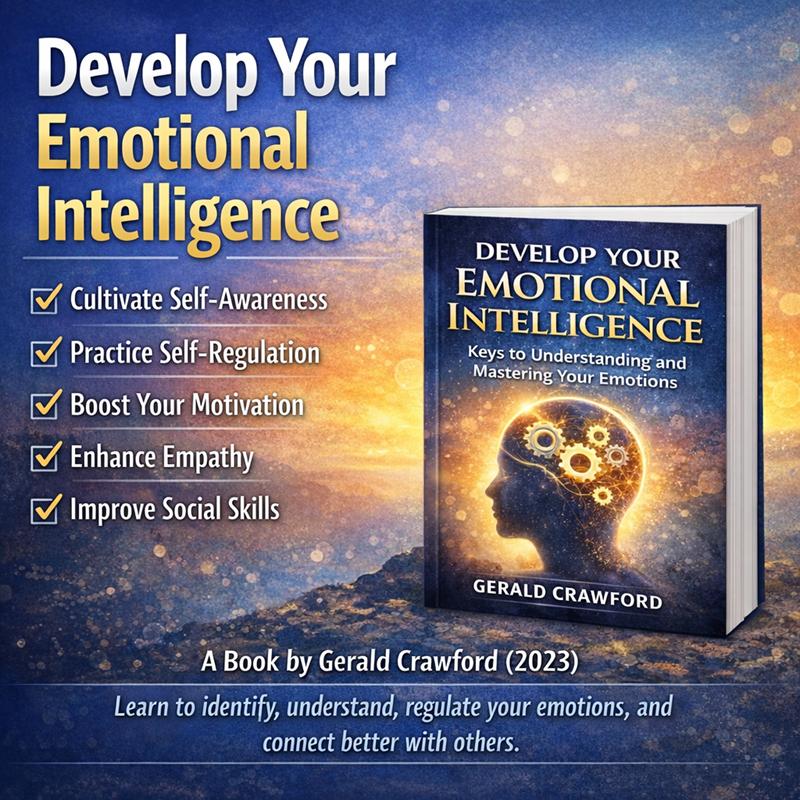
To develop Emotional Intelligence (EI), cultivate self-awareness by identifying and naming your emotions, self-regulation by managing those feelings, motivation by setting goals, empathy by understanding others' perspectives, and improving social skills through active listening and clear communication.

Tag: Emotional Intelligence Assessment

Benefits of Emotional Intelligence Assessment

Emotional Intelligence (EI) assessments can have numerous benefits for individuals, organizations, and society as a whole.

Here are some of the benefits of EI assessments:

Individual Benefits:

1. Self-Awareness: EI assessments can help individuals understand their strengths and weaknesses, and identify areas for improvement.

2. Personal Growth: By understanding their emotional intelligence, individuals can develop strategies to improve their relationships, decision-making, and overall well-being.

3. Career Development: EI assessments can help individuals understand their career strengths and weaknesses, and identify potential career paths that align with their emotional intelligence.

4. Improved Relationships: EI assessments can help individuals understand how to communicate more effectively, build stronger relationships, and manage conflict.

5. Better Decision-Making: EI assessments can help individuals understand how to make more informed decisions that take into account their emotions, values, and goals.

Organizational Benefits:

1. Improved Leadership: EI assessments can help organizations identify and develop leaders who possess high emotional intelligence, leading to more effective management and decision-making.

2. Enhanced Teamwork: EI assessments can help teams understand each other’s strengths and weaknesses, leading to more effective communication, collaboration, and conflict resolution.

3. Increased Employee Engagement: EI assessments can help organizations understand their employees’ emotional needs, leading to increased employee satisfaction, engagement, and retention.

4. Better Customer Service: EI assessments can help organizations develop customer-facing staff who possess high emotional intelligence, leading to improved customer satisfaction and loyalty.

5. Improved Organizational Culture: EI assessments can help organizations create a positive and supportive culture that values emotional intelligence, leading to improved morale, productivity, and performance.

Societal Benefits:

1. Improved Mental Health: EI assessments can help individuals understand their emotional needs, leading to improved mental health and well-being.

2. Reduced Conflict: EI assessments can help individuals understand how to manage conflict and improve relationships, leading to reduced violence, crime, and social unrest.

3. Improved Education: EI assessments can help educators understand their students’ emotional needs, leading to improved teaching methods, student engagement, and academic performance.

4. Better Community Relationships: EI assessments can help community leaders and organizations understand the emotional needs of their constituents, leading to improved community relationships, social cohesion, and civic engagement.

5. Increased Global Understanding: EI assessments can help individuals understand and appreciate cultural differences, leading to increased global understanding, tolerance, and cooperation.

Business Benefits:

1. Improved Performance: EI assessments can help organizations identify and develop high-performing employees, leading to improved productivity, efficiency, and effectiveness.

2. Increased Revenue: EI assessments can help organizations develop sales teams who possess high emotional intelligence, leading to increased sales, revenue, and customer loyalty.

3. Reduced Turnover: EI assessments can help organizations understand their employees’ emotional needs, leading to reduced turnover, absenteeism, and recruitment costs.

4. Improved Brand Reputation: EI assessments can help organizations develop customer-facing staff who possess high emotional intelligence, leading to improved brand reputation, customer satisfaction, and loyalty.

5. Competitive Advantage: EI assessments can help organizations develop a competitive advantage by identifying and developing employees who possess high emotional intelligence, leading to improved innovation, creativity, and adaptability.

Overall, EI assessments can have a significant impact on individuals, organizations, and society as a whole, leading to improved relationships, decision-making, and overall well-being.


Emotional Intelligence Assessment – Limitations and Criticisms

Emotional Intelligence (EI) assessments have been widely used in various settings, including education, employment, and personal development. However, like any other assessment tool, EI assessments have limitations and criticisms that need to be considered.

Limitations of EI Assessments:

1. Self-report bias: Many EI assessments rely on self-report data, which can be influenced by biases, such as social desirability bias or impression management.

2. Lack of standardization: There is no universally accepted standard for EI assessments, which can make it difficult to compare results across different assessments.

3. Cultural limitations: EI assessments may not be applicable or generalizable to all cultural contexts, as emotional intelligence can vary across cultures.

4. Limited scope: EI assessments may only assess a limited range of emotional intelligence skills, such as self-awareness or empathy, and may not capture the full range of emotional intelligence.

5. Test-retest reliability: EI assessments may not have high test-retest reliability, which can make it difficult to establish the stability of emotional intelligence over time.

Criticisms of EI Assessments:

1. Lack of theoretical clarity: The concept of emotional intelligence is not yet fully understood, and there is ongoing debate about its definition and measurement.

2. Overemphasis on individual differences: EI assessments may overemphasize individual differences in emotional intelligence, which can lead to a focus on deficits rather than strengths.

3. Limited predictive validity: EI assessments may not have strong predictive validity, which can make it difficult to establish the relationship between emotional intelligence and outcomes such as job performance or academic achievement.

4. Overuse and misuse: EI assessments may be overused or misused, such as in employment settings where they may be used as a sole criterion for hiring or promotion.

5. Lack of cultural sensitivity: EI assessments may not be culturally sensitive, which can lead to biases and unfairness in the assessment process.

Criticisms of Popular EI Assessments:

1. Mayer-Salovey-Caruso Emotional Intelligence Test (MSCEIT): The MSCEIT has been criticized for its lack of standardization and limited scope.

2. Bar-On Emotional Quotient Inventory (EQ-i): The EQ-i has been criticized for its self-report bias and lack of predictive validity.

3. Thomas-Kilmann Conflict Mode Instrument (TKI): The TKI has been criticized for its limited scope and lack of standardization.

Future Directions:

1. Develop more comprehensive and culturally sensitive EI assessments: Future EI assessments should aim to capture a broader range of emotional intelligence skills and be culturally sensitive.

2. Establish clear standards for EI assessment: There is a need for clear standards and guidelines for EI assessment to ensure consistency and fairness.

3. Investigate the predictive validity of EI assessments: More research is needed to establish the predictive validity of EI assessments and their relationship to outcomes such as job performance or academic achievement.

4. Use EI assessments in conjunction with other assessment tools: EI assessments should be used in conjunction with other assessment tools, such as cognitive ability tests or personality assessments, to provide a more comprehensive picture of an individual’s abilities and strengths.

Conclusion:

While EI assessments have been widely used and have shown promise in various settings, they are not without limitations and criticisms. It is essential to consider these limitations and criticisms when using EI assessments and to strive for more comprehensive, culturally sensitive, and theoretically sound assessments in the future.

Emotional Intelligence Assessment – Assessment Methods

There are several methods used to assess Emotional Intelligence (EI), each with its own strengths and limitations.

Here are some common EI assessment methods:

1. Self-Report Questionnaires:

* These are the most common type of EI assessment, where individuals complete a questionnaire that asks them to rate their own emotional abilities.

* Examples include the Mayer-Salovey-Caruso Emotional Intelligence Test (MSCEIT) and the Bar-On Emotional Quotient Inventory (EQ-i).

* Advantages: easy to administer, cost-effective, and can be completed quickly.

* Disadvantages: may be subject to biases, and individuals may not always be aware of their own emotional abilities.

2. Multi-Rater Assessments (360-Degree Feedback):

* This method involves gathering feedback from multiple sources, such as supervisors, peers, and subordinates.

* Examples include the Emotional Competence Inventory (ECI) and the Thomas-Kilmann Conflict Mode Instrument (TKI).

* Advantages: provides a more comprehensive view of an individual’s EI, as it takes into account the perspectives of multiple stakeholders.

* Disadvantages: can be time-consuming and expensive to administer, and may be subject to biases.

3. Performance-Based Assessments:

* These assessments involve completing tasks or exercises that require emotional intelligence, such as problem-solving or decision-making.

* Examples include the MSCEIT and the Situational Judgement Test (SJT).

* Advantages: provide a more objective measure of EI, as they assess actual behavior rather than self-reported abilities.

* Disadvantages: can be time-consuming and expensive to administer, and may not be comprehensive.

4. Behavioral Observations:

* This method involves observing an individual’s behavior in a natural or simulated setting, such as a work or social situation.

* Examples include the Assessment Center Method and the Behavioral Event Interview (BEI).

* Advantages: provide a more objective and comprehensive view of an individual’s EI, as it assesses actual behavior rather than self-reported abilities.

* Disadvantages: can be time-consuming and expensive to administer, and may require specialized training.

5. Neuropsychological Assessments:

* These assessments involve using neuroimaging techniques, such as functional magnetic resonance imaging (fMRI), to examine the neural basis of emotional intelligence.

* Examples include the Emotional Intelligence-Neural Basis (EI-NB) and the Emotional Processing Task (EPT).

* Advantages: provide a more objective and comprehensive view of an individual’s EI, as it assesses the neural mechanisms underlying emotional processing.

* Disadvantages: can be expensive and require specialized equipment and expertise.

6. Online EI Assessments:

* These assessments are typically web-based and can be completed online.

* Examples include the Emotional Intelligence Test (EIT) and the EI-Quiz.

* Advantages: convenient, cost-effective, and can be completed quickly.

* Disadvantages: may be subject to biases, and may not provide a comprehensive view of an individual’s EI.

Each assessment method has its own strengths and limitations, and the choice of method depends on the specific goals and context of the assessment. A combination of methods may provide a more comprehensive view of an individual’s emotional intelligence.

Best Practices for EI Assessment:

1. Use a combination of assessment methods to provide a comprehensive view of an individual’s EI.

2. Ensure that the assessment method is valid and reliable.

3. Use a standardized and normed assessment tool.

4. Consider the cultural and individual differences when interpreting the results.

5. Provide feedback and coaching to individuals to help them develop their EI.

Question that can be asked to do the Emotional Intelligence Assessment

Here are some questions that can be asked to assess Emotional Intelligence:

Self-Awareness:

1. How do you typically handle stress or pressure in your daily life?

2. Can you describe a situation where you felt overwhelmed or anxious? How did you manage your emotions?

3. What are some common emotions that you experience, and how do you usually respond to them?

4. How do you recognize and understand your own emotional triggers?

5. Can you recall a time when you realized you were feeling a certain way, but didn’t know why? How did you handle that situation?

Self-Regulation:

1. Can you describe a situation where you had to control your emotions in order to achieve a goal or complete a task?

2. How do you typically handle frustration or anger when things don’t go as planned?

3. What strategies do you use to manage your emotions when you’re feeling overwhelmed or stressed?

4. Can you recall a time when you had to make a decision that required you to consider the emotional impact on others? How did you approach that decision?

5. How do you prioritize your own emotional well-being and take care of yourself?

Motivation:

1. What drives you to achieve your goals and pursue your passions?

2. Can you describe a situation where you felt highly motivated and inspired to take action?

3. How do you typically handle setbacks or failures? What do you learn from them, and how do you use that knowledge to move forward?

4. What are some personal values or principles that guide your decision-making and behavior?

5. Can you recall a time when you felt a sense of purpose or meaning in your work or personal life? What were you doing, and how did you feel?

Empathy:

1. Can you describe a situation where you had to understand and respond to someone else’s emotional needs?

2. How do you typically handle conflicts or difficult conversations with others?

3. What do you think are some common emotional challenges that others may face, and how can you support them?

4. Can you recall a time when you had to put yourself in someone else’s shoes and see things from their perspective? What did you learn from that experience?

5. How do you build and maintain strong relationships with others, and what role does empathy play in those relationships?

Social Skills:

1. Can you describe a situation where you had to communicate effectively with someone who had a different personality or communication style?

2. How do you typically handle group or team projects, and what role do you play in those situations?

3. What strategies do you use to build trust and rapport with others?

4. Can you recall a time when you had to negotiate or resolve a conflict with someone else? What was the outcome, and what did you learn from the experience?

5. How do you prioritize and manage your relationships with others, and what importance do you place on social connections in your life?

Scenario-Based Questions:

1. Imagine you’re working on a team project, and one of your teammates is not pulling their weight. How would you handle that situation?

2. Suppose you’re in a meeting and someone presents an idea that you strongly disagree with. How would you respond in a way that is respectful and constructive?

3. If a friend or family member is going through a difficult time, how would you offer support and comfort?

4. Can you describe a situation where you had to adapt to a new or changing environment, and how you handled the emotional challenges that came with it?

5. Imagine you’re in a leadership role, and one of your team members is struggling with a personal issue. How would you support them, and what resources would you provide to help them succeed?

Behavioral Questions:

1. Tell me about a time when you had to work with someone who had a very different work style or personality. How did you adapt, and what was the outcome?

2. Can you describe a situation where you received feedback or constructive criticism? How did you respond, and what did you learn from the experience?

3. Recall a time when you had to make a difficult decision that involved considering the emotional impact on others. What was the situation, and how did you approach the decision?

4. Tell me about a project or initiative you led or were a part of, and how you contributed to its success. What were some challenges you faced, and how did you overcome them?

5. Can you describe a situation where you had to communicate complex information to someone who didn’t have a technical background? How did you approach the situation, and what strategies did you use to ensure the person understood the information?

I hope these questions help you assess Emotional Intelligence! Remember to tailor the questions to the specific context and purpose of the assessment, and to use a combination of question types to get a comprehensive picture of the individual’s emotional intelligence.

Emotional Intelligence Assessment Tool

An emotional intelligence assessment is a tool used to evaluate an individual’s ability to recognize and understand emotions in themselves and others, and to use this awareness to guide thought and behaviour.

Here are some common components of an emotional intelligence assessment:

Components of Emotional Intelligence:

1. Self-Awareness: The ability to recognize and understand one’s own emotions and how they impact behavior.

2. Self-Regulation: The ability to control and regulate one’s own emotions and impulses.

3. Motivation: The ability to use emotions to drive motivation and achieve goals.

4. Empathy: The ability to recognize and understand emotions in others.

5. Social Skills: The ability to effectively communicate and interact with others.

Assessment Methods:

1. Surveys and Questionnaires: Standardized questionnaires that ask individuals to rate their own emotional intelligence or provide examples of how they handle emotional situations.

2. Behavioral Observations: Observing an individual’s behavior in social situations to assess their emotional intelligence.

3. Performance Reviews: Evaluating an individual’s performance in a work or academic setting to assess their emotional intelligence.

4. Psychological Tests: Standardized tests that measure emotional intelligence, such as the Mayer-Salovey-Caruso Emotional Intelligence Test (MSCEIT).

5. 360-Degree Feedback: Collecting feedback from multiple sources, including self, peers, and supervisors, to provide a comprehensive assessment of emotional intelligence.

Popular Emotional Intelligence Assessments:

1. Mayer-Salovey-Caruso Emotional Intelligence Test (MSCEIT): A standardized test that measures emotional intelligence through a series of questions and scenarios.

2. Bar-On Emotional Quotient Inventory (EQ-i): A self-report questionnaire that assesses emotional intelligence across five dimensions: self-awareness, self-regulation, motivation, empathy, and social skills.

3. Goleman’s Emotional Competence Inventory (ECI): A 360-degree feedback tool that assesses emotional intelligence across 12 competencies, including self-awareness, self-regulation, and social skills.

4. Thomas-Kilmann Conflict Mode Instrument (TKI): A survey that assesses an individual’s conflict resolution style and emotional intelligence.

Benefits of Emotional Intelligence Assessment:

1. Improved Self-Awareness: Individuals can gain a better understanding of their emotional strengths and weaknesses.

2. Enhanced Relationships: Emotional intelligence assessment can help individuals develop more effective communication and interpersonal skills.

3. Increased Job Performance: Emotional intelligence is linked to job performance, leadership effectiveness, and career advancement.

4. Better Decision-Making: Emotional intelligence can help individuals make more informed decisions by considering the emotional impact of their choices.

Limitations and Criticisms:

1. Cultural Bias: Emotional intelligence assessments may be culturally biased, as emotional expressions and norms vary across cultures.

2. Lack of Standardization: There is no widely accepted standard for emotional intelligence assessment, which can make it difficult to compare results across different tests and populations.

3. Limited Predictive Validity: Emotional intelligence assessments may not always predict real-world outcomes, such as job performance or relationship satisfaction.

I hope this information helps you understand emotional intelligence assessment! Do you have any specific questions or would you like more information on a particular aspect of emotional intelligence?

Back a Buddy Show your Support